
It is common understanding and practice that an appropriate dissolution test is to be developed for a particular drug product when the product itself is being developed. The rationale is that the product development stage provides a sufficient variety of formulation/manufacturing differences and in vivo (bioavailability/bioequivalence) data to establish the relevance and validity of the proposed dissolution test. The choice of experimental conditions (such as apparatus, rpm, medium, pH, etc.) which fit the product’s behavior be chosen as the best or most appropriate dissolution test for future use. If one method may not fulfill the need or requirement, as commonly happens, then two or more methods for the same product may be suggested such that one (simpler) would be used as a QC test and the other (somewhat complex) as bio-relevant. In short, while products are developed, dissolution test(s) are being developed for the product evaluation.

On the other hand, one of the main uses of a dissolution test often described is to facilitate product development by establishing its drug release or dissolution characteristics. It is interesting to note that as described in the previous paragraph where a dissolution test is being chosen, the same process is also concurrently considered as the use of dissolution testing for product development. Both product and method developments are interdependent or they use each other to establish each other’s use and credibility. It is exactly like measuring something while establishing the “scale” for measuring by using the object to be measured. This practice is not only scientifically invalid but based on flawed logic as well.

Dissolution method development and product development steps must be treated as two separate steps. A dissolution method should not be used for product development until and unless it has been clearly shown independently, prior to its use, the method can determine drug dissolution (or release). A biopharmaceutic laboratory should require from an analytical chemistry laboratory or a vendor of the dissolution testers evidence that a dissolution tester (apparatus and associated experimental conditions) can determine the drug dissolution properties of products. Determining drug dissolution characteristics does not mean determining drug concentrations in different solutions at different times using multiple stirring speeds. Determining drug dissolution characteristics means that as the products are developed for human use, a formulator likes to know from an analytical laboratory how the drug is going to be released/behaved in humans. Therefore, a MANDATORY requirement for a dissolution tester is to demonstrate that it is capable of evaluating drug dissolution in humans. Unfortunately, at present, formulators/analysts both consider a dissolution tester as a validated tester if it is listed in a compendium and/or available from a vendor rather than based on its required capability of measuring drug dissolution. At present, available apparatuses lack evidence to show that they can provide drug dissolution characteristics of products.

The question is what evidence one would need to establish the validity of a tester as a dissolution tester. There are two requirements for this:(1) the tester must be capable of providing dissolution results of a product, established independently such as from pharmacokinetic studies; (2) the tester/method must be capable of differentiating dissolution characteristics of products (e.g. IR vs ER) as one would see in humans. In addition, as dissolution testing is linked to human physiology, which remains constant from product to product, these two testing conditions/criteria must be met using constant experimental conditions. Suppose a tester is not capable of providing expected/known dissolution results and not capable of differentiating products having different dissolution characteristics using common experimental conditions. In that case, the tester/method is NOT a dissolution tester/method and cannot and should not be used for product development.

At present, none of the apparatuses with associated experimental conditions appears to meet the fundamental requirement of a dissolution tester/method; thus, unfortunately, none of these testers may be used for product development and/or their evaluations. The formulators and analysts should be aware of this limitation and deficiency. On the other hand, formulators and analysts are expected to use “whatever is available”, which results in confusion and a large array of bizarre dissolution practices under different names and terminology, as shown here (Link). A huge amount of work/resources have gone into the practice of drug dissolution testing, which understandably is often rationalized with vigor, but the fact remains that these practices have been of limited or no use in determining dissolution characteristics of products. An even more frustrating aspect of the current practices of dissolution testing is that analysts and formulators are expected to develop IVIVC using testers that have never been shown for their in vivo relevance. In short, therefore, a new approach is needed to fulfill this gap of providing an appropriate dissolution tester/method.

One option is to use a vessel-based dissolution tester with a modified stirrer known as “Crescent-Shaped Spindle” which has been designed by considering the deficiencies of the current practices. The spindle description and its use have been described in the literature and on this site; for example, see links [1, 2, 3].
commonenviron

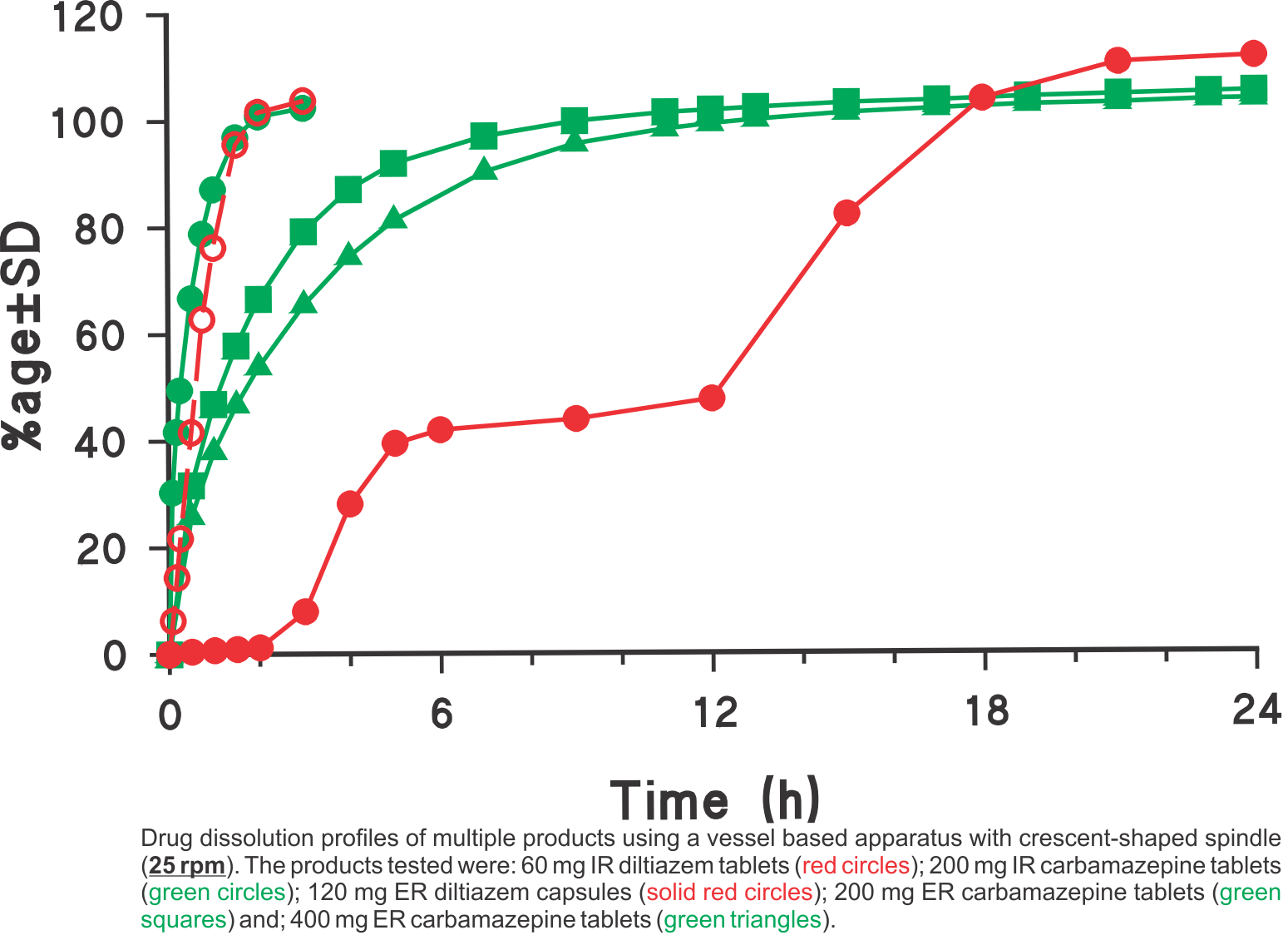
Dissolution profiles were generated using the USP vessel apparatus with crescent-shaped spindles set at a rotation speed of 25 rpm in all cases. The media used was 900 mL water for diltiazem and 900 mL water containing 0.5% sodium lauryl suphate (SLS) for carbamazepine products, respectively. The SLS was added to provide the needed sink condition. Using the suggested experimental conditions, all one has to do is to provide an appropriate dissolution medium (water with or without a solubilising agent e.g. SLS) so that the expected amount of drug is soluble in the medium. This single method/approach was employed for analyzing different types of products: tablets, capsules, IR and ER products having high water solubility (diltiazem) and low solubility (carbamazepine). As these experimental conditions are commonly used and simple, the method may easily be transferred to a QC test along with bio-relevant support of the testing environment. For further explanation and discussion on this topic please refer to the publication (link).

It appears so.

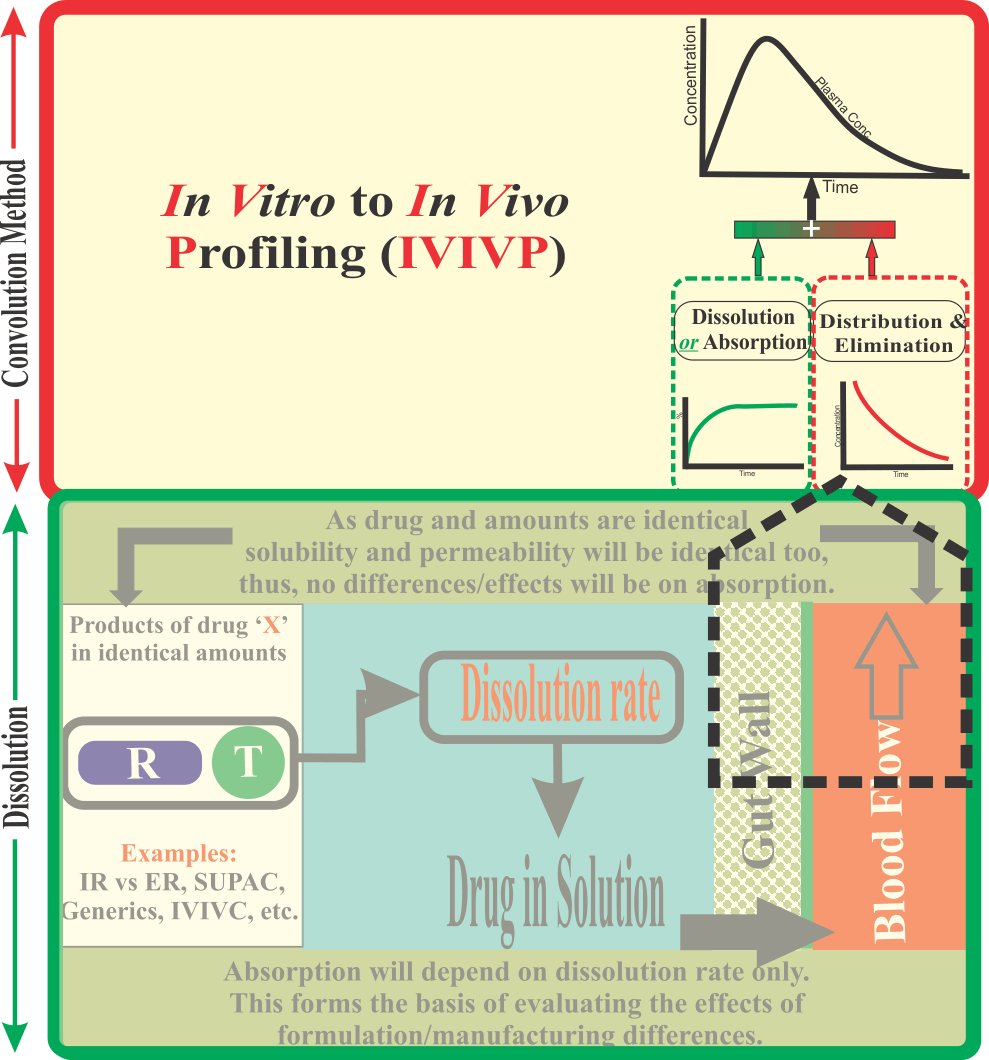
BCS is an approach, which has been promoted to reduce the burden of pharmaceutical product evaluations, and their regulatory approval, using drug dissolution testing instead of in vivo (bioavailability/bioequivalence) testing.

In reality, the BCS concept was introduced to facilitate success in establishing IVIVC, which in general had shown poor, or no, success.

The underlying principle of BCS is that if drugs are classified into classes based on their aqueous solubilities and absorptions or permeabilities through the GI tract, then establishing IVIVC may be possible. It is, therefore, important to note that the concept of BCS was introduced to increase the chances of IVIVC success.

For BCS, drugs are divided into four classes having the characteristics of (I) High solubility and high permeability; (II) Low solubility and high permeability; (III) High solubility and low permeability; (IV) Low solubility and low permeability. As per the BCS approach, for drugs that would fall in the low permeability category, i.e., classes III and IV, it would be unlikely to achieve successful IVIVC as drug dissolution testing does not relate to permeability. Thus, the success of IVIVC may not be possible for the drugs of these classes. The drugs in class I are also considered as poor candidates for a successful IVIVC, as these drugs would often dissolve so fast that they may overwhelm the absorption system. Therefore, the drugs in class II (low solubility and high permeability) and drugs of class I, where release would be manipulated so that drugs appear as slow dissolving (e.g., extended-released type), would have the potential to achieve successful IVIVC. It is important to note that in principle, BCS would support the potential success of IVIVC with only class II type drugs. However, the reported success of IVIVC for drugs in class II has also been limited. Perhaps because of a mismatch of in vitro and in vivo environments, see link). Therefore, one should be cautious when describing the BCS as a success or useful practice. Thus, the extension of BCS in developing IVIVC and its usefulness in the regulatory environment should be considered with care.

On the other hand, Guidance documents are available that recommend using the BCS concept for bio-waivers, meaning products may be evaluated using in vitro drug dissolution tests only without in vivo testing. First of all, these documents are applicable for products of drugs in class I only, where generally it is recognized that achieving IVIVC would be highly unlikely based on the BCS concept as explained above. Moreover, there are other conditions as well which these drugs and their product must also meet. For example, products must be of immediate-release type, and the products must also release the drug very quickly, generally in less than 30 minutes. In essence, the products for which bio-waiver may be considered should be such that they should have drugs that would be released and dissolve quickly. The assumption here is that the human body will consider these products equivalent to solution products. It is obvious from this discussion that the BCS, which is intended for developing IVIVC, plays a limited role in describing bio-waiver criteria for this particular class of drug where no IVIVC is expected.

It may, therefore, be concluded that BCS had been of limited use in facilitating IVIVC, application of dissolution testing in lieu of in vivo testing and/or reducing regulatory burden.

In my opinion, current practices of method development have not only caused the biggest confusion in the industry but also hindered in an appropriate evaluation of drug products using dissolution (release) testing itself.

Current practices of method development suggest that an analyst is to “fish” (seek) experimental conditions, such as choice of an apparatus (paddle/basket), rpm, buffer, pH to establish UNKNOWN dissolution characteristics of a product. Commonly, it is suggested that an analyst have a number of formulations with presumed dissolution characteristics, and the analyst should seek experimental conditions that would reflect “presumed” product characteristics. Such practices are often referred to as developing “discriminating” and/or “lot-to-lot consistency check” methods.

Similarly, the above-mentioned practice of “fishing” (seeking) experimental conditions will be considered as developing a bio-relevant method if the analyst tries to match dissolution results with in vivo results (bioavailability/bioequivalence).

Therefore, in practice, an analyst would never know the true product dissolution characteristics but would select experimental conditions which would fit his/her expectations. It is, therefore, critical to understand that as it stands now, an analyst or a product developer will never know the true dissolution characteristics of its product. Each and every analyst/product developer is occupied with “developing” dissolution methods which in reality should not be their assignment. Their objective is to develop a product based on its dissolution characteristics, using a standardized and well-accepted dissolution method. This is similar to an analogy in which each and every laboratory would be busy developing their own thermometers and weighing balances to monitor temperatures and weighing substances, respectively.

Therefore, it is essential to note that the pharmaceutical industry requires a standard dissolution tester and its associated experimental conditions capable of providing dissolution characteristics of pharmaceutical products. The crescent-shaped spindle has been developed with these thoughts in mind, which appears to offer a powerful solution to the current confusion and avoids the unnecessary practices of method development.

In the drug dissolution testing area, a reference to the “quality” of a product (table/capsule) is frequently made. For example, a drug dissolution test may be considered a quality assurance and/or control test. More recently use of the term has been extended to the concept and practice of “quality by design” or QbD. Obviously, to achieve or monitor “quality,” one needs to define it as an achievable objective or goal.

In general terms, “quality” is a subjective term for which each person or sector has its own definition. For example, certain variations in shape, size, or color of a tablet may indicate poor quality of the product for some, but for others, it may be normal and expected. In the literature, commonly, “quality” refers to “fitness for use” or “conformance to requirements” according to Joseph Juran (considered father of the QbD concept) and Philip Crosby, respectively. However, in technical usages, such as for the assessment of pharmaceutical products, these definitions of “quality” may be translated into a product property that fulfills stated or implied needs by establishing it as “fit for use.” The terminology “to fulfill stated or implied needs” appears to be the most critical in this regard, i.e, one must establish the need before defining the quality.

Therefore, before using dissolution testing for “quality” assessment purposes (or its control/assurance), one must first describe the stated or implied need here. Until and unless one cannot define or establish a need or use (for the testing) one cannot establish the quality. What is the need or use of a drug dissolution test? Conducting a dissolution test is not a need by itself. However, it is the ability (test) to fulfill a need of determining drug dissolution in the human GI tract from pharmaceutical products. The need is to determine drug dissolution in the human GI tract. This particular needed characteristic reflects upon the “quality” of the product. How it is to be determined and controlled or assured comes later, which is the “fitness for use” characteristics. In this regard, both, i.e., bioavailability/bioequivalence (BA/BE) testing/studies and drug dissolution testing, are two different types of tests to fulfill the same need and to establish “fitness for use” criteria. One reflects the in vivo evaluation while the other in vitro, but they both fulfill exactly the same need. One may argue about the differences in the strength of these two types of tests, but one has to recognize that they both fulfill the same need. Once the need is established, then one has to establish a tolerance (specifications) for “fitness to use” around the needed characteristics so that this need may be fulfilled consistently. For further discussion on the evaluation of drug release (dissolution) characteristics for both in vitro and in vivo, please see the post.

In short, therefore, “quality” here is referred to as fulfilling a need of determining the drug release (dissolution) from a product in the gastrointestinal (GI) tract, which is quantitatively measured to establish the “fitness for use” by a drug dissolution test

In a recent issue of Dissolution Technologies, in an article titled “Overview of Dissolution Instrument Qualification, Including Common Pitfalls” the authors started the article with a statement (or quote) of the claim that “For almost fifty years, the pharmaceutical community has been relying on dissolution data as an indication of drug product performance. Effective qualification of the dissolution apparatus is critical to the value and integrity of these data”.

The above-mentioned statements can be misleading and may provide false and erroneous comfort for a drug product performance using instrument qualifications (IQ) as its basis, as explained below:

IQ based on Enhanced Mechanical Calibration (EMC): Meeting the EMC means that the instrument is within the expected and required specifications. However, it does not mean that the instrument is capable of determining dissolution characteristics reflecting the appropriate performance of a product. To fulfill such a requirement, the instrument must be capable of producing the expected dissolution results of an approved drug product linked to the product’s performance.

The situation may be explained with an analogy that an analyst requires a laboratory thermometer to monitor the temperature of a dissolution water bath. The supplier provides the thermometer to the analyst with a detailed list of specifications for: lengths and diameters of the outer tube and inner capillary, heat-conducting bulb, the quality of glass used and marking on it, and the amount of mercury present in the capillary with a detailed theory of the heat expansion coefficient, etc. The question is will this thermometer perform as expected and monitor the temperature of the bath accurately? No, there is no data available on the performance of the thermometer. For the performance evaluation, the supplier needs to provide evidence to show that when the thermometer is placed in freezing water, the mercury will show a reading of 0 °C, and while in boiling water, the mercury will expand to the 100° C mark. This would reflect that, indeed, the thermometer performed as expected and is good for use.

Similarly, a dissolution instrument should also demonstrate that if a test (performance or calibration) is performed using a drug product for human use, the instrument is capable of providing the expected dissolution results.   

IQ based on Performance Verification Test/Tablets (PVT): In this case, in addition to establishing the instrument specifications as with EMC, dissolution tests are conducted using USP calibrator tablets (not a pharmaceutical product) to achieve certain expected results. This type of testing (calibration) will show the capability of the tester to evaluate dissolution characteristics. However, its capability of showing the performance of a product for human use is still lacking.  In reality, the dissolution results thus obtained would be similar to those obtained using a kitchen blender set at slow rotation speeds. The link to reflect the performance of a drug product in humans lacks in both cases.

On the other hand, continuing with the thermometer analogy, in this case (i.e. PVT) the supplier, in addition to the specifications as described above, provides a pouch filled with an unknown or mysterious liquid, which causes the mercury in the thermometer to expand to somewhere in the middle of the thermometer. The expansion is expected to vary from user to user. Should this be considered as a performance evaluation test? Not really, because one does not know that, indeed, the mercury should expand to the middle. The performance test becomes arbitrary and of limited use. The question is why the thermometer supplier is making so much effort in developing the specifications and an arbitrary performance test (pouch). Why doesn’t the supplier of the thermometer provide evidence of the performance with the use of freezing and boiling water?

The same situation is with the suppliers of the dissolution testers and providers of the calibrator tablets. Why are they making so much effort in developing tablets and setting arbitrary specifications and performance evaluation criteria for these? Why can’t they use a tablet or capsule product approved for human use and demonstrate that the apparatuses can provide the expected dissolution behavior of the product? The simple and short answer is that the presently used apparatuses cannot provide appropriate dissolution results for a product.

Therefore, using such an instrument, along with stated performance testing, will provide false comfort, resulting in misleading conclusions about the performance of the pharmaceutical products.

Note: This post has been shared with the authors of the article. They have provided the following response. Their contribution is greatly appreciated. Saeed

 We appreciate the thoughtfulness of Dr. Qureshi’s response to our article. Striving for clinically relevant specifications is paramount for our drug products. Therefore sufficiently challenged methods that give information on the critical quality attributes that contribute to the release mechanism are the key. We disagree that dissolution is not a useful test, and that if we are going to use dissolution as a test then it is important that the apparatus is appropriately qualified.

Vivian Gray, V. A. Gray Consulting, vagray@rcn.com
Greg Martin, Complectors Consulting,
greg.martin@complectors.com

In vivo bioequivalence or simply bioequivalence is commonly referred to as an evaluation study conducted to establish the equality of mostly two oral products, such as tablets or capsules. The equality of two products (test vs reference) is established by comparing their blood drug concentration-time (C-t) profiles. The reason for selecting C-t profiles for such comparison is that as therapeutic effects depend on drug concentrations in blood i.e., if two or more products provide similar C-t profiles, then they will provide similar therapeutic effects as well. Thus they will be considered therapeutically bioequivalent or simply bioequivalent. Continue here.

It is often stated that in vitro drug dissolution testing may never be able to predict the physiological outcome as the environment and processes within may be too complex and variable to be adequately reproduced in vitro. This prevents achieving adequate and bio-relevant dissolution results. This belief may not reflect reality and appears to lack any experimental evidence.

The belief appears to be based on dissolution results obtained using mostly paddle and basket apparatuses. Interestingly, it has been shown repeatedly that these apparatuses poorly mimic the physiological environment (e.g., see), which is required for dissolution testing. It is, therefore, should be expected that these apparatuses would not provide physiologically relevant results. In addition to a lack of physiological relevancy, it has further been shown that hydrodynamics within dissolution apparatuses (paddle/basket) is such that these apparatuses should provide highly variable and unpredictable results [link]. Therefore, it is safe to assume that it is not the difficulty and complexity of reproducing a physiological environment in vitro but the choice of dissolution apparatuses that appears to have caused the lack of success. Recent studies using the modified spindle (crescent-shaped), which addresses the artifacts of the paddle and basket apparatuses, appear to provide a choice of physiologically relevant experiment conditions, thus providing improved and physiologically relevant results [Link]. Furthermore, the use of the crescent-shaped spindle provides a common and product independent testing environment one observes in vivo, where products are also evaluated under a common and independent product environment. This contrasts with the current practices of using paddle and basket apparatuses where practically every product is analyzed using its method, a physiologically non-relevant condition.

Therefore, it is essential that for accurate dissolution results and their interpretation, one should conduct drug dissolution tests using apparatuses that can simulate physiologically relevant experimental conditions. As the paddle and basket apparatuses provide a non-physiological testing environment, they will provide non-physiologically relevant results, thus the lack of faith.

I received a query by email seeking my opinion concerning the topic mentioned above. The email is attached (link), without reference of the sender, to provide a background of my response. My opinion is as follows:

First, what is a phase I clinical study? In general, a phase I clinical study is a study in which a drug is to be evaluated in humans for the first time, following successful animals studies, to establish its safety and tolerability in different dosage strengths. In principle, at this stage, there would not be any data available on human pharmacokinetics (absorption, metabolism, elimination, volume of distribution, etc.), and this phase of the study is generally used for determining these parameters. If the drug is to be administered as a solid oral product such as a tablet/capsule or suspension, then such a product is to be “developed”. [link for full response]