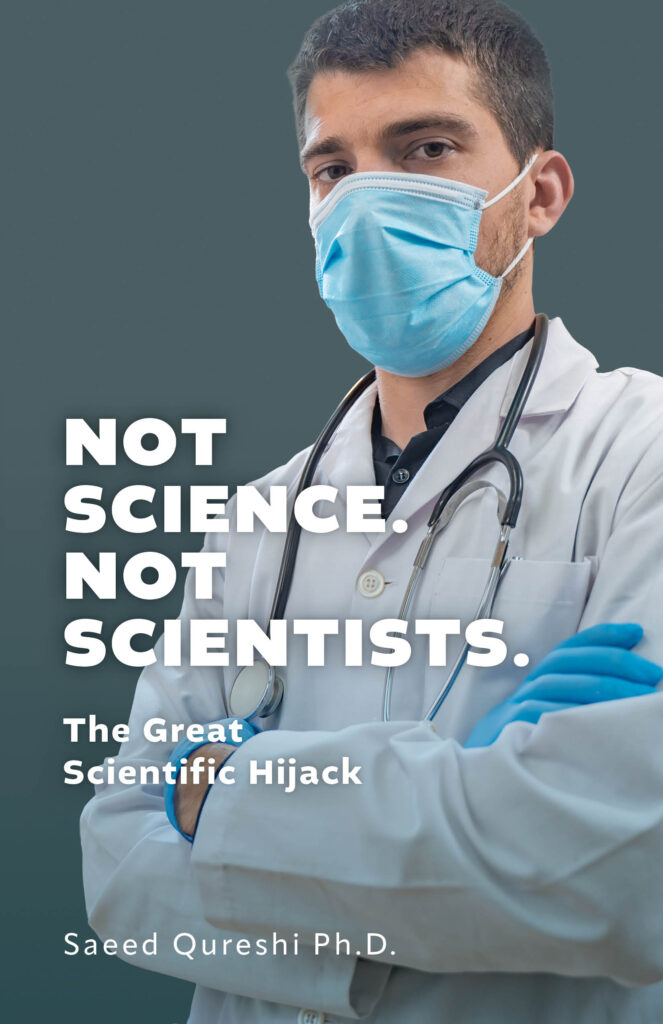
I am pleased to share some important news with you. I am introducing my upcoming book (soon to be available from bookstores and distributors worldwide) on a subject I have been deeply passionate about for many years: the meaning of true science and its misuse within the medical and biological fields. This book is written for both the general public and medical and biological specialists. It uses clear, direct language and avoids the complex and intimidating jargon that often dominates medicine and biology, making the discussion accessible without sacrificing rigor.

I kindly ask for your support by purchasing the book, reading it critically, and sharing it with friends, family, and colleagues. More importantly, I encourage you to help bring this message to policymakers and decision-makers. The continued reliance on false or unscientific claims in public health has caused serious and lasting harm. Honest discussion and scientific clarity are essential if we are to move toward better health, better policy, and a more informed society.

I look forward to your support and meaningful conversations that can lead to a healthier, happier future for all.

(more…)


In recent discussions, particularly on social media, I have encountered a recurring response to my critique of virology: “Stay within your field. Your chemistry knowledge does not translate to virology.”

At first glance, this may sound reasonable. Specialization matters. Expertise matters. However, this response fundamentally misunderstands the nature of the issue being raised.

This Is Not About Virology — It Is About Scientific Claims

I am not attempting to practice virology. I am not describing clinical medicine. I am not proposing alternative biological models.

The issue is far more basic.

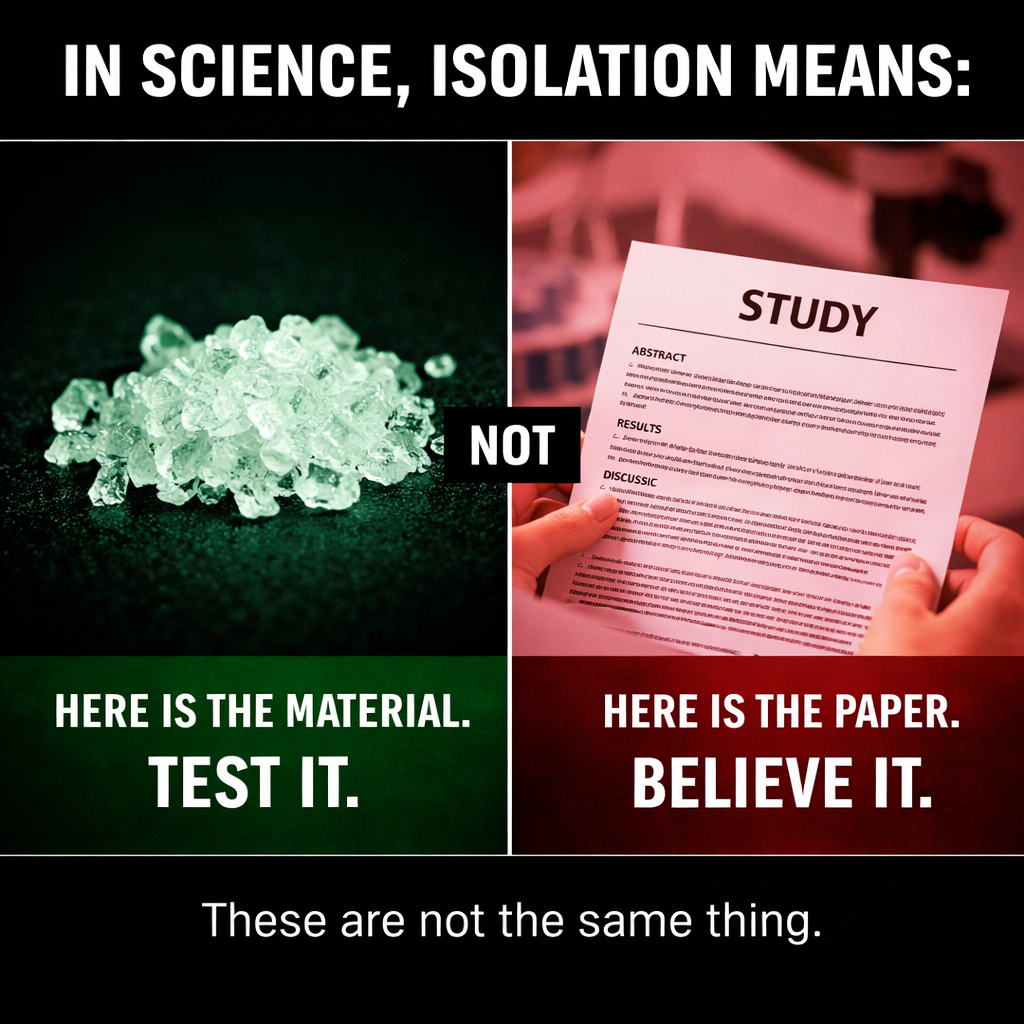
The claim under examination is the existence of viruses as physically isolated, purified, and fully characterized entities. That question does not belong exclusively to virology or medical practice. It belongs to science in its strict analytical sense — particularly to chemistry and the physical sciences.

(more…)

Let me try another way in the hope that it will be clearer for both the public and experts to see where the confusion lies.

Imagine that I ask to see the actual treasure. Instead, I am handed a map and told that the treasure exists. I am even declared wealthy on that basis. However, when I attempt to deposit this supposed wealth, I am told: “Bring the treasure, not the story.” A map may describe where something is claimed to be, but it does not demonstrate that the treasure itself is real.

In the same way, presenting models, protocols, genomic sequences, or culture systems is not the same as presenting an isolated, purified, and fully characterized physical entity. A description is not the entity. A procedure is not proof of existence.

You keep presenting maps — protocols, models, reconstructed sequences, and complex mixtures — and declaring that the treasure exists. But a map is not the treasure. If a virus truly exists as a discrete physical entity, then it should be possible to present it as such: isolated, purified, and fully characterized. Instead, what is often offered are descriptions and inferred frameworks, with the assumption that the entity must be there.

Science operates on demonstrable physical evidence, not narrative structures. If all that can be shown are maps — genetic reconstructions, modeled particles, or interpretive systems — then one must ask whether the field has mistaken the map for the treasure.

This may not stem from bad intent. It may simply reflect that generations have been trained to accept description as proof of existence. But from a strict methodological standpoint, claims of existence require direct, reproducible, and tangible evidence.

A map does not prove the treasure exists. It only suggests where it is supposed to be.

“Former CDC Director Robert Redfield has officially joined a massive coalition of over 81,000 physicians, scientists, concerned citizens, and 240 government officials demanding that COVID-19 mRNA injections be pulled from the market.

Documented in a peer-reviewed study, this growing movement raises urgent questions about vaccine safety, oversight, and public health policy. The list keeps expanding as experts and officials continue speaking out (link).”


This development may appear to be good news, and I support any genuine effort toward accountability and scrutiny. However, it is important to recognize the implicit message within such claims and requests

Calling for the withdrawal of mRNA vaccines does not address the deeper foundational issue. It still operates within — and therefore reinforces — the prevailing framework of virology and “medical science” as established science. In my view, that framework itself is the core problem. It is the conceptual system that produced both the virus narrative and the mRNA vaccine response.

By focusing solely on stopping mRNA vaccines, the discussion indirectly affirms the underlying assumptions: that the virus is established as described, that the illness model is valid as presented, and that vaccine-based intervention is the appropriate paradigm. This, I argue, leaves the fundamental scientific questions untouched.

From a strict, foundational scientific perspective, the public should be demanding something far more substantial: a critical reassessment of the biological and medical frameworks promoted as science but, in my opinion, do not meet the standards of the physical sciences. Such a reassessment would not only halt problematic vaccine programs but also require a rigorous examination of broader claims about viruses, associated illnesses, and their proposed treatments.

Addressing only one product — even an mRNA vaccine — treats a symptom of a much larger structural issue. If the goal is genuine scientific integrity, then the focus must shift from individual interventions to the foundational assumptions upon which they are built.

A few short line posts may not seem significant at first glance. However, if one pauses and evaluates them carefully, they may suggest a potentially game-changing scientific question (link).

There have been reports of making ivermectin available for cancer treatment, including in certain jurisdictions such as Florida. This is noteworthy because ivermectin is not a cancer drug. It is a well-known antiparasitic medication, developed and historically used to treat parasitic infections in both humans and animals. That is its established and documented purpose.

More recently, however, some have promoted ivermectin as having potential anti-cancer effects. At the same time, mainstream medical experts and regulatory agencies have not accepted this claim as established therapy and do not endorse its routine use for cancer treatment.

This situation invites a broader scientific question.

(more…)

A Scientific Perspective on Standards, Variability, and Scientific Accountability

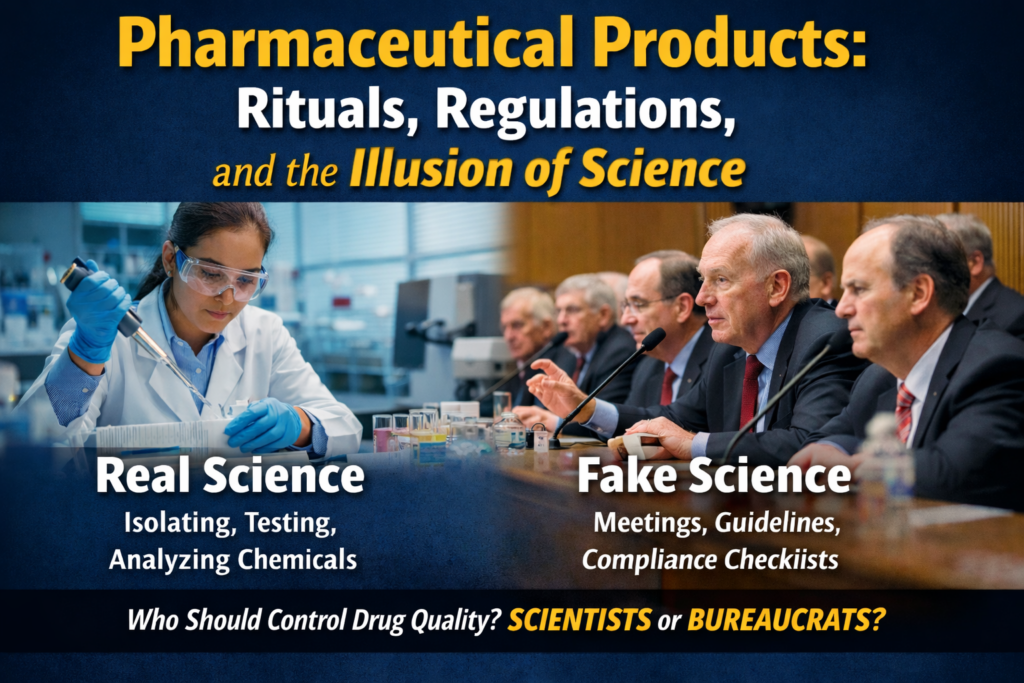
Medicine presents itself as science. But science, in its classical sense, requires measurement — precise, reproducible, and independently verifiable measurement. Without that, claims remain narratives.

Let us begin with a thought experiment. Suppose the medical establishment were to declare: “We made a mistake. The viral model, as currently defined, lacks foundational verification.” What would follow? Entire segments of modern pharmaceutical practice — particularly the vaccine sector — are built upon specific biological premises. If those premises were fundamentally revised, the products derived from them would require re-evaluation. The point is not collapse. The point is dependence. The industry operates within a framework defined by what is called “medical science.”

Now consider something more concrete.

(more…)

“Is it not interesting? Over $200 billion spent on cancer research every year — and a reported 90% increase in cancer deaths since the 1990s.”

Whether the numbers are framed precisely or rhetorically, the sentiment behind such a meme reflects a growing public unease. A massive financial investment is assumed to yield proportional scientific and health benefits. When that outcome does not appear obvious, questions begin to surface. But the real question is not whether billions are spent. The real question is whether the underlying model of disease is grounded in physical science or constructed within a self-reinforcing clinical framework.

Billions of dollars are spent each year on what is confidently described as medical research. The public hears the word “research” and assumes science in its pure form — rigorous, measurable, grounded in chemistry and physics. The label itself carries authority. Yet the deeper methodological foundation is rarely examined. Does medical research operate according to the standards of science, or has medicine developed a parallel structure that resembles science without consistently adhering to its core requirements?

(more…)

A recent Scientific American article argues that a year of RFK Jr.’s influence has “changed American science,” particularly within the U.S. Department of Health and Human Services (HHS). The underlying claim is that science at HHS has been disrupted, politicized, or undermined. (link)

That framing assumes something that deserves closer examination: that HHS is, in fact, a center of foundational science.

It is not.

HHS is primarily a clinical and regulatory institution. It is staffed and directed largely by physicians and public health professionals. Their training is clinical and applied. They diagnose, prescribe, regulate, and manage programs. That is a professional function — not foundational science.

(more…)

The term “bioweapon” is often repeated with dramatic certainty. Yet it should be read with sadness and concern, because it hides a serious deception: it projects the appearance of advanced science and expert authority where neither has been demonstrated.

Calling something a “bioweapon” implies that rigorous, high-level science is being conducted — that defined biological agents are understood, controlled, and intentionally weaponized. It suggests precision, expertise, and a legitimate scientific foundation. But the uncomfortable reality is that this framing can be used to legitimize a practice that has not met basic scientific standards.

True science — physics and chemistry — begins with defined objects: substances that are isolated, purified, characterized, and measurable, with methods that are reproducible and transparent. Without that foundation, “advanced research” becomes a performance: sophisticated language wrapped around assumptions, mixed materials, and unverified claims.

(more…)

The central problem in modern medicine is not the pharmaceutical industry. It is medicine itself—specifically physicians—who have come to treat stories as science and enforce those stories as fact.

What gives medicine this power is not evidence, but classification. When physicians collectively label something as “science,” it is accepted as such by governments, regulators, courts, media, and the public. Once that label is applied, questioning is no longer permitted. Industry does not define this reality; it responds to it.

Physicians hold the ultimate trump card: the power to treat narrative as science.

How the Story Was Created

The modern story of viruses, vaccines, and mass vaccination did not originate with pharmaceutical manufacturers. It originated within medicine and biology, promoted by physicians under the banner of “medical science.”

The claim that vaccines are “safe and effective” was not invented by industry. It was—and continues to be—made by physicians, their professional associations, committees, and advisory bodies, all presenting themselves as scientific authorities.

Pharmaceutical companies simply manufactured products that physicians asserted were scientifically developed, scientifically validated, and 95% effective, despite the absence of foundational scientific requirements.

(more…)

The collapse of Theranos remains one of the clearest modern examples of what happens when bold medical claims are finally subjected to genuine scientific scrutiny. Founded in 2003 and operating for more than a decade, Theranos rose rapidly in the early 2010s, reaching a peak valuation of roughly $9 billion. At its height, the company attracted elite investors, major corporate partnerships, and extraordinary political credibility.

Its board and supporters included some of the most influential figures in U.S. public life, among them George Shultz and Henry Kissinger. Such endorsements conferred instant legitimacy. The claims were celebrated, the machines were photographed and publicly displayed, and skepticism was muted by authority rather than answered by evidence.

Theranos promised a medical revolution: hundreds of laboratory tests from a single drop of blood, performed on sleek proprietary devices presented as cutting-edge technology. These machines became icons of innovation—despite never being shown to work as claimed.

Behind the scenes, Theranos relied on conventional laboratory equipment while its own devices failed to produce reliable results. Data were inconsistent, validation was absent, and basic principles of chemistry and analytical science were ignored. When whistleblowers and investigative reporting forced independent scrutiny, the illusion collapsed rapidly. Regulators intervened, laboratories were shut down, and partnerships dissolved.

The legal reckoning followed. Elizabeth Holmes, founder and CEO of Theranos, was convicted in 2022 on multiple counts of fraud for misleading investors about the company’s technology and was sentenced to more than 11 years in federal prison. Her business partner, Ramesh Balwani, was separately convicted and sentenced to nearly 13 years. Theranos did not fail because it dared to innovate; it failed because its claims could not withstand scientific validation.

(more…)