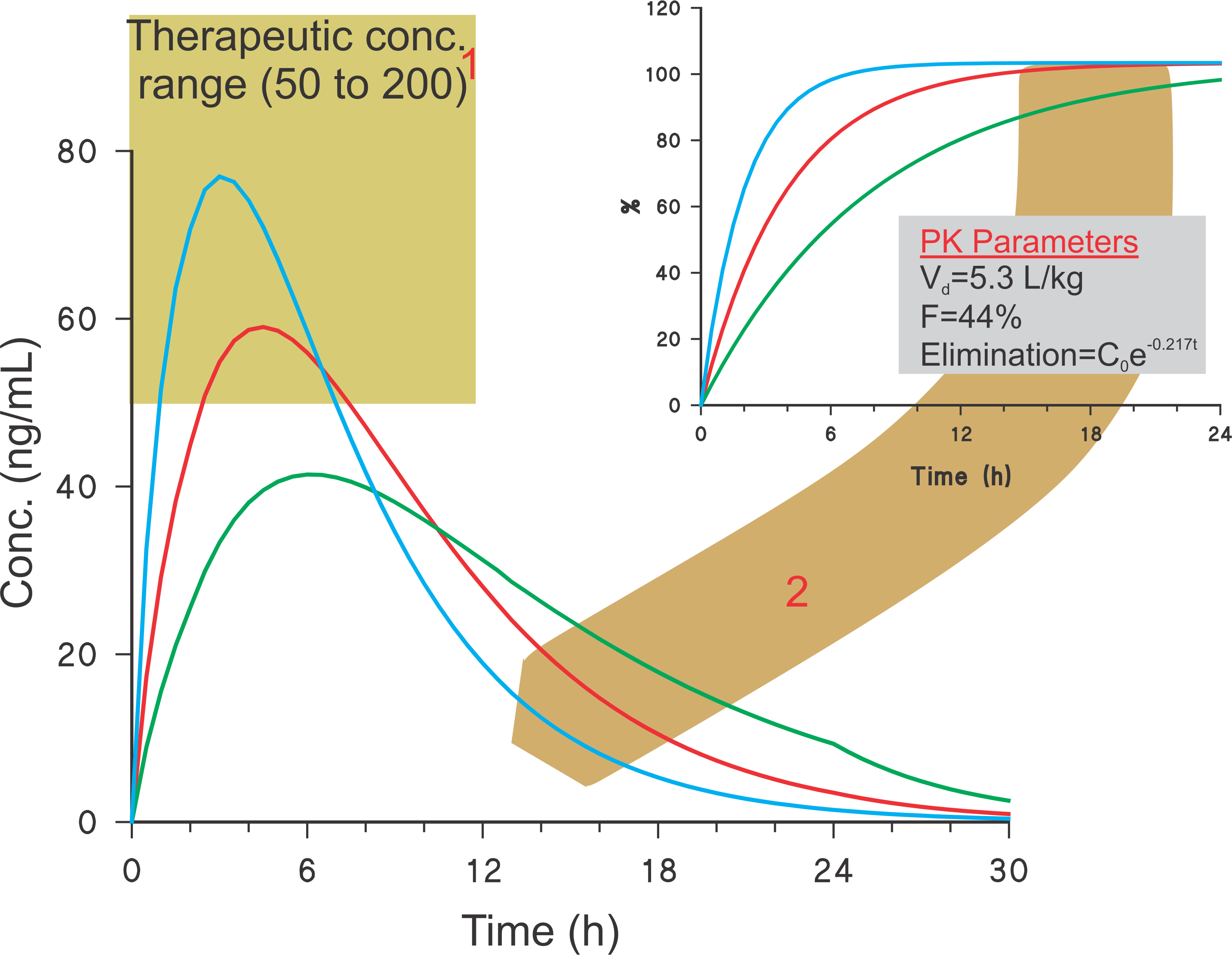
The most common dissolution/release tolerances for tablet and capsule products as per USP are 80% of the drug dissolved/released at the suggested time. The question is, where does the remaining 20% of the drug go, especially, when the product meets the requirement of Assay and CU of 100%. From a consumer/patient perspective, it is like buying a 1L milk carton but being assured of receiving only 800 mL! Please, note that in many cases, the USP tolerances can be as low as 70%.
If USP tolerances are considered correct, then a product user is expected to receive less and/or an inconsistent amount of drugs. It is to be noted that all bioavailability/bioequivalence (BA/BE) studies results are reported based on 100% deliverable drug. As Assay and CU show, on average, 100% content and BA/BE assumes delivery of 100% of the drug in humans, it indicates that demonstration or requirement of less than 100% in vitro dissolution/release is an inaccurate tolerance (standard).

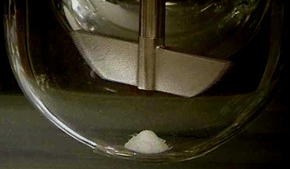
The reason for this discrepancy (observance of lower in vitro dissolution/release) is the poor stirring and mixing environment within the dissolution vessels using paddle and basket stirrers.  The poor stirring environment creates unstirred pockets within the vessels where the drug hides. These pockets depend on the nature of the product, in particular excipients, and can hide as much as 40% of the drug as in the case of the dissolution results of the USP Performance Verification Tablets (see Figure). If this flaw of unstirred pockets is addressed, then one can observe the release/dissolution of 100% of the drug. This means that not only will dissolution results match with the Assay and CU results, but SEPARATE monitoring of Assay and CU becomes redundant. This leads to simplification, efficiency, and accuracy in overall product evaluation and development (see also related links 1, 2, 3).
Estimating drug conc.-time (C-t) profiles from drug dissolution results requires the use of a few PK parameters of the drug (link). The values for the parameters can be obtained from the literature, however, these values may vary from study to study or source to source. This makes the comparison of results (profiles) between studies difficult. To minimize such differences and for improved comparison, a list of values of these parameters would be useful.

To fulfill this need a new list under the “Useful Lists” section has been added (link). The values described in the list are those which are considered appropriate at this time. However, the list and values are subject to change if and when more appropriate values are suggested. Please consider contributing to the list by submitting suggestions for new additions and/or revisions to moderator@drug-dissolution-testing.com

Commonly pharmaceutical products are evaluated and developed based on four “quality” parameters/measurements: (1) Identity, to show that a product contains the expected drug; (2) assay, to show that a product contains expected amount of drug (dose); (3) Content Uniformity (CU), to establish that the dose or drug content in each unit varies within an expected range; (4) Dissolution/release, to show that the drug will be released from the product in an expected manner. All these tests are simple chemical tests based on solvent extractions, i.e., the drug is extracted from the product and measured using any of the quantitative techniques such as spectrophotometric or chromatographic.  For the complete article, click here.

Drug dissolution test as a quality control test: In simple terms, at present, a dissolution test as a QC test means conducting a dissolution test as described in a pharmacopeia, in particular USP. If the test meets the pharmacopeial (Tolerances) requirements, the product may be considered a “Quality” product. It is, however, not clear what “quality” the test refers to or to what product property the test is linked to? Therefore, to overcome this lack of objectivity/relevancy, pharmacopeial tests are described as “consistency” tests. Again, it is not clear the “consistency” of which property or parameter the test is referring to?

Dissolution testing during product development: One of the main uses of dissolution testing is to facilitate product development. This use is based on the principle that the tests should be able to provide potential in vivo drug release behavior information. However, this is a commonly recognized fact that currently used dissolution tests generally do not provide in vivo relevant product characteristics. Thus, current practices of dissolution testing at the product development stage appear to lack relevancy and objectivity.    

Practices of methods development: Developing a method requires a well-established and accepted reference (product or parameter). In this case, a reference product should be available with known drug dissolution results established independently. As there is no reference product with known dissolution results available at present, it is not possible to develop a dissolution method. As commonly suggested in the literature, developing a method based on test products (with unknown dissolution characteristics) is neither scientifically valid nor possible.

Dissolution apparatus selection: Selecting adissolution apparatus should also be part of a method development exercise. An apparatus must be able to provide a relevant testing environment. Current practices appear to suggest that relevant apparatuses, and associated experimental conditions, are those which are described in the pharmacopeias only. On the other hand, it has never been shown that suggested apparatuses and the associated experimental conditions are suitable for their intended purpose. That is, the suggested apparatuses have never been validated for the intended purpose.

Selecting experimental conditions: Choices of experimental conditions such as rpm and buffers described in the literature appear to be arbitrary and random. Moreover, experimental conditions are selected to achieve some desired dissolution characteristics of the test products. Thus, a formulator/analyst would never know the “true” dissolution characteristics of the product. Experimental conditions must be linked to the physiological environment and be product-independent. Drug and/or product-dependent experimental conditions, as commonly described, are neither scientifically valid nor relevant.

Establishing IVIVC: Developing IVIVC commonly refers to RELATING in vitro dissolution results to in vivo dissolution results using a mathematical approach of de-convolution.However, in general, dissolution tests are conducted based on the principle that in vitro release should relate well with in vivo results. Therefore, it is unclear why every manufacturer/analyst has to go through this exercise of establishing this in vitro-in vivo link for each product. In addition, as stated above, the current apparatuses/practices of dissolution testing have never been validated for providing relevant in vivo dissolution characteristics, so why should one be expected to achieve appropriate IVIVC?

Product development stage: What this really means in simple terminology is the stage where a product (formulation + manufacturing process) is developed to show that it can release (dissolution) the drug and provide desired drug levels in humans. The drug release characteristics of a product are usually established based on human studies, which are commonly known as bioavailability/bioequivalence (BA/BE) studies. However, one requires a simpler in vitro method to screen test products (especially multiple combinations of formulations) to select some (usually one or two) for BA/BE studies.

 Drug dissolution test: This is the in vitro test used for this purpose, i.e., to evaluate potential release characteristics of different products (or formulations). It is, therefore, very important to note that a formulator must have access to a dissolution method that can reflect potential in vivo drug release (dissolution) characteristics in humans at this stage. This method must already be developed and validated using other well-characterized product(s) for human use. In the literature, it is often described that a specific dissolution method is developed at this stage for the particular test drug/product. However, such a practice is scientifically invalid, as a method can only be developed using a product with well-established dissolution characteristics. At the product development stage, a dissolution test is applied, not developed. This is an essential concept, often overlooked, and should be kept in mind.

 The next step: Preparing a variety of products (or formulations) and obtaining in vitro dissolution characteristics of these products would not be valuable or useful until it is shown what type of drug levels these products/dissolution results will provide in humans. It is important to note that obtaining similar or different dissolution characteristics for different formulations is usually of limited use. One has to demonstrate what would be the expected drug levels in humans from the test formulations. As stated above, the exercise of product development is to develop a product to achieve desired drug levels in humans. Therefore, there must be a technique to convert these dissolution results to potential drug levels in humans. Such a technique, known as convolution, is described in the literature (link), which may transfer dissolution results to blood levels in humans.

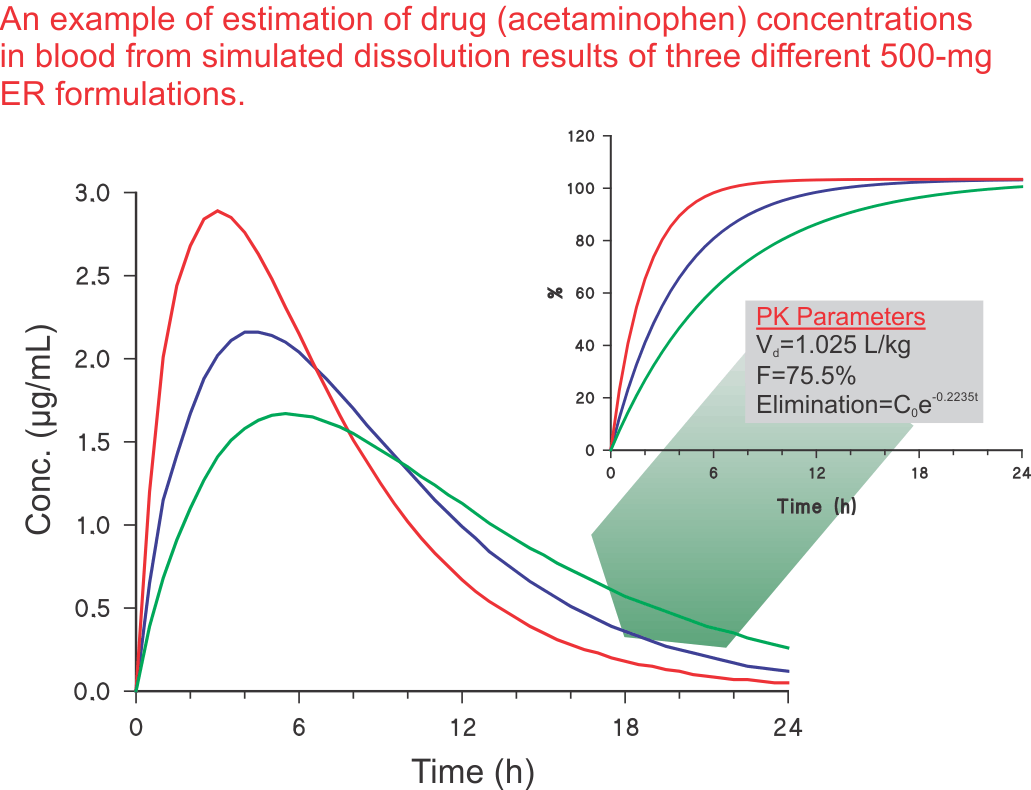
 For an illustration, an example is provided to reflect the estimation of acetaminophen blood levels from dissolution results for a 500-mg extended-release product (see Figure). The methodology of convolution is described in detail in one of the publications (link).

 Once a desired drug’s levels profile is achieved, the formulator may use the product for an in vivo BA/BE study to finalize the development.

 If one follows the approach described here, it will provide a powerful screening method for selecting products for BA/BE testing and significantly simplify the product development stage.

For clinically relevant tolerances, perhaps the most important consideration is that the tolerance should reflect consistent and reproducible delivery of the patient’s expected dose (amount of the drug). Commonly, the dosage or strength of a tablet/capsule reflects the expected amount of drug to be released or delivered.  Therefore, the amount of drug to be released is fixed for clinical relevance, i.e. 100% (at least on average). The only variable which needs to be determined is the time, i.e., how long would it take for the drug to be released. For IR products, this duration of drug release is usually an hour or less. However, based on experimental evidence, this time duration may be adjusted as required in exceptional cases.

Therefore, the setting of tolerances should be based on the duration of time required for the release of all drug present in the product.

At present, tolerances are set (e.g. see USP) based on two parameters (values), i.e., the amount of drug released at a certain time.

The amount (%age of drug) released is often referred to as the Q-value. Although the Q-value is set based on the product behavior at the product development stage, it is still chosen arbitrarily rather than based on any scientific/clinical relevance. It is not clear why this Q-value is chosen arbitrarily and set at less than 100%, usually 80% or lower when it should be 100%. The practice of setting tolerances at 80% or less may not be clinically relevant and require reconsideration.

In short, clinically relevant tolerances should only be based on the time duration, i.e., how long would it take for 100% of the drug to be released from a product.

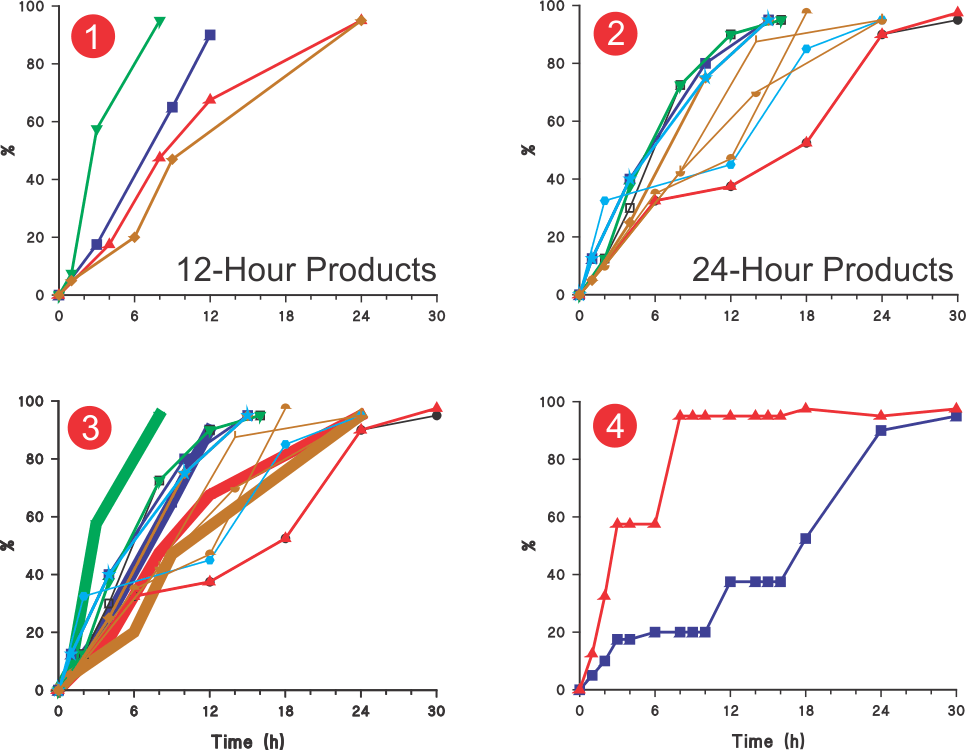
USP diltiazem (ER) monograph describes 15 sets of tolerances or, by definition, “the permitted variation in the results (link)”; four sets for 12-hour and eleven sets for 24-hours products. Figures 1 and 2 present these tolerances in a profile format by using the average values of the ranges described. The first and last tolerances, where ranges are often described as NMT (not more than) or NLT (not less than) respectively, averages are calculated using zero and NMT values and NLT values and 110 (highest expected percent dissolved from the CU requirement).

In short, these profiles represent acceptable variation in dissolution characteristics for presumably good quality (without a clinical concern) diltiazem products that are permissible for sale. In addition, although the monograph describes the tolerances for 12- and 24-h products separately, in most cases, these tolerances appear to overlap, as shown in Figure 3. Therefore, it would be safe to assume that, from the pharmacopeial perspective (in vitro testing), both of these types of products will show similar dissolution characteristics!

In most cases, tolerances are based on separate dissolution test conditions. Therefore, it is impossible to ascertain whether the dissolution characteristics reflect a product characteristic or because of the experimental conditions used. Therefore, it may not be possible to establish the quality of the product.

On the other hand, if such variations in drug dissolution (release) results are acceptable, the tolerances can be simplified by representing these only with one set of tolerances (upper and lower limit profiles) as shown in Figure 4. This would avoid the current complex and resource-intensive practices of setting individual tolerances with no apparent advantage. In addition, it will also help in establishing underlying expected variability in dissolution results.

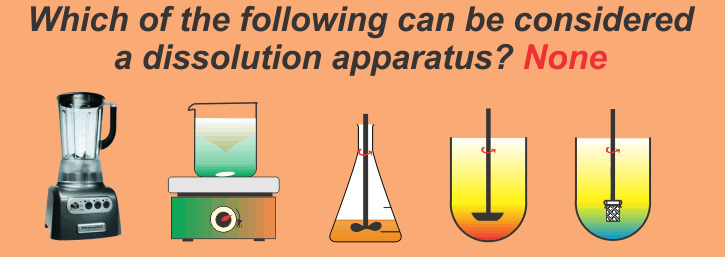
In general, an apparatus means a machine having a specific function. In our case, a dissolution apparatus means “a machine which may be used to determine dissolution characteristics (function) of a drug product such as a tablet or capsule”. This function (dissolution) can only be achieved if the machine is able to provide thorough but gentle (low rpm) stirring and mixing within a vessel. Another way of saying the same thing is that the machine should provide thorough but gentle product/solvent interaction at low rpms, i.e., less than 100.

The reason the machines shown above may not be considered dissolution apparatuses is that they do not provide appropriate and required product/solvent interactions, thus drug dissolution. All these machines required very high speed (RPMs) for mixing. At lower RPMs, the test products often lie around stagnant, thus incorrectly indicating limited or no dissolution.

 A critical requirement for a dissolution apparatus is that it should be capable of providing stirring and mixing at low RPMs and it must also avoid stagnation of the test product.