
What is science, and who are scientists? (link)
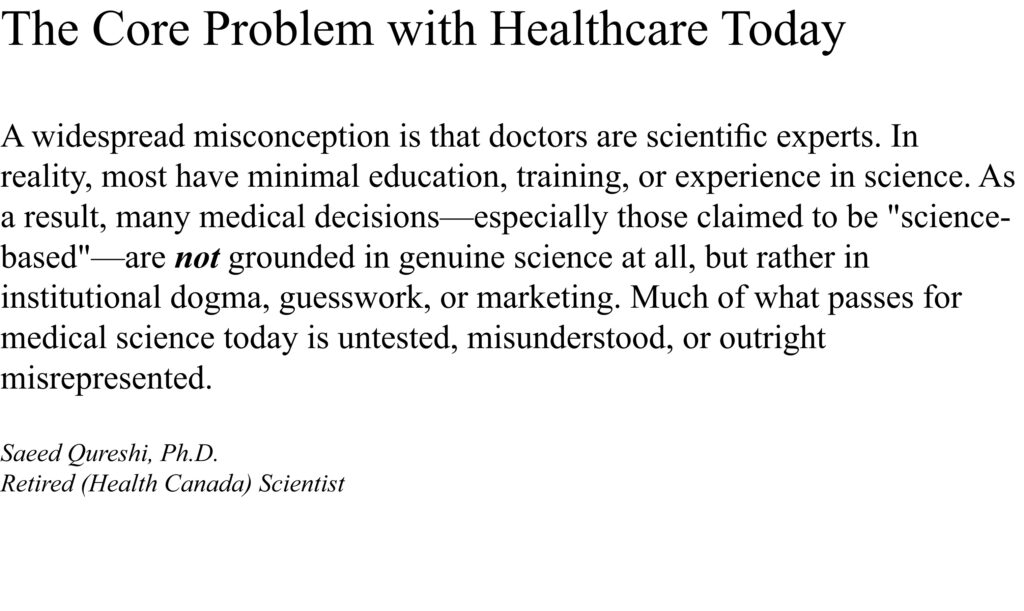
An M.D. degree is not a science degree! (Link)
Biology vs Science (link)

Recently, I’ve received an increasing number of hostile messages via Facebook and email—accusations of arrogance, of being a self-proclaimed and self-centered scientist, and of disrespecting others by insisting on my interpretation of science. These reactions largely stem from my critical evaluation of certain physicians’ and biologists’ work, including members of the so-called “no-virus group”—individuals some see as sincerely trying to help.
Unfortunately, some of these responses have taken on a disturbingly aggressive tone, with some bordering on intimidation and veiled threats.
The reality, however, is quite different. A careful review of my public commentary over the past five years—particularly my work challenging the existence of SARS-CoV-2—shows that my conclusions are grounded in rigorous academic training and decades of experience. They are not casual opinions but the product of over thirty years of scientific work at Health Canada. I have never been affiliated with individuals who present themselves as scientific authorities without the necessary credentials or expertise.
(more…)
mRNA Vaccines – are they real?
Medical experts have yet to provide concrete scientific evidence that mRNA is actually present in the vaccines. There is no verified proof that mRNA has been successfully manufactured, isolated, and incorporated into these formulations. To establish its presence, a validated analytical method/test is essential—one that must be based on a reference standard: an isolated, purified, and fully characterized sample of mRNA. Such a standard does not currently exist (link).
Therefore, all claims about mRNA and its purported role in these vaccines remain unverified and lack a sound scientific foundation.
While experts continue to debate the safety and efficacy of these vaccines, their conclusions are based on assumptions rather than proven facts. Without verified mRNA, the basis for these vaccines remains speculative at best.
This is not a matter of opinion—it is a matter of scientific rigor and evidence.
(link)
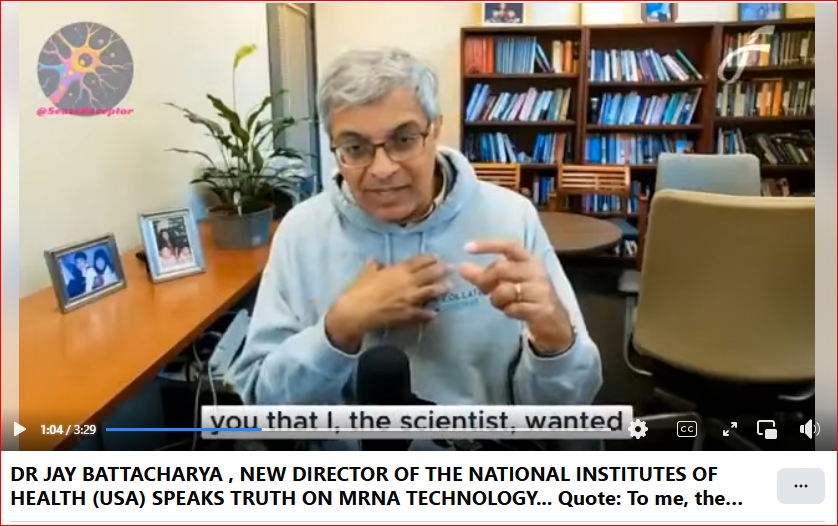
He has an undergraduate degree (M.D.) in a non-science subject and a postgraduate degree (Ph.D.) in economics.
“He earned his Doctor of Medicine (M.D.) from the Stanford University School of Medicine in 1997 (but never had a residency/fellowship and never practiced medicine, link).
An M.D. degree is not a science degree! (link)
Biology vs Science (link)
My training and expertise – people ask! (link)
It is essential to note that biology is not a science, nor is it a science subject. Biology more closely aligns with the arts—similar to fields like psychology, sociology, or economics—drawing heavily on observation, interpretation, and speculative theorizing rather than direct experimentation with physical substances. In this framework, biology constructs narratives based on observed patterns and inferred mechanisms, rather than engaging with empirically verifiable entities.
For example, concepts like viruses and the diseases attributed to them must be viewed as theoretical (imaginary), rather than physically demonstrated realities. On the other hand, science (physics and chemistry, link) is concerned only with tangible substances. As the physical samples of the isolated and purified viruses are not available, claims about viruses and their illnesses cannot be considered science-based or scientific, but biological (non-scientific).
As medical practice and research heavily or solely depend on biology, it should also be considered a non-science discipline. Therefore, all claims by medical experts, particularly physicians, in medical research areas concerning diagnosis and their treatments, including vaccines, should be regarded as false and fraudulent from a scientific perspective.
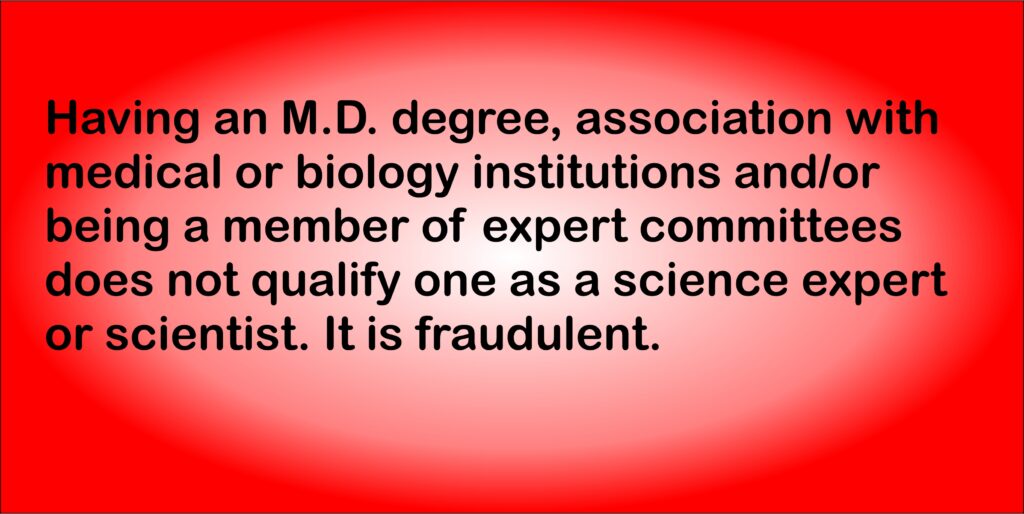
Anyone who claims to be a science representative or expert, especially physicians, must disclose their credentials (academic background, expertise, hands-on work experience, etc.) to support their claims about science. An M.D. degree does not qualify one as having scientific knowledge or expertise, because it is a typical non-science undergraduate degree. Association with so-called medical or biology institutions and/or being a member of expert committees does not qualify one as a science expert or scientist. It is fraudulent.
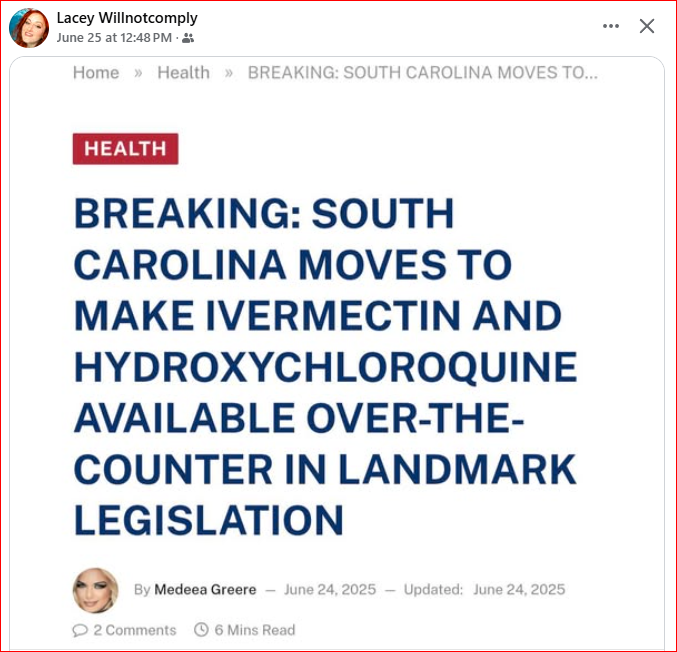
Does it not show that doctors have lost their professional credibility, and the public is taking the prescriptions of medication into their own hands? In reality, I would not recommend such a practice, as it could have some unintended harmful consequences. However, under the circumstances, it is the most practical approach; the public has no other choice, as doctors have misled and lied to them.
As I have been describing for a long time, physicians’ claims have been fraudulent, regarding science experts or scientists. Their diagnoses and treatments have no support or relevance to science or scientific research. They have no formal education or knowledge of the science of medicine and its research, which is primarily based on science (chemistry). Hence, the medical fraternity employs ritual-based practices but promotes them as science. They imposed these lies and false claims of science under the government’s authority, which they dominate under the guise of independent science experts and scientists. The public has no venue to express or be heard about their sufferings from illnesses or medical treatments, or (mal) practices.
New CDC Vaccine Panel’s Upcoming Voting (link)
Drs. Malone And McCullough May Like To Address This Concern (link)
It is worth noting an uncommon and unpopular fact about HHS/FDA/NIH (link)
After Years of Silence, New CDC Vaccine Panel to Vote on Mercury in Flu Shots (link)
Consider the credentials of the new ACIP membership. The eight new members are, according to Kennedy: (link)
It is essential to note that none of the listed credentials indicate that they would reflect science literacy. They are based on self-proclaimed sciences, i.e., without education or expertise in actual science. Such expertise caused the disaster of vaccination in the first place. It is impossible that experts with such expertise would be able to address the issue of vaccinations or other chemical-based treatments.
If the issue needs to be resolved based on science, then actual science (chemistry) experts should be appointed, as medicines, including vaccines, are chemicals or chemical-based.
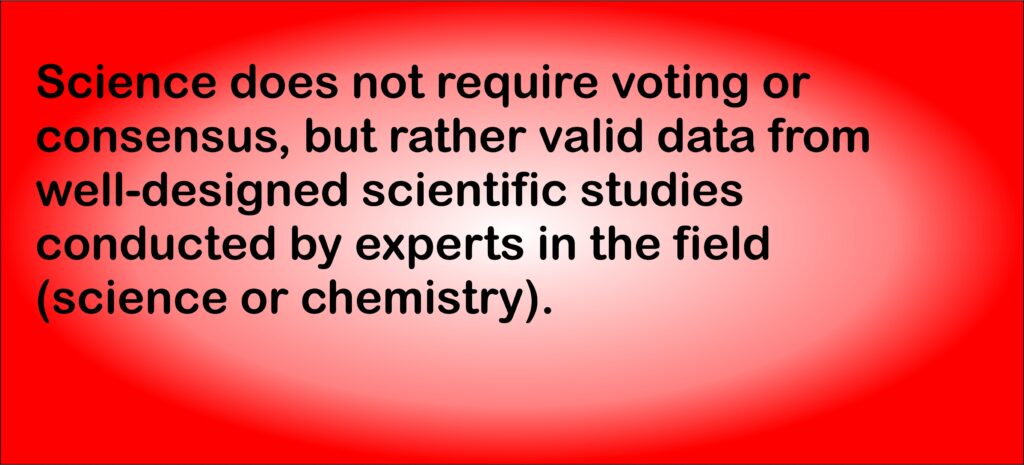
Science does not require voting or consensus, but rather valid data from well-designed scientific studies conducted by experts in the field (science or chemistry).
Science And Medical Experts – An Oil And Water Mix! (link)
For The Attention Of Respectable RFK Jr. (United States Secretary Of HHS) (link)
Below is my response to Malcolm Glass’s comment on Facebook (link). His comment is provided at the end of my response.
Thank you very much for taking the time to evaluate my view critically and for explaining your understanding of the subject.
In short, your narrative does not accurately describe my position. Your description is similar to those who consider there is no or limited need to know or understand science to resolve the virus or virology issue. A straightforward discussion (based on so-called logic) could easily and effectively resolve the issue. No true! If that had been the case, the problem would have been resolved a long time ago.
Unfortunately, both groups (virus and non-virus) have been arguing about science (without understanding it) and have failed to resolve the issue. My view is that if one wants to discuss science, then say so. Do not hide it under the rug of logic or high school stuff.
(more…)People often assume that claiming the non-existence of a virus makes one a science expert, scientist, or an honest and knowledgeable person about science. This is, unfortunately, a prevailing view, especially among physicians and their followers.
However, contrary to such a belief, to claim expertise in science or be recognized as a science expert, one must possess credentials indicating a thorough understanding of the subject based on studying the actual sciences (physics and chemistry) in greater depth.
Please refrain from labeling non-science subjects with the word ‘science,’ such as medical science, pharmaceutical science, life science, health science, and biological science, as these are not science subjects. It is just like having a last name; “king” would not make the person king or related to the king.
Please refrain from making false claims about science or criticizing valid scientific research and subjects based on non-scientific education or credentials. This is particularly important for medical experts who have an education based solely on a non-science degree, such as an M.D. Their claims about science are largely unfounded and misleading, potentially harming the public.
An M.D. degree is not a science degree! (link)
What is science, and who are scientists? (link)
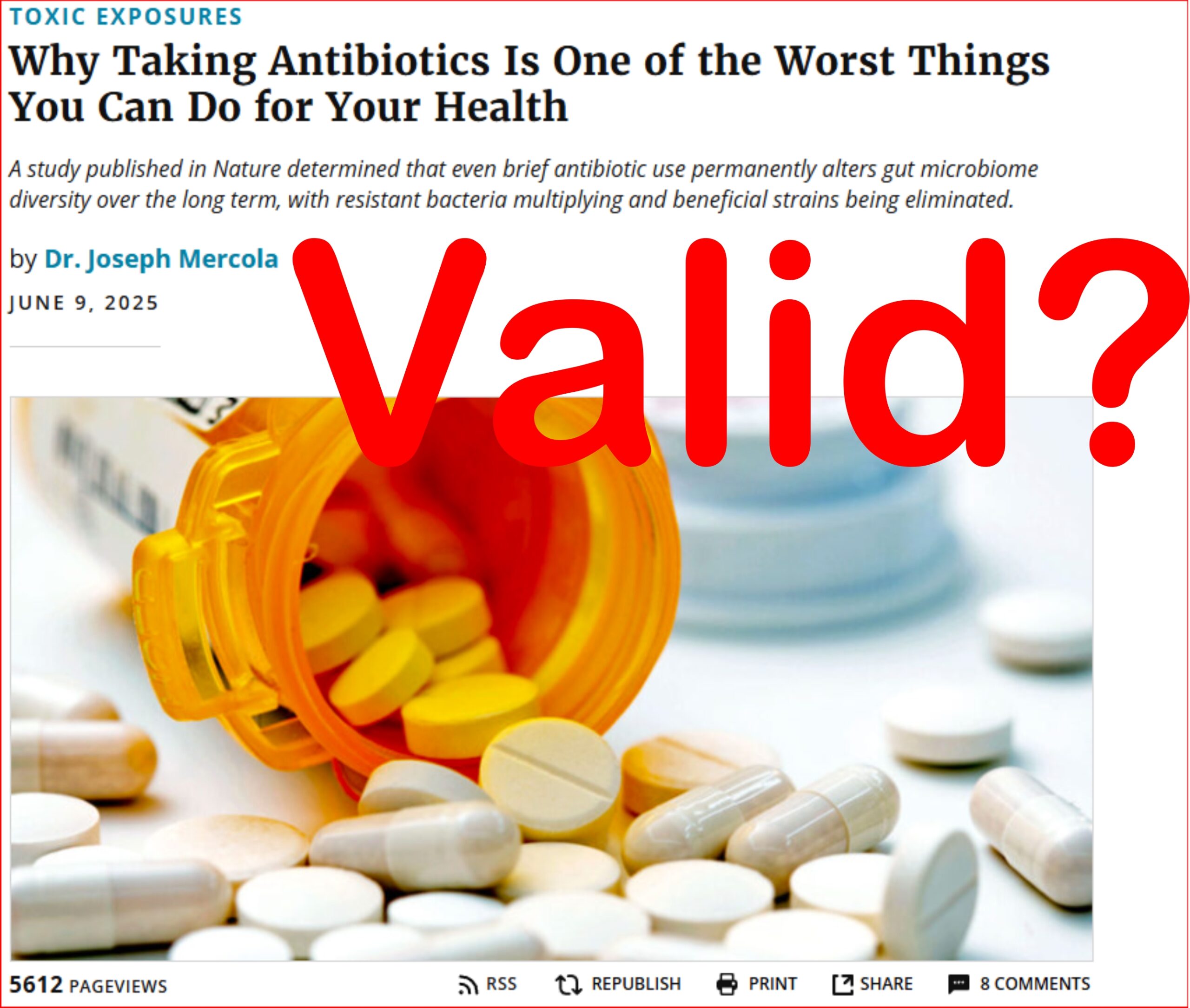
I started reading the article (link) but got bored after reading a few lines. I find it typical nonsensical narrative by medical professionals to sell fear to promote their “science” and products/services with convoluted and dodgy narratives.
For example, consider the first two words of the article “Antibiotic abuse.” Of course, the abuse of anything can be detrimental and must be avoided, but that does not mean it should be avoided all the time, including for its proper use. There is a definite need for antibiotics, and they have been used successfully for very long periods.
@ “According to the CDC, 2.8 million cases of antibiotic-resistant infections are diagnosed yearly, and 35,000 people die from them …” Citing the CDC claim is of limited authenticity of validity, as recently, the CDC has been under scrutiny for providing false or invalid reporting.
Next, are the narratives referring to “intrinsic resistance, acquired resistance, genetic change, DNA transfer.” These are all chemicals and chemistry/science terms, along with antibiotics, about which doctors have no knowledge or training. Therefore, it can be said with almost certainly that these are scientifically false or unproven narratives. It is like the hoopla about viruses and vaccines based on a genetic and DNA narrative, which has clearly been shown to be fraudulent.
Therefore, I suggest that medical professionals limit their practice and claims to the training and education they have received and refrain from engaging in science that has not been taught or learned – noting that a medical degree, such as M.D., is not a science degree.
An M.D. degree is not a science degree! (link)
Unlawful Science Practices By Physicians (link)