For some time, many of you have been following my writing and discussions here on Facebook and on my blog. Over the years, I have tried to raise important questions about science, medicine, and how scientific claims are presented to the public. These discussions have sometimes been challenging, sometimes controversial, but always focused on one goal: to understand what real science is and how it should be applied to medicine.

Now that my book, “Not Science. Not Scientists.” (link), has been published and is available for purchase. I have decided to launch a Substack platform where I can write more regularly, more professionally, and in greater depth.

I will continue to post on Facebook and maintain my blog, but Substack will become the main platform for publishing and discussing my articles. The reason is simple. Serious discussions are often difficult on social media platforms, where thoughtful debate is frequently interrupted by personal attacks, ad hominem comments, and ridicule instead of scientific discussion. Important topics require careful explanation, evidence, and logical argument — something that is not always possible in short social media posts.

(more…)
Article Review: When Winning Requires Sacrifice (link)

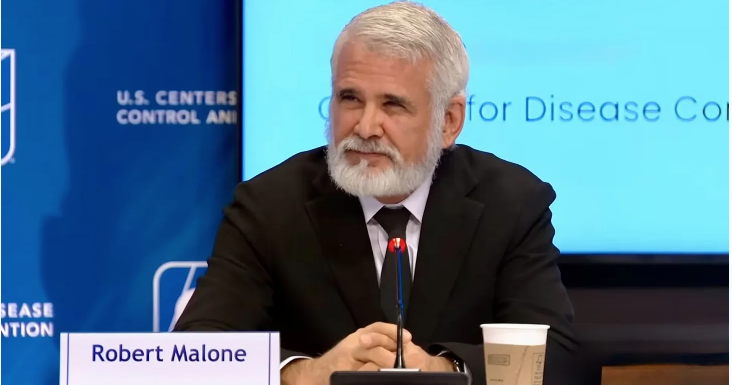
I read the article When Winning Requires Sacrifice with interest, but also with some confusion. At first, it appeared to be a story about Dr. Robert Malone, his time on the ACIP committee, and how he was not respected and eventually forced to leave. However, this is not really a story about one man or one committee. It is a story about something much bigger: the use of the word “science” in medicine, and whether what is called medical science today actually meets the definition of science in the first place.

One sentence in the article stood out to me: “The need for honest science hasn’t gone anywhere.” This sentence sounds reasonable and reassuring, but it raises a very serious question: What is “honest science,” and who decides what science is?

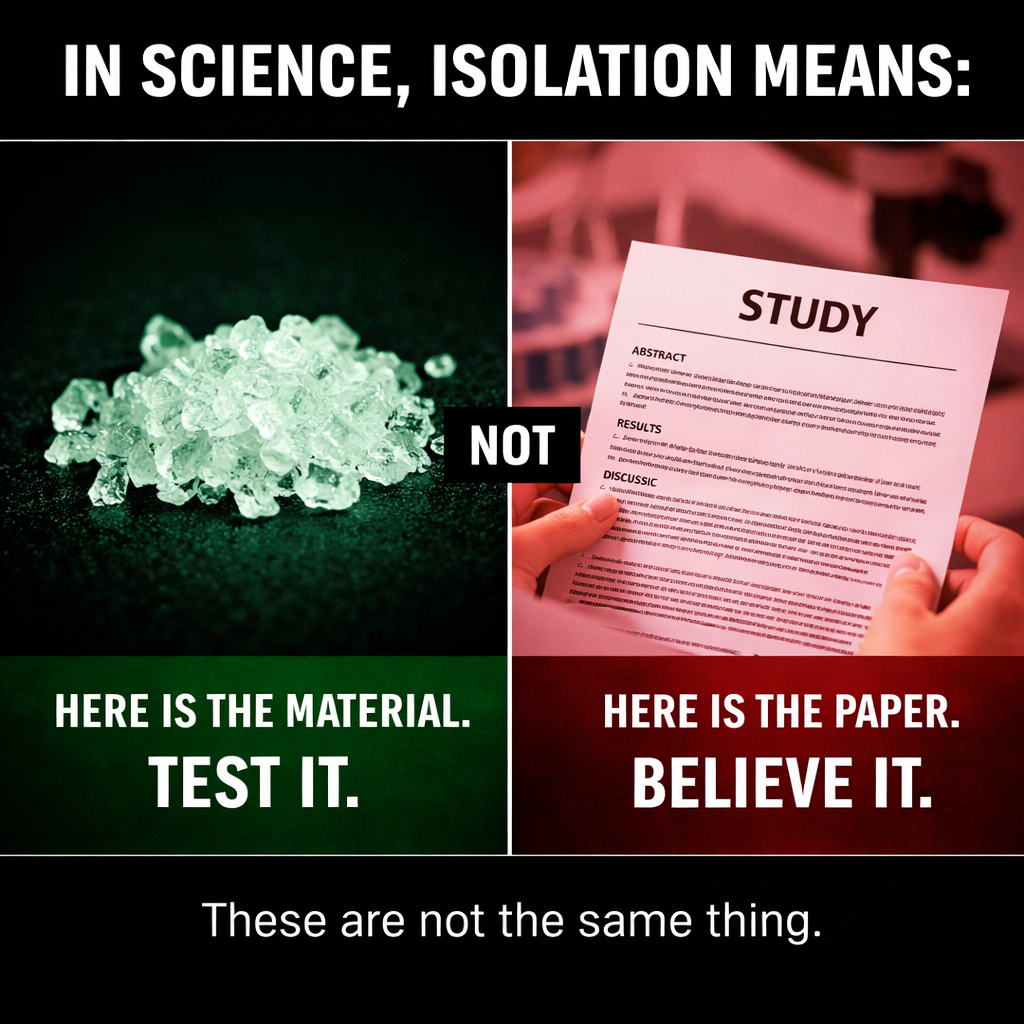
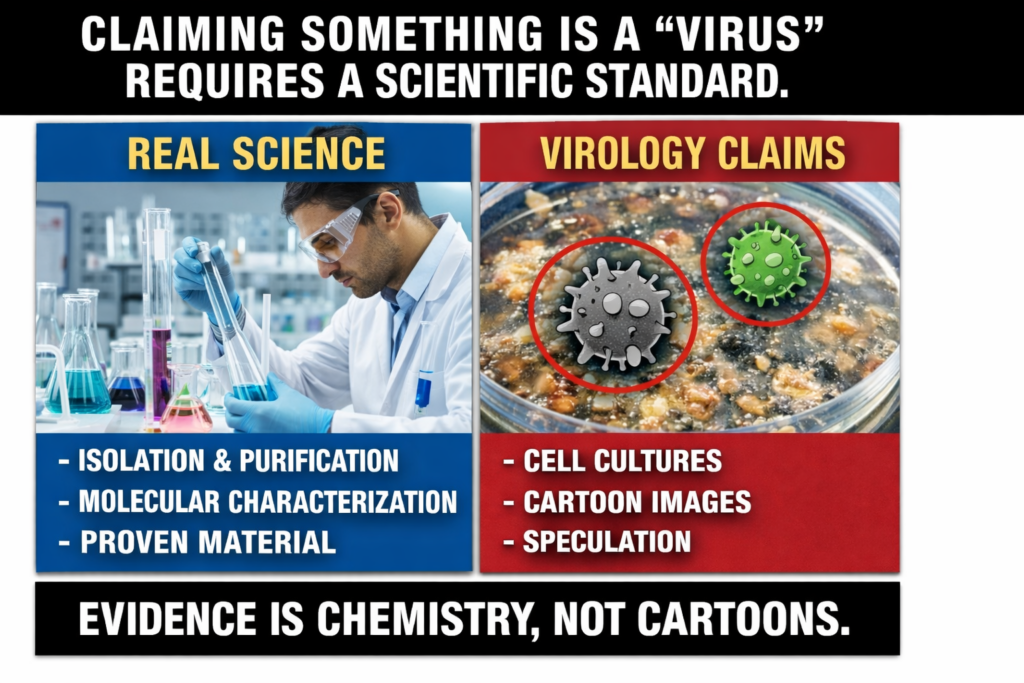
From a scientific perspective, medicines, vaccines, proteins, RNA, and mRNA are all chemical substances. Any claim about their existence, safety, toxicity, or effectiveness must therefore be established using the principles of chemistry and analytical science. In real science, before any substance can be studied, tested, or discussed, it must first be isolated, purified, and fully chemically characterized. This is standard practice in chemistry and physics and forms the foundation of scientific work.

(more…)

We are often told to trust the experts, trust the institutions, and trust the science. But what happens when the experts are not trained in science, the institutions are not truly scientific institutions, and what is presented as “science” is not science in the strict sense of the word? That is when a web of deception is created—so complex and so widely accepted that even politicians fall into it. What we are witnessing today in the debates about viruses, vaccines, and modern medicine is not a scientific debate, but a conflict of authority, credentials, and narratives, all presented under the powerful name of “science.”

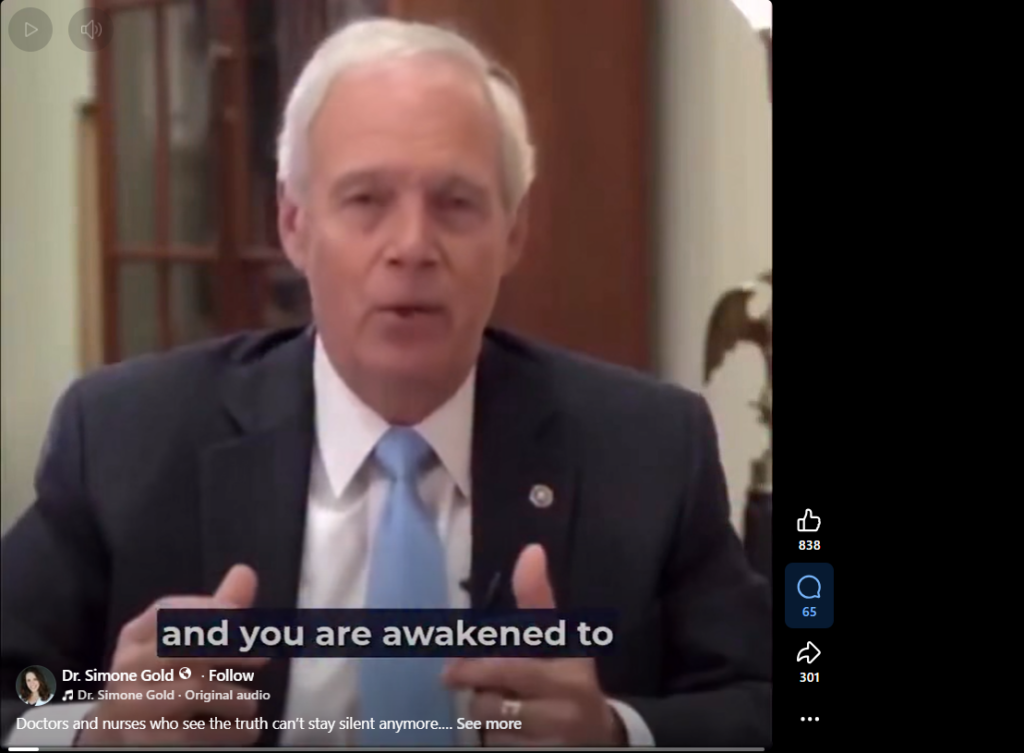
I recently listened to a short clip of Senator Johnson referring to physicians and other medical experts who are now speaking against mainstream medical experts who promote and support vaccines (link). What struck me was not the disagreement itself, but the deeper problem behind it. Political authorities, like most people, assume that doctors are capable of understanding and resolving issues related to viruses and vaccination. They do not realize that the issue is fundamentally about science and scientific research, not clinical practice. In this respect, both sides are working outside their actual training and credentials.

(more…)

It is interesting to observe that the question of viruses has increasingly become a debate between two opposing camps: the “viruses are real” group and the “viruses are not real” group. What is particularly interesting is that this debate does not usually take place among experts in the foundational sciences such as chemistry and physics, but rather within medicine, virology, and biology, and among followers of these fields. This raises an important question: why has this become a debate at all? In true science, the existence of a physical entity is not decided by debate, opinion, or consensus, but by physical evidence that can be demonstrated, measured, and independently verified.

The core of the issue is that medicine and biology often present themselves as sciences in the same sense as chemistry and physics, even though their methods and training are very different. This creates confusion. The use of scientific terminology gives the impression that the work is grounded in the same scientific method used in the physical sciences. Terms such as “isolation,” “characterization,” and “validation” are used, but often they are not used in the same way as in analytical science. This difference in terminology and methodology is rarely explained clearly to the public or even to experts.

(more…)

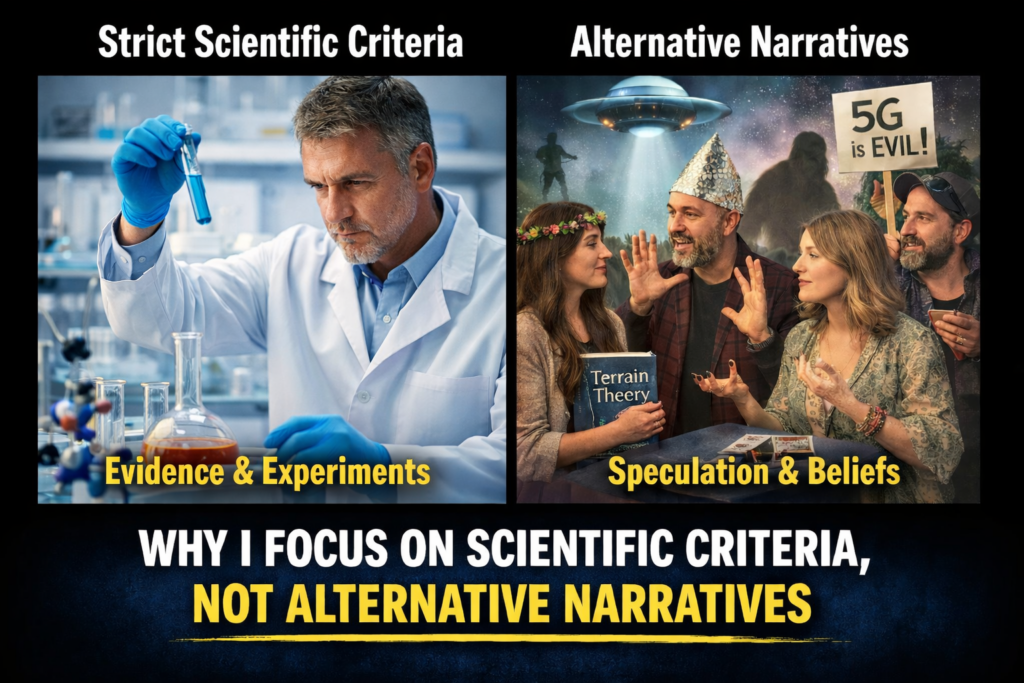
Public discussions about viruses, vaccines, and modern medicine often move quickly into competing narratives. Some defend the conventional medical view, while others introduce alternative explanations such as terrain theory or statistical critiques of viral pandemics. While these debates may appear to challenge the mainstream view, they often leave a deeper question unaddressed: what constitutes a valid scientific demonstration in the first place?

A recent comment illustrates this dynamic well. The commenter largely agreed that proper scientific criteria—such as isolation, purification, and full characterization of a claimed entity—are rarely discussed in virology in the rigorous sense expected in the physical sciences. However, the commenter suggested that focusing solely on these criteria may not persuade many people and that broader arguments, such as statistical evidence or terrain-based explanations, might be more effective.

The comment reads as follows:

(more…)

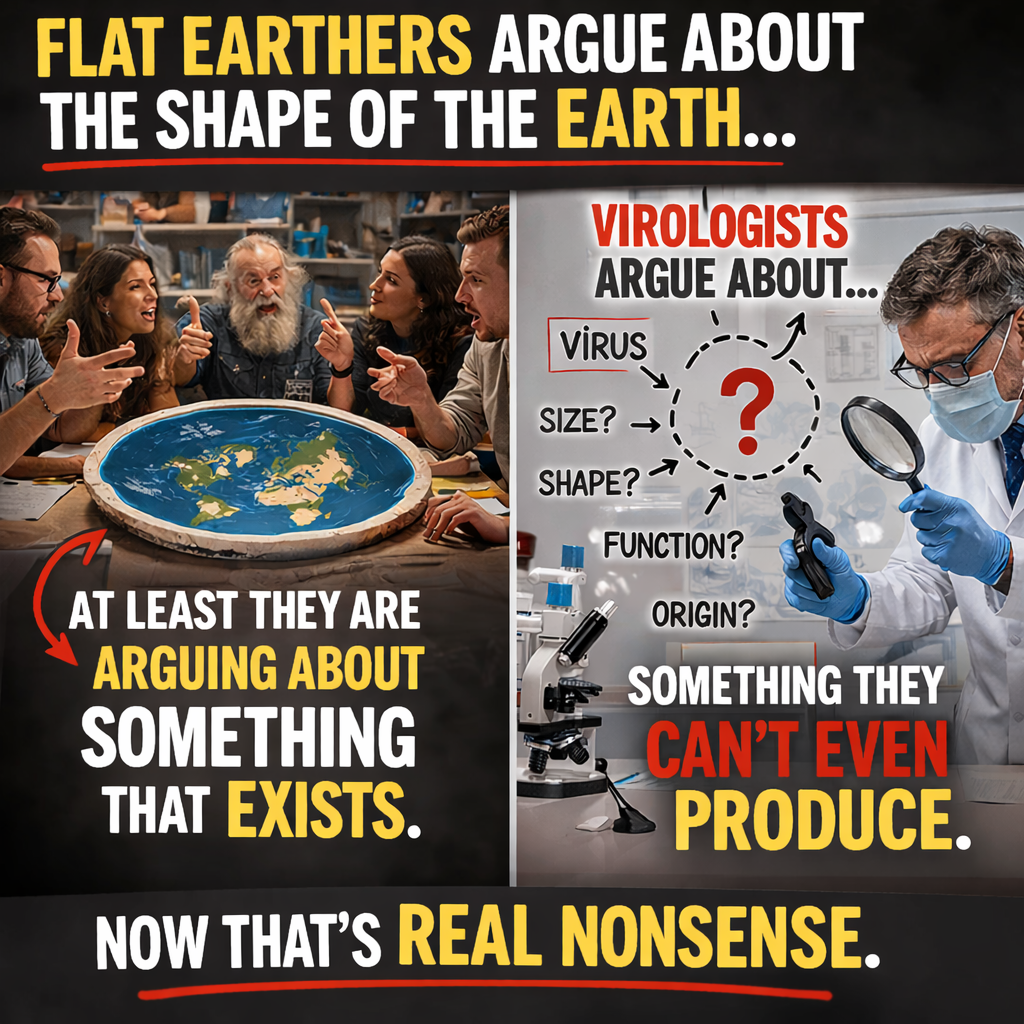
Virus believers are arguably worse than flat-Earthers. Flat-Earthers, at least, are debating the shape of something that unquestionably exists—the Earth. Their disagreement concerns the form of a real, observable object.

In contrast, virologists and their supporters debate the properties, behavior, and mechanisms of entities that, from this perspective, have never been properly demonstrated to exist as isolated, purified, and fully characterized physical objects. Instead of working with a clearly established entity, they rely on indirect interpretations and assumptions about what may be present in complex biological materials (e.g., cell culture or debris).

This creates a situation in which elaborate theories, classifications, and debates develop around something that has not been demonstrated in the strict scientific sense required for physical entities. In that sense, the discussion becomes even more problematic than flat-Earth claims: at least the flat-Earth debate concerns the geometry of a real planet, whereas the virus debate centers on entities whose existence remains unproven.

Yet they present themselves as science experts or scientists—an honorable and prestigious title. What a shame!

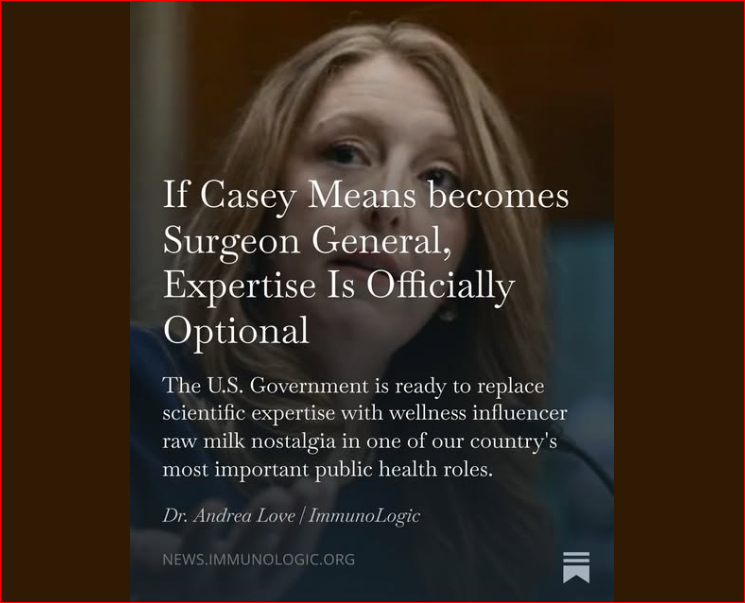
The article, “If Casey Means becomes Surgeon General, Expertise Is Officially Optionallink), discussing the possibility of Dr. Casey Means becoming U.S. Surgeon General, raises concerns about her qualifications. The central criticism is that she did not complete a medical residency and therefore lacks sufficient expertise to assess and guide public health policy. While this argument may appear reasonable at first glance, it reflects a deeper misunderstanding of the nature of medical scientific expertise.

The core issue is the widespread assumption that medical doctors are scientific experts. In reality, physicians are primarily trained as clinicians. Medical education focuses on diagnosis, treatment, and patient management. A typical medical degree involves approximately four years of training centered on recognizing symptoms, applying diagnostic frameworks, and prescribing therapies. It is not designed to train students as research scientists or as experts in the foundational scientific disciplines.

(more…)

In recent discussions, particularly on social media, I have encountered a recurring response to my critique of virology: “Stay within your field. Your chemistry knowledge does not translate to virology.”

At first glance, this may sound reasonable. Specialization matters. Expertise matters. However, this response fundamentally misunderstands the nature of the issue being raised.

This Is Not About Virology — It Is About Scientific Claims

I am not attempting to practice virology. I am not describing clinical medicine. I am not proposing alternative biological models.

The issue is far more basic.

The claim under examination is the existence of viruses as physically isolated, purified, and fully characterized entities. That question does not belong exclusively to virology or medical practice. It belongs to science in its strict analytical sense — particularly to chemistry and the physical sciences.

(more…)

Let me try another way in the hope that it will be clearer for both the public and experts to see where the confusion lies.

Imagine that I ask to see the actual treasure. Instead, I am handed a map and told that the treasure exists. I am even declared wealthy on that basis. However, when I attempt to deposit this supposed wealth, I am told: “Bring the treasure, not the story.” A map may describe where something is claimed to be, but it does not demonstrate that the treasure itself is real.

In the same way, presenting models, protocols, genomic sequences, or culture systems is not the same as presenting an isolated, purified, and fully characterized physical entity. A description is not the entity. A procedure is not proof of existence.

You keep presenting maps — protocols, models, reconstructed sequences, and complex mixtures — and declaring that the treasure exists. But a map is not the treasure. If a virus truly exists as a discrete physical entity, then it should be possible to present it as such: isolated, purified, and fully characterized. Instead, what is often offered are descriptions and inferred frameworks, with the assumption that the entity must be there.

Science operates on demonstrable physical evidence, not narrative structures. If all that can be shown are maps — genetic reconstructions, modeled particles, or interpretive systems — then one must ask whether the field has mistaken the map for the treasure.

This may not stem from bad intent. It may simply reflect that generations have been trained to accept description as proof of existence. But from a strict methodological standpoint, claims of existence require direct, reproducible, and tangible evidence.

A map does not prove the treasure exists. It only suggests where it is supposed to be.

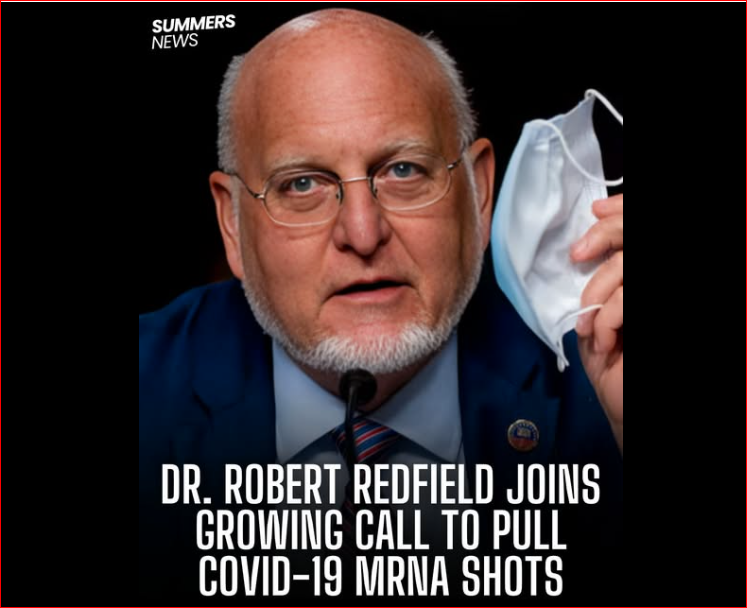
“Former CDC Director Robert Redfield has officially joined a massive coalition of over 81,000 physicians, scientists, concerned citizens, and 240 government officials demanding that COVID-19 mRNA injections be pulled from the market.

Documented in a peer-reviewed study, this growing movement raises urgent questions about vaccine safety, oversight, and public health policy. The list keeps expanding as experts and officials continue speaking out (link).”


This development may appear to be good news, and I support any genuine effort toward accountability and scrutiny. However, it is important to recognize the implicit message within such claims and requests

Calling for the withdrawal of mRNA vaccines does not address the deeper foundational issue. It still operates within — and therefore reinforces — the prevailing framework of virology and “medical science” as established science. In my view, that framework itself is the core problem. It is the conceptual system that produced both the virus narrative and the mRNA vaccine response.

By focusing solely on stopping mRNA vaccines, the discussion indirectly affirms the underlying assumptions: that the virus is established as described, that the illness model is valid as presented, and that vaccine-based intervention is the appropriate paradigm. This, I argue, leaves the fundamental scientific questions untouched.

From a strict, foundational scientific perspective, the public should be demanding something far more substantial: a critical reassessment of the biological and medical frameworks promoted as science but, in my opinion, do not meet the standards of the physical sciences. Such a reassessment would not only halt problematic vaccine programs but also require a rigorous examination of broader claims about viruses, associated illnesses, and their proposed treatments.

Addressing only one product — even an mRNA vaccine — treats a symptom of a much larger structural issue. If the goal is genuine scientific integrity, then the focus must shift from individual interventions to the foundational assumptions upon which they are built.