It is interesting to observe that the question of viruses has increasingly become a debate between two opposing camps: the “viruses are real” group and the “viruses are not real” group. What is particularly interesting is that this debate does not usually take place among experts in the foundational sciences such as chemistry and physics, but rather within medicine, virology, and biology, and among followers of these fields. This raises an important question: why has this become a debate at all? In true science, the existence of a physical entity is not decided by debate, opinion, or consensus, but by physical evidence that can be demonstrated, measured, and independently verified.
The core of the issue is that medicine and biology often present themselves as sciences in the same sense as chemistry and physics, even though their methods and training are very different. This creates confusion. The use of scientific terminology gives the impression that the work is grounded in the same scientific method used in the physical sciences. Terms such as “isolation,” “characterization,” and “validation” are used, but often they are not used in the same way as in analytical science. This difference in terminology and methodology is rarely explained clearly to the public or even to experts.
Question: The covid vaccine makers claim that the mrna sends a code to the cell to manufacture spike proteins. We don’t have an isolated virus or an isolated spike protein. So what is the code actually telling the cells? Is there a code? What are the vaccinologists actually seeing under their “microscopes?” (link)
Response:
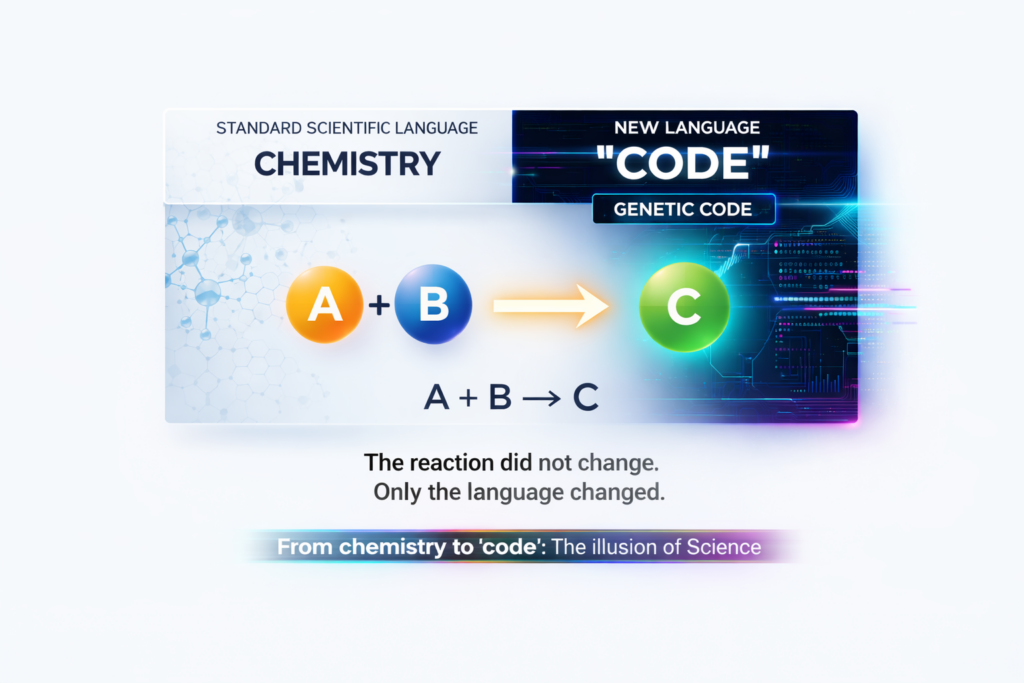
Before discussing mRNA “code,” one must first clarify what the word “code” actually means in scientific terms. The term creates the impression of something highly advanced and complex, often beyond the understanding of non-experts. However, in reality, the so-called “code” refers to a chemical sequence in a molecule called mRNA, which is claimed to cause the production of a protein in the body. When stripped of technical language, the entire process can be described as a series of chemical reactions between chemical compounds. Therefore, the subject should be examined from a chemical and analytical science perspective, not merely described in medical terminology.
In principle, or in theory, the word “code” refers to a specific chemical compound called mRNA. This compound is said to instruct another chemical component in the body (DNA) to produce another chemical compound, a protein (for example, the spike protein). The idea is that this process simulates the arrival of a foreign protein in the body, which is assumed to be part of a virus. The body then mounts a defense by producing antibodies (chemical compounds) that neutralize the protein and prepare the body to respond to future exposures.
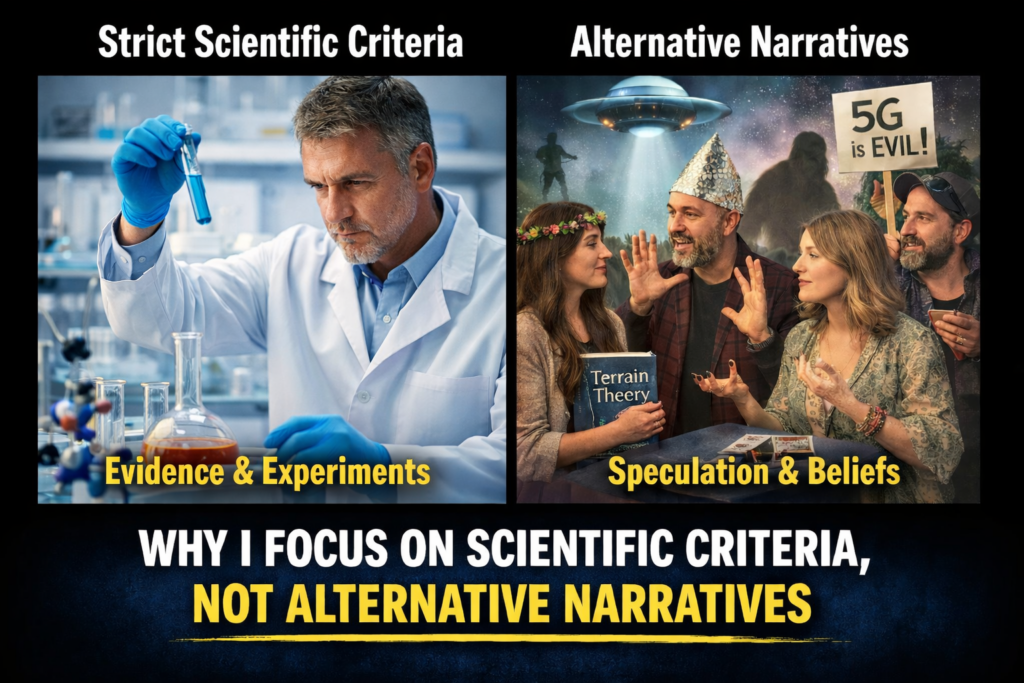
Public discussions about viruses, vaccines, and modern medicine often move quickly into competing narratives. Some defend the conventional medical view, while others introduce alternative explanations such as terrain theory or statistical critiques of viral pandemics. While these debates may appear to challenge the mainstream view, they often leave a deeper question unaddressed: what constitutes a valid scientific demonstration in the first place?
A recent comment illustrates this dynamic well. The commenter largely agreed that proper scientific criteria—such as isolation, purification, and full characterization of a claimed entity—are rarely discussed in virology in the rigorous sense expected in the physical sciences. However, the commenter suggested that focusing solely on these criteria may not persuade many people and that broader arguments, such as statistical evidence or terrain-based explanations, might be more effective.
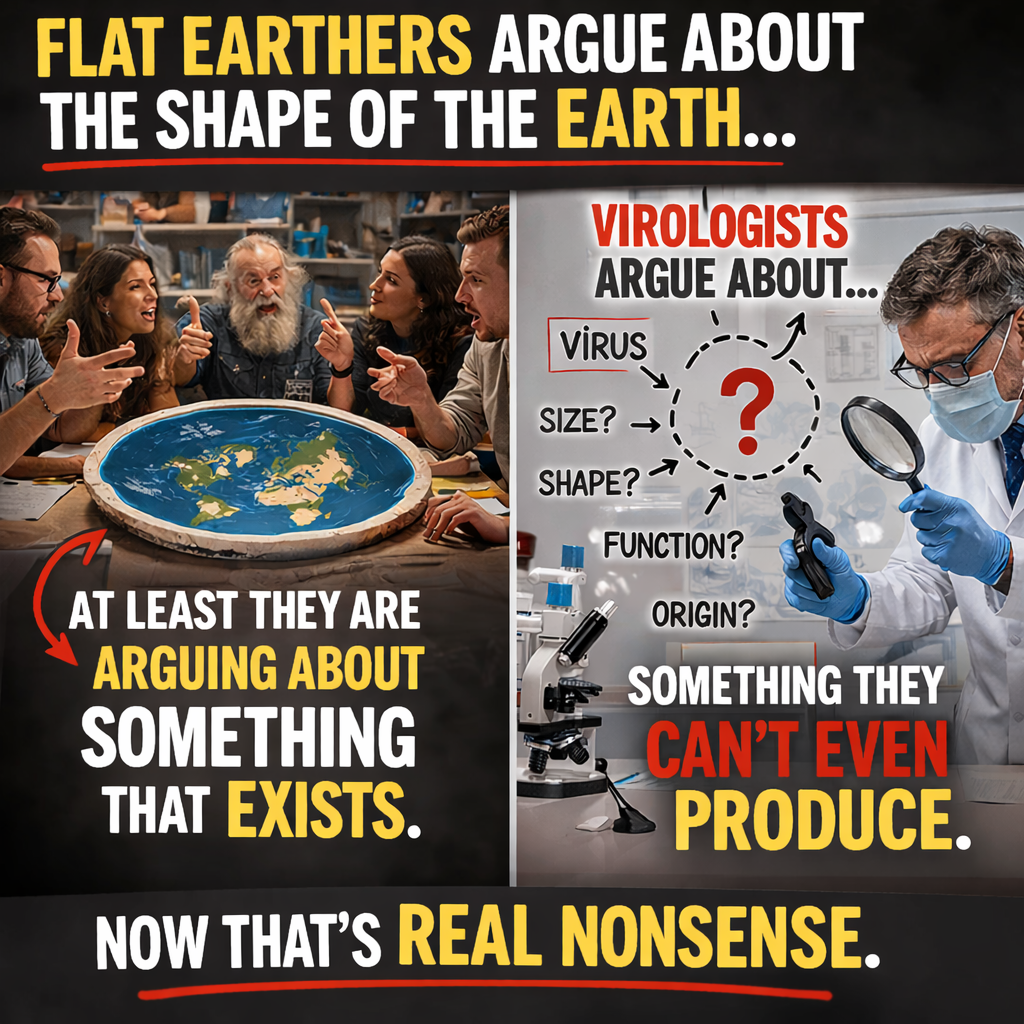
Virus believers are arguably worse than flat-Earthers. Flat-Earthers, at least, are debating the shape of something that unquestionably exists—the Earth. Their disagreement concerns the form of a real, observable object.
In contrast, virologists and their supporters debate the properties, behavior, and mechanisms of entities that, from this perspective, have never been properly demonstrated to exist as isolated, purified, and fully characterized physical objects. Instead of working with a clearly established entity, they rely on indirect interpretations and assumptions about what may be present in complex biological materials (e.g., cell culture or debris).
This creates a situation in which elaborate theories, classifications, and debates develop around something that has not been demonstrated in the strict scientific sense required for physical entities. In that sense, the discussion becomes even more problematic than flat-Earth claims: at least the flat-Earth debate concerns the geometry of a real planet, whereas the virus debate centers on entities whose existence remains unproven.
Yet they present themselves as science experts or scientists—an honorable and prestigious title. What a shame!
Let me try another way in the hope that it will be clearer for both the public and experts to see where the confusion lies.
Imagine that I ask to see the actual treasure. Instead, I am handed a map and told that the treasure exists. I am even declared wealthy on that basis. However, when I attempt to deposit this supposed wealth, I am told: “Bring the treasure, not the story.” A map may describe where something is claimed to be, but it does not demonstrate that the treasure itself is real.
In the same way, presenting models, protocols, genomic sequences, or culture systems is not the same as presenting an isolated, purified, and fully characterized physical entity. A description is not the entity. A procedure is not proof of existence.
You keep presenting maps — protocols, models, reconstructed sequences, and complex mixtures — and declaring that the treasure exists. But a map is not the treasure. If a virus truly exists as a discrete physical entity, then it should be possible to present it as such: isolated, purified, and fully characterized. Instead, what is often offered are descriptions and inferred frameworks, with the assumption that the entity must be there.
Science operates on demonstrable physical evidence, not narrative structures. If all that can be shown are maps — genetic reconstructions, modeled particles, or interpretive systems — then one must ask whether the field has mistaken the map for the treasure.
This may not stem from bad intent. It may simply reflect that generations have been trained to accept description as proof of existence. But from a strict methodological standpoint, claims of existence require direct, reproducible, and tangible evidence.
A map does not prove the treasure exists. It only suggests where it is supposed to be.
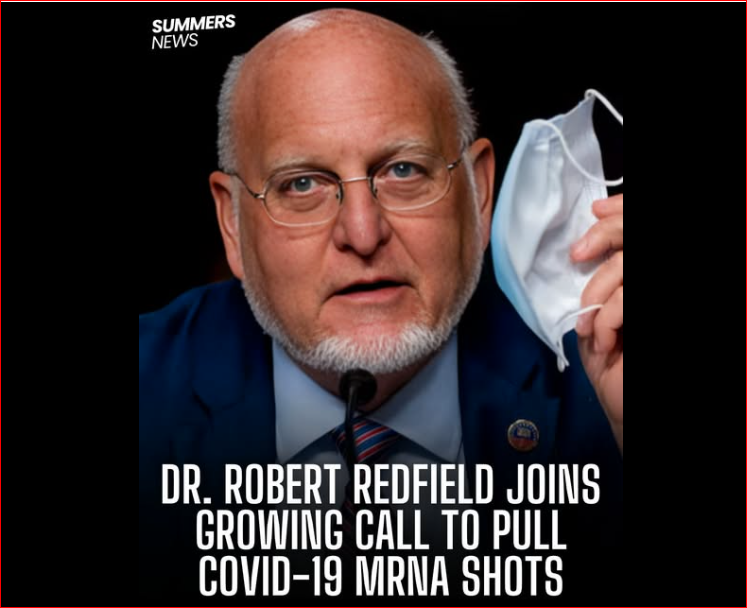
“Former CDC Director Robert Redfield has officially joined a massive coalition of over 81,000 physicians, scientists, concerned citizens, and 240 government officials demanding that COVID-19 mRNA injections be pulled from the market.
Documented in a peer-reviewed study, this growing movement raises urgent questions about vaccine safety, oversight, and public health policy. The list keeps expanding as experts and officials continue speaking out (link).”
This development may appear to be good news, and I support any genuine effort toward accountability and scrutiny. However, it is important to recognize the implicit message within such claims and requests
Calling for the withdrawal of mRNA vaccines does not address the deeper foundational issue. It still operates within — and therefore reinforces — the prevailing framework of virology and “medical science” as established science. In my view, that framework itself is the core problem. It is the conceptual system that produced both the virus narrative and the mRNA vaccine response.
By focusing solely on stopping mRNA vaccines, the discussion indirectly affirms the underlying assumptions: that the virus is established as described, that the illness model is valid as presented, and that vaccine-based intervention is the appropriate paradigm. This, I argue, leaves the fundamental scientific questions untouched.
From a strict, foundational scientific perspective, the public should be demanding something far more substantial: a critical reassessment of the biological and medical frameworks promoted as science but, in my opinion, do not meet the standards of the physical sciences. Such a reassessment would not only halt problematic vaccine programs but also require a rigorous examination of broader claims about viruses, associated illnesses, and their proposed treatments.
Addressing only one product — even an mRNA vaccine — treats a symptom of a much larger structural issue. If the goal is genuine scientific integrity, then the focus must shift from individual interventions to the foundational assumptions upon which they are built.
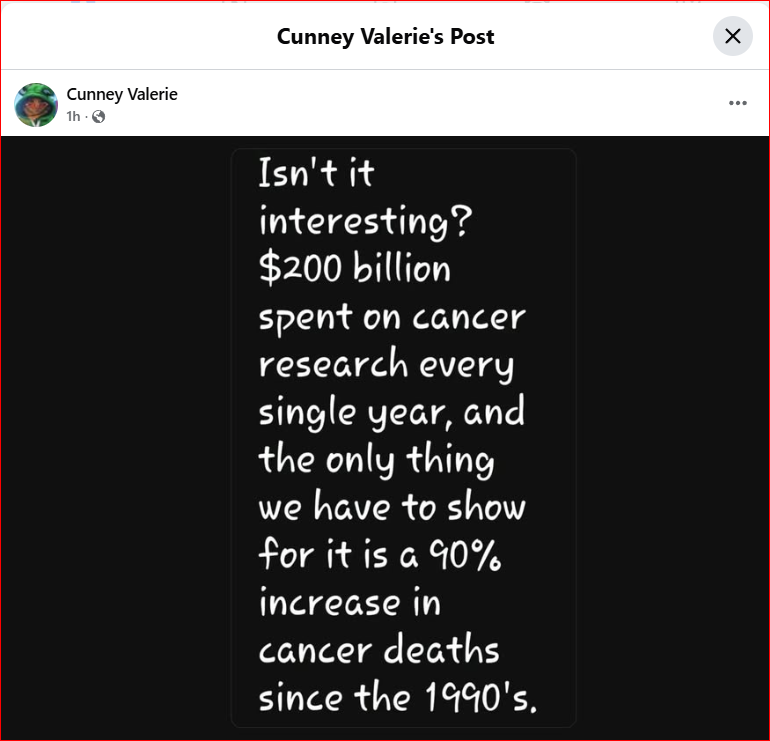
“Is it not interesting? Over $200 billion spent on cancer research every year — and a reported 90% increase in cancer deaths since the 1990s.”
Whether the numbers are framed precisely or rhetorically, the sentiment behind such a meme reflects a growing public unease. A massive financial investment is assumed to yield proportional scientific and health benefits. When that outcome does not appear obvious, questions begin to surface. But the real question is not whether billions are spent. The real question is whether the underlying model of disease is grounded in physical science or constructed within a self-reinforcing clinical framework.
Billions of dollars are spent each year on what is confidently described as medical research. The public hears the word “research” and assumes science in its pure form — rigorous, measurable, grounded in chemistry and physics. The label itself carries authority. Yet the deeper methodological foundation is rarely examined. Does medical research operate according to the standards of science, or has medicine developed a parallel structure that resembles science without consistently adhering to its core requirements?
The central problem in modern medicine is not the pharmaceutical industry. It is medicine itself—specifically physicians—who have come to treat stories as science and enforce those stories as fact.
What gives medicine this power is not evidence, but classification. When physicians collectively label something as “science,” it is accepted as such by governments, regulators, courts, media, and the public. Once that label is applied, questioning is no longer permitted. Industry does not define this reality; it responds to it.
Physicians hold the ultimate trump card: the power to treat narrative as science.
How the Story Was Created
The modern story of viruses, vaccines, and mass vaccination did not originate with pharmaceutical manufacturers. It originated within medicine and biology, promoted by physicians under the banner of “medical science.”
The claim that vaccines are “safe and effective” was not invented by industry. It was—and continues to be—made by physicians, their professional associations, committees, and advisory bodies, all presenting themselves as scientific authorities.
Pharmaceutical companies simply manufactured products that physicians asserted were scientifically developed, scientifically validated, and 95% effective, despite the absence of foundational scientific requirements.
The collapse of Theranos remains one of the clearest modern examples of what happens when bold medical claims are finally subjected to genuine scientific scrutiny. Founded in 2003 and operating for more than a decade, Theranos rose rapidly in the early 2010s, reaching a peak valuation of roughly $9 billion. At its height, the company attracted elite investors, major corporate partnerships, and extraordinary political credibility.
Its board and supporters included some of the most influential figures in U.S. public life, among them George Shultz and Henry Kissinger. Such endorsements conferred instant legitimacy. The claims were celebrated, the machines were photographed and publicly displayed, and skepticism was muted by authority rather than answered by evidence.
Theranos promised a medical revolution: hundreds of laboratory tests from a single drop of blood, performed on sleek proprietary devices presented as cutting-edge technology. These machines became icons of innovation—despite never being shown to work as claimed.
Behind the scenes, Theranos relied on conventional laboratory equipment while its own devices failed to produce reliable results. Data were inconsistent, validation was absent, and basic principles of chemistry and analytical science were ignored. When whistleblowers and investigative reporting forced independent scrutiny, the illusion collapsed rapidly. Regulators intervened, laboratories were shut down, and partnerships dissolved.
The legal reckoning followed. Elizabeth Holmes, founder and CEO of Theranos, was convicted in 2022 on multiple counts of fraud for misleading investors about the company’s technology and was sentenced to more than 11 years in federal prison. Her business partner, Ramesh Balwani, was separately convicted and sentenced to nearly 13 years. Theranos did not fail because it dared to innovate; it failed because its claims could not withstand scientific validation.
Yesterday, one of my Facebook posts reached nearly 80,000 views in just over 24 hours (link). The volume and intensity of the responses suggest that a nerve was touched. When deeply held beliefs—particularly those labeled as “unquestionable” or “settled” science—are challenged, emotional reactions are inevitable. Such responses are entirely predictable.
Most replies did not engage with the argument’s substance. Instead, they relied on insults, ridicule, and attempts to dismiss my credentials. This is a common tactic when belief systems are threatened: attack the messenger rather than examine the evidence.
The most frequent rebuttal is familiar: “Read the medical literature—there are thousands of papers proving viruses exist.”
The problem is not the quantity of papers. It is how they are read—and what they actually show.
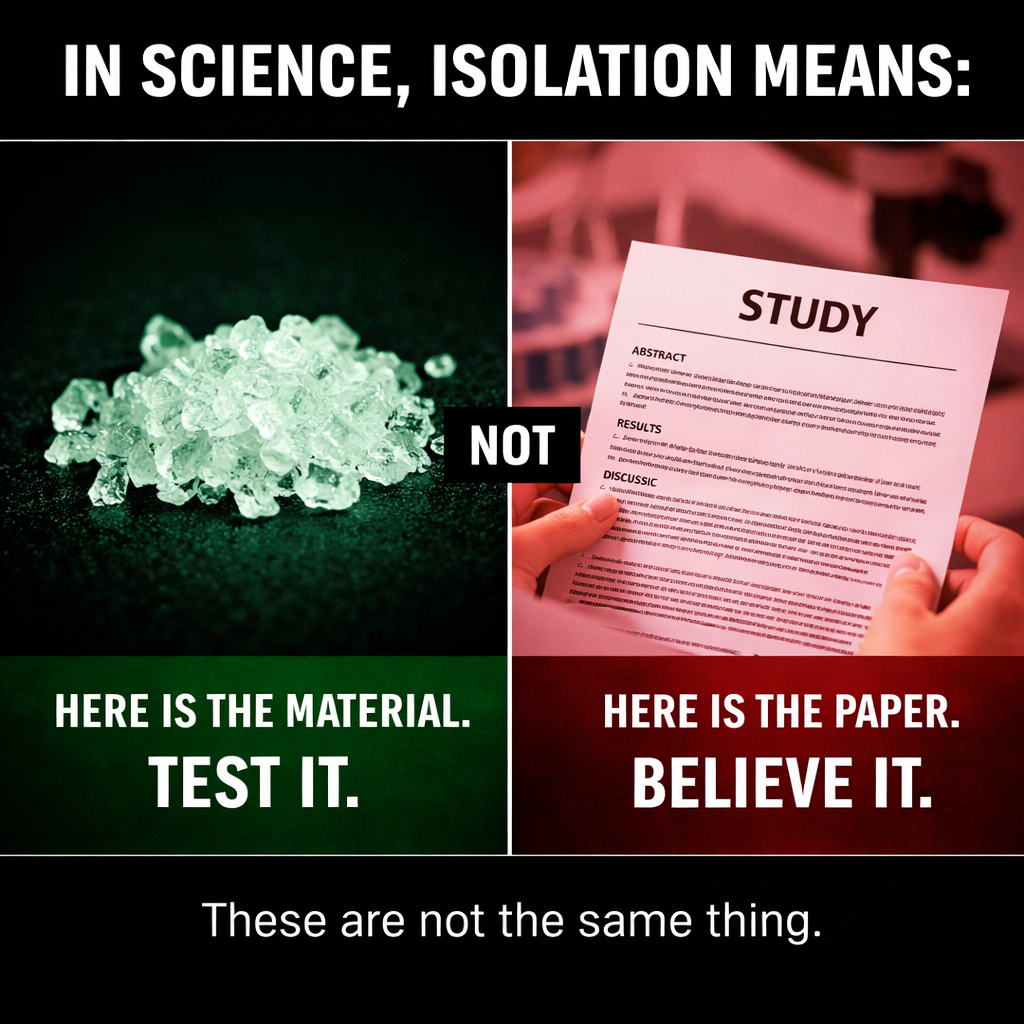
Medical and biology/virology papers do not work with isolated or purified viruses. Instead, they rely on what is termed a “virus isolate,” which is a complex mixture of cell debris, genetic fragments, proteins, additives, and other contaminants derived from cell cultures—without demonstrating that any presumed virus is present within that mixture. Labeling such material a “virus” does not establish its existence. Repeating an assumption does not make it evidence.
In true science—particularly chemistry—existence requires isolation, purification, and physical and chemical characterization. Without these steps, claims remain presumptive. This is not a minor technical detail; it is the foundation of scientific validation, which is absent. The reason this error persists is that many working in medicine and biology are not trained in science, where material identification is mandatory and rigorously enforced.
This leads to a conclusion that many find uncomfortable but unavoidable when scientific standards are applied:
Viruses do not exist; therefore, they cannot cause infection. Medical and biological experts do not work with isolated or purified viruses; they presume them. Consequently, vaccines are irrelevant and invalid as treatments or products. This is not an opinion, but a scientific claim based on the principles of true science—chemistry.
Insults will not change this. Appeals to authority will not change this. Pointing to medical or biology (peer-reviewed) publications will not change this.
The reality is that modern medicine and biology routinely borrow the language of science while ignoring its standards and requirements, using chemistry as a tool while disregarding its rules. From this misuse emerges an imagined entity called “the virus.”
This practice of false science needs to stop. The sooner true scientific rigor is restored, the sooner meaningful progress—rather than belief-driven consensus—can begin.