
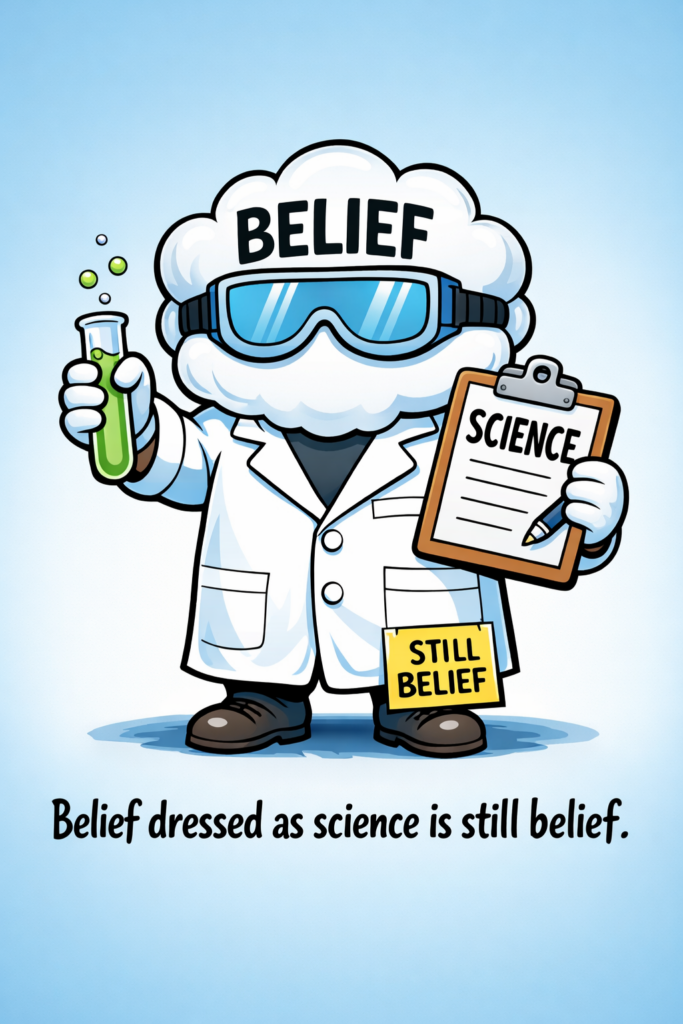
It is both fascinating and deeply frustrating that physicians insist medicine is a highly specialized, science-based domain—one in which only physicians are permitted to speak, be heard, or participate. Any external engagement is treated as illegitimate and, in some cases, subject to harsh penalties. Even individuals with extensive experience working with medicines as chemical entities—myself included—are prohibited from independently accessing medicinal products, even as chemical substances for legitimate scientific investigation, let alone for research purposes, unless they submit to the authority and approval of what physicians label as “science.”
At the same time, physicians freely claim authority to conduct scientific research, make sweeping scientific assertions, develop diagnostic tests, and control substantial research funding—despite lacking formal training, education, or expertise in core scientific disciplines, particularly chemistry. They routinely dismiss or overrule the work of trained scientists, declaring such research “irrelevant” or “unsupported,” and actively prevent it from being examined, debated, or further investigated. It is clearly a case of malpractice that needs to be investigated.
When this contradiction is highlighted, the response is predictable: physicians assert sufficient scientific competence based on limited undergraduate exposure to science, claiming this grants them the authority to evaluate, critique, and reject decades of rigorous scientific research based on experience and claims by trained chemists and physicists. Such a position fails under rigorous scientific scrutiny.
A clear example is virology and modern medical practice, which rely heavily on PCR testing (a science/chemistry subject), which is treated as a gold standard for virus detection and diagnosis. From the perspective of true science, this test is fundamentally invalid, as it was developed without a proper reference standard: no isolated, purified, and fully characterized virus or viral RNA. Any analytical method developed without a reference standard lacks scientific merit and must be rejected outright. Yet medical practitioners dismiss this basic scientific requirement, despite it being well beyond their training and expertise.
Even more concerning, there is no valid scientific evidence demonstrating the existence of viruses as isolated physical entities, yet persistent claims are made that viruses exist and have been isolated—claims that remain unsubstantiated. The published literature, widely promoted as “science-based,” is built upon this assumed, unverified entity and is therefore not science in any rigorous sense. Such assertions can arise only from a fundamental ignorance of scientific principles, clearly reflected in the lack of formal scientific training and methodological rigor within medical education and practice. Despite this, medical professionals present themselves as authorities on science—a role for which they have shown no scientific foundation. This constitutes a false, and arguably fraudulent, claim of scientific authority.
This reveals the core issue: modern medical practice is not science-based, but authority-based. Claims are accepted not because they meet scientific standards, but because they are issued by credentialed authorities and reinforced through repetition and institutional power. Science, in the strict sense, is largely absent. This practice must be openly exposed, challenged, and corrected.