
The collapse of Theranos remains one of the clearest modern examples of what happens when bold medical claims are finally subjected to genuine scientific scrutiny. Founded in 2003 and operating for more than a decade, Theranos rose rapidly in the early 2010s, reaching a peak valuation of roughly $9 billion. At its height, the company attracted elite investors, major corporate partnerships, and extraordinary political credibility.
Its board and supporters included some of the most influential figures in U.S. public life, among them George Shultz and Henry Kissinger. Such endorsements conferred instant legitimacy. The claims were celebrated, the machines were photographed and publicly displayed, and skepticism was muted by authority rather than answered by evidence.
Theranos promised a medical revolution: hundreds of laboratory tests from a single drop of blood, performed on sleek proprietary devices presented as cutting-edge technology. These machines became icons of innovation—despite never being shown to work as claimed.
Behind the scenes, Theranos relied on conventional laboratory equipment while its own devices failed to produce reliable results. Data were inconsistent, validation was absent, and basic principles of chemistry and analytical science were ignored. When whistleblowers and investigative reporting forced independent scrutiny, the illusion collapsed rapidly. Regulators intervened, laboratories were shut down, and partnerships dissolved.
The legal reckoning followed. Elizabeth Holmes, founder and CEO of Theranos, was convicted in 2022 on multiple counts of fraud for misleading investors about the company’s technology and was sentenced to more than 11 years in federal prison. Her business partner, Ramesh Balwani, was separately convicted and sentenced to nearly 13 years. Theranos did not fail because it dared to innovate; it failed because its claims could not withstand scientific validation.
That is precisely why the Theranos case matters far beyond the company itself.
From Theranos to Virology
What destroyed Theranos was not motive or ambition, but the failure to apply basic scientific standards. Once chemistry and laboratory science were allowed to examine the claims, the outcome was swift and decisive.
Modern virology and vaccine practice make claims of the same scientific nature—yet they have never been subjected to comparable scrutiny.
Like Theranos, virology asserts the ability to detect, characterize, and act upon microscopic entities using indirect laboratory signals. It claims specificity, causation, and accuracy. These are chemical claims, governed by principles of isolation, purification, characterization, and reproducibility—the very principles that exposed Theranos.
Yet here, the standards quietly change.
Where Theranos was required to prove that its machines worked as claimed, virology is permitted to assume the existence of its target entities. Where Theranos was forced to validate its tests against known reference materials, virology proceeds without isolated, purified, and fully characterized viral standards. Where Theranos collapsed under independent examination, virology is insulated by institutional consensus.
Vaccines inherit this unexamined foundation. Their justification depends entirely on the presumed existence of viruses and virus-specific illnesses, diagnosed through tests that rely on the same assumption-based framework. If the foundational entity is not scientifically established, the downstream logic—diagnosis, prevention, and treatment—cannot stand.
This is not a debate about policy, risk tolerance, or public messaging. It is a question of scientific legitimacy.
Theranos shows what happens when claims are tested.
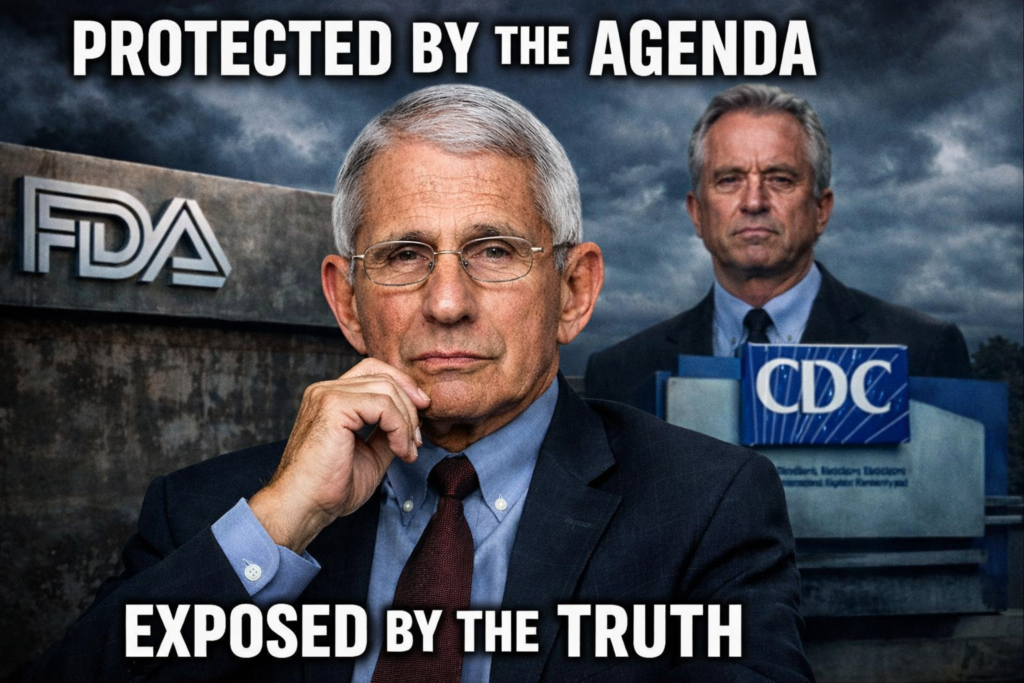
Virology shows what happens when claims are protected.
But this raises the critical question: who is protecting those claims?
The protection comes from medical practitioners who label themselves—and are publicly accepted—as scientific authorities, despite lacking the scientific training or evidence required to justify that status. This false authority is sustained not by proof, but by institutional endorsement. Professional organizations and regulatory bodies provide cover, allowing unsupported claims and lowered standards to persist. Authority replaces validation, and non-existent scientific credentials are used to shield practices that would otherwise collapse under genuine scientific scrutiny.
Public Trust and Regulatory Failure
The ultimate cost of this double standard is not merely scientific confusion; it is the erosion of public trust—both in government institutions and in the once highly trusted medical profession. Theranos was exposed because regulators eventually demanded proof. Modern medical practice, by contrast, is shielded by regulators who treat medical science as true science by assumption, rather than subjecting it to verification.
Regulatory bodies exist to protect the public by enforcing standards. When they substitute consensus for validation, they cease functioning as safeguards and instead become enforcers of doctrine. Scientific questions are reframed as political, ethical, or public-safety concerns, effectively preventing technical examination of foundational claims.
Public trust has not declined because people have become irrational. It has declined because institutions have repeatedly defended assumptions while presenting them as settled science. The public recognizes this inconsistency—even if it cannot always articulate it.
Theranos is remembered as a scandal because it was subjected to true scientific accountability. Much of modern medical practice persists because it has never been subjected to the same scrutiny.
Authority Without Science
This is why the discussion ultimately returns to figures such as Anthony Fauci. The issue is not legal culpability; it is institutional authority and scientific misrepresentation. Fauci’s power did not rest on demonstrated chemical validation of virological claims, but on position, repetition, and institutional endorsement. He was presented—and accepted—as a scientific authority, despite not meeting the standards of training or evidence required to make foundational scientific claims.
Responsibility, therefore, lies not only with the individual, but with the institutions that elevated and protected him: government agencies, professional organizations, academic bodies, and regulatory authorities that allowed medical practitioners and biologists to present themselves as scientists. These institutions failed to enforce the boundary between descriptive medical practice and true science grounded in chemistry and physics.
The corrective action is clear and unavoidable. Individuals who are not trained in the foundational sciences must be disqualified from leading scientific organizations, defining scientific standards, or presenting themselves as scientific authorities. Once this separation is enforced, the claims of viruses, virology, vaccines, and vaccination—claims that depend entirely on unverified scientific authority—are rendered null and void by default.
Theranos collapsed because its claims were tested. Modern medicine persists because its leaders have not been. Until institutional authority is stripped of a false scientific identity and its foundational claims are required to meet genuine scientific standards, so-called “medical science” will continue—and so will public suffering—not because science has failed, but because it has been systematically impersonated.