It should be clearly understood that when medical experts refer to science, they mean medical science, not true science.

True science is the study of physical and tangible substances, guided by precise observation, experimentation, and measurement. It includes disciplines such as chemistry, physics, and mathematics — fields that rely on verifiable data, reproducible results, and the logical interpretation of evidence. Those who study these subjects in depth, supported by rigorous academic education and extensive experimental training, are the real scientists.

In contrast, what is called medical science is not science in the true sense. It is a fraudulent imitation of science, borrowing its language and symbols — especially from chemistry — but without its rigor or proof. Physicians’ claims to be “scientists” rest mainly on non-scientific professional, mostly undergraduate degrees such as the M.D., which offer no meaningful training in science and provide little or no genuine scientific credentials.

Over the past five or six decades, most of what has been presented as “medical research” has been false, misleading, or irrelevant — bearing little connection to real illness, its testing, or its treatment. This deception is most evident in the diagnosis of virus-based illnesses, the testing for them, and the development and administration of vaccines.

Despite billions of dollars spent through research grants and donations, there remains no purified sample of any virus, no scientifically validated test, and no vaccine proven effective against an actual, demonstrable virus. What exists instead are claims — supported by publications filled with the terminology of true science (chemistry) but devoid of its substance.

Therefore, physicians’ repeated assertions that they are “following science” must be critically examined. Most of these claims would collapse under the standards of genuine scientific evaluation. It is time to recognize that medical science is not real science — and that true understanding of health and disease can only come through the actual sciences, led by chemistry.
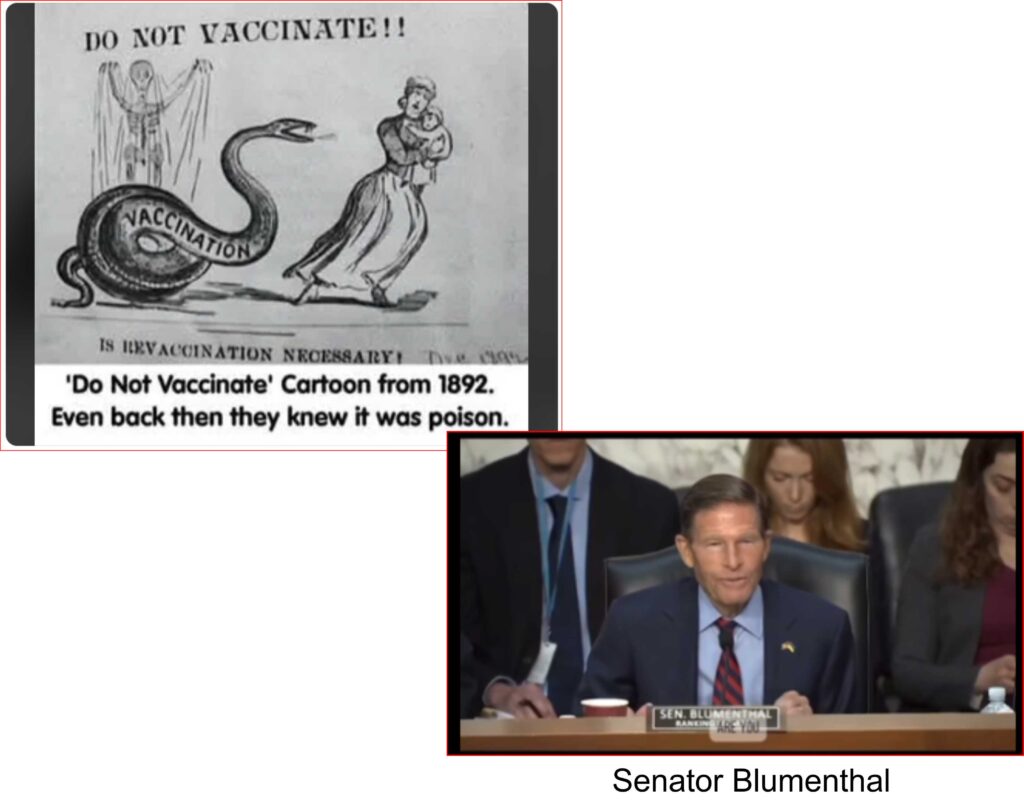

I saw this picture (left) and began to think: if the poisonous view of vaccines was already known and circulating in the late nineteenth century, how did vaccine use and recommendation become so widespread—even into modern times? A brief review of the literature shaped my conclusion: physicians are not scientific experts but rather professionals rebranded under a misleading titlemedical science, or more precisely, fraudulent science. No wonder we remain trapped in a profession that labels itself “science” when, in truth, it is not.

If this deception was recognized even in its early days, why has it continued to be accepted as legitimate science? The answer lies in the gradual transformation of the medical profession during that period. Until the mid-1800s, physicians were regarded as healers—educated in anatomy, herbs, and observation—but they were not engaged in experimental or physical science. Their practice was practical and empirical, at times even philosophical, but never chemical or quantitative.

(more…)

There is no scientific basis or justification for vaccination (link). I support Senator Rand Paul’s position on this matter and offer a scientific argument for it. Unfortunately, physicians are not in a position to counter this discussion, because the question is not medical (mistakenly assumed) but scientific in nature. Moreover, the defense of vaccination has become a matter of pride and ego within the medical community, rather than an objective evaluation of facts.

Institutions such as the CDC and FDA are now trapped in their own contradictions. Their predicament arises from years of misrepresenting medical practices as “science-based.” The central falsehood is the claim that the development and validation of vaccines are grounded in genuine science, and that physicians are scientists conducting scientific work. In reality, physicians receive little or no education, training, or experience in the true sciences—namely, chemistry, physics, and mathematics. Medicines, including vaccines, are chemical entities; therefore, their study and evaluation properly belong to chemistry, not medicine. What medicine presents in the name of science is, in fact, an imitation — a form of fake chemistry and fabricated experimentation.

(more…)

In recent online discussions, several readers raised thoughtful questions about what defines a scientist and what truly qualifies as science. The conversation touched on topics such as bioelectrochemistry, molecular biology, virology, and the role of chemistry in understanding living systems. The discussion revealed a recurring confusion — that biology and medicine are often mistaken for sciences, when in fact they depend entirely on the principles of chemistry and physics.

Defining a Scientist

A scientist is one who studies physics, chemistry, and mathematics in depth — the foundational disciplines that explain nature and its operations. These subjects deal with matter, energy, and the laws that govern their behavior. Only through such rigorous and quantitative understanding can one explore the workings of nature in a truly scientific way.

(more…)

Thanks for asking my opinion on the topic of autism (link). By education, training, and expertise, I consider myself a scientist — more precisely, a chemist. Chemistry, among all the sciences, is the discipline that deals with the study of natural substances and their functions, including those within the human body. From this fundamental and scientific perspective, chemistry provides the most authentic and authoritative view of how the body functions — and how it malfunctions.

Understanding the human body through chemistry is not simple, but it is the most direct and logical approach to exploring health and disease. The body is an extraordinarily complex chemical machine, yet at its physical level, it operates through remarkably simple and predictable chemical principles. The major components of the body — carbon, hydrogen, oxygen, nitrogen, calcium, and trace elements like iron (in numerous combinations, called molecules) — behave and react just as they do outside the body, following the same laws of chemistry.

The Loss of Chemistry in Medicine

The first step toward understanding illness should always be the study of the body’s chemistry. Unfortunately, over the past five to six decades, the science of medicine has been gradually taken over by medical and pharmaceutical professionals who speak the language of chemistry but are not trained in it. They use chemical terminology, draw chemical formulas, and claim to conduct “scientific” research — yet very few of them have even the basic understanding of what chemistry actually represents.

(more…)

There has been much talk about a recently “discovered” study that claims to compare vaccinated and unvaccinated children, as summarized here (the article). The original study may be found here (link).

Based on a survey or so-called epidemiological analysis, it reportedly found that vaccination appears to harm vaccinated children. The data presented indeed suggest this outcome. Logically, there is no reason to continue vaccination programs. The conclusion is self-evident.

However, upon closer reading, one finds manipulation and misleading language throughout the report. The authors describe the study’s “scientifical robustness,” yet there is no science in it in the true sense of the word. Science means experimental work — controlled, measurable, and reproducible — not the simple collection of questionnaire data. At best, this is an observational social survey. The first author of the study, Lois Lamerato, Ph.D., holds a degree in sociology.

(more…)

Why real expertise matters more than borrowed authority

The criticism of science or scientists should not target everyone with a title or degree, but only those who misuse such titles to claim expertise they do not possess. The problem lies not in credentials themselves, but in the false representation of knowledge.

Actual scientists and genuine experts deserve respect. They are the ones who can help resolve the confusion created by self-proclaimed authorities who merely hold positions without understanding. It is essential to separate the pretenders from the professionals — the former seek recognition and lucrative compensation, the latter pursue knowledge and truth.

Now everyone is a science expert or scientist — except the actual scientist.

(more…)

When asked, “What recent scientific discovery has fascinated you? my thoughts turn to the curious case of ivermectin and cancer — two seemingly unrelated entities now being linked in medical discussions (link).

As the article noted, “Ivermectin, widely known for treating parasitic infections… — and indeed, that is an established fact. Ivermectin was developed and prescribed as an antiparasitic drug. So how, suddenly, has it become associated with treating “cancer”? Could it be that what is being diagnosed as cancer might, in fact, be a misidentified parasitic or microbial illness?

Modern medicine has a long history of misdiagnosis — and even of creating diseases and treatments out of nothing. Virus-based illnesses provide a glaring example. There is no valid scientific evidence that viruses, as defined by medicine, actually exist; therefore, the so-called “viral diseases” cannot exist either. Yet, drugs and vaccines have been developed to treat these imaginary or mischaracterized conditions, from AIDS to COVID-19.

(more…)

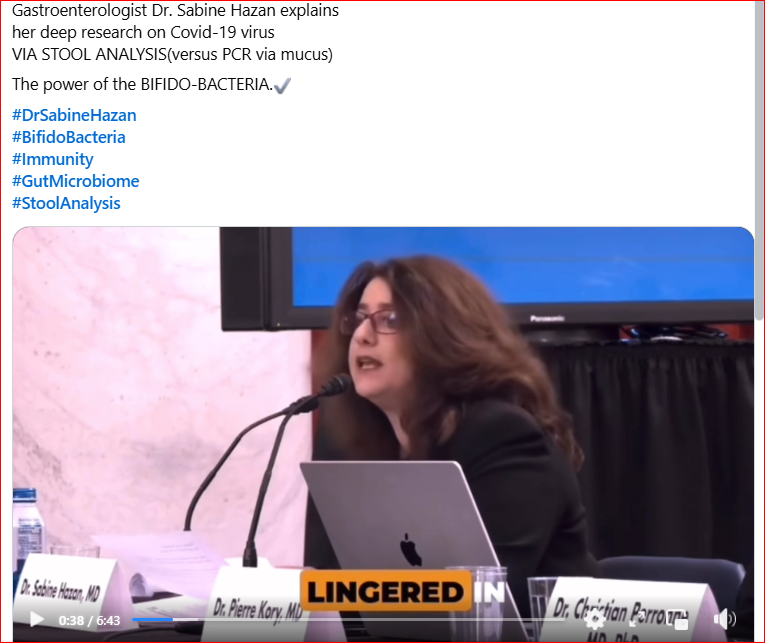
This perspective may be both interesting and disturbing from the standpoint of a scientist and student of science. Dr. Hazan claims to have been involved in science for an extended period (link). Yet her training is in medicine, and her work centers on clinical practice and studies, which she equates with science. But how does conducting clinical trials or working with bacteria suddenly make one a scientific expert—or a scientist? At best, such activities fall under applied biology and observational practice. Unfortunately, many people, including physicians, wrongly assume this qualifies them to call themselves scientists.

The most glaring flaw in her claims is the belief in viruses and her assertion that  “[her lab] was the first lab to document the entire sequence of the virus.” Scientifically, this is impossible without first isolating the virus itself. To illustrate: if one wishes to prove that sugarcane contains sugar, the process begins with obtaining authentic sugarcane, extracting and isolating the sugar, and characterizing it using well-established chemical methods. Only then can one confirm the presence of sugar in sugarcane. Without authentic sugarcane, any claim of “finding sugar” in it is nonsense. Repeating such claims in scientific language, or publishing them in medical journals, does not make them science.

The harsh truth is that medical experts are not doing science, nor are they scientists. They fail to grasp such analogies because they have never studied science rigorously, nor learned its proper research techniques and methods. Their false claims stem directly from this lack of education. The same misplaced authority of medicine—fundamentally non-scientific training—brought us the so-called fake pandemic, built on the illusion of a virus that never existed to begin with.

Therefore, my request to medical professionals is simple: please refrain from making false claims about “science.” You do not have the credentials, and an M.D. degree has no basis in science. It is essentially a non-science, undergraduate-level qualification in prescribing medicines and following diagnostic procedures, without genuine research. Presenting this as “science” is misleading, untrue, and potentially dangerous. The general public should be aware of the false claims of science.

False Priests of Science (link)  
A Simple And Direct Question RFK Jr Needs To Ask – A Suggestion (link)

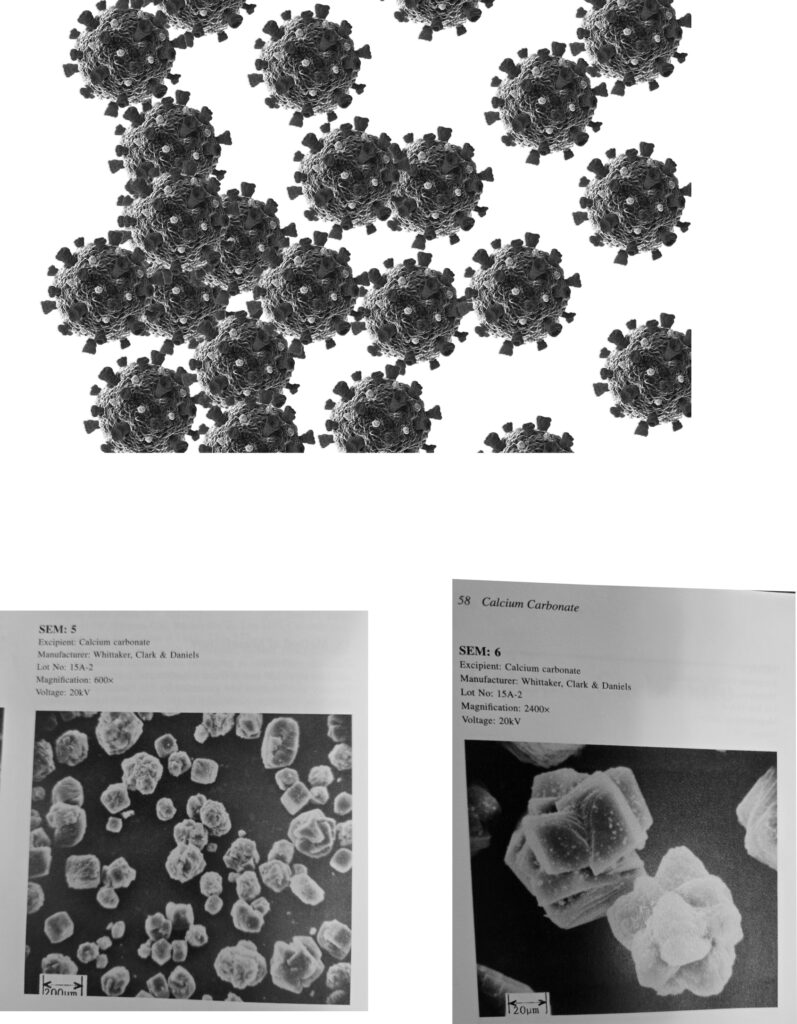
Question asked: “…But how come there are electron microscope photos of them [viruses]?”

Top: If the virus had truly been isolated, the photograph would resemble this.

Bottom: Electron micrographs of calcium carbonate crystals/particles (Source: Handbook of Pharmaceutical Excipients, edited by A.H. Kibbe).

They aren’t. What is shown in those images is not an isolated virus but a mass of cell culture debris — gunk, frankly, the microscopic equivalent of a toilet flush. After the photo is taken, the debris is simply labeled “virus.” If it were truly a sample of an isolated virus, the image would show only viral particles, consistently and uniformly, just as electron micrographs of calcium carbonate show actual particles or crystals: every particle in the photo is calcium carbonate, taken from an isolated and purified sample.

People — including medical professionals — are fooled by “virus” images because they lack training in the science of isolation, preparation, and imaging. They do not understand how particles or their contents must be purified before they can be meaningfully photographed (even with an electron microscope). Too embarrassed to admit their ignorance, they instead are shouting louder and louder: “Here is the virus! Here is the virus!” But there is no virus. It is all fake and false.

The emperor has no clothes. All it will take is one honest observer to point out the obvious; then the crowd will see what was there (or not there) all along. Medical experts are not scientists — they are storytellers, and the story they have told is a tragic fiction.