For some time, many of you have been following my writing and discussions here on Facebook and on my blog. Over the years, I have tried to raise important questions about science, medicine, and how scientific claims are presented to the public. These discussions have sometimes been challenging, sometimes controversial, but always focused on one goal: to understand what real science is and how it should be applied to medicine.

Now that my book, “Not Science. Not Scientists.” (link), has been published and is available for purchase. I have decided to launch a Substack platform where I can write more regularly, more professionally, and in greater depth.

I will continue to post on Facebook and maintain my blog, but Substack will become the main platform for publishing and discussing my articles. The reason is simple. Serious discussions are often difficult on social media platforms, where thoughtful debate is frequently interrupted by personal attacks, ad hominem comments, and ridicule instead of scientific discussion. Important topics require careful explanation, evidence, and logical argument — something that is not always possible in short social media posts.

(more…)

Article Review: When Winning Requires Sacrifice (link)

I read the article When Winning Requires Sacrifice with interest, but also with some confusion. At first, it appeared to be a story about Dr. Robert Malone, his time on the ACIP committee, and how he was not respected and eventually forced to leave. However, this is not really a story about one man or one committee. It is a story about something much bigger: the use of the word “science” in medicine, and whether what is called medical science today actually meets the definition of science in the first place.

One sentence in the article stood out to me: “The need for honest science hasn’t gone anywhere.” This sentence sounds reasonable and reassuring, but it raises a very serious question: What is “honest science,” and who decides what science is?

From a scientific perspective, medicines, vaccines, proteins, RNA, and mRNA are all chemical substances. Any claim about their existence, safety, toxicity, or effectiveness must therefore be established using the principles of chemistry and analytical science. In real science, before any substance can be studied, tested, or discussed, it must first be isolated, purified, and fully chemically characterized. This is standard practice in chemistry and physics and forms the foundation of scientific work.

(more…)

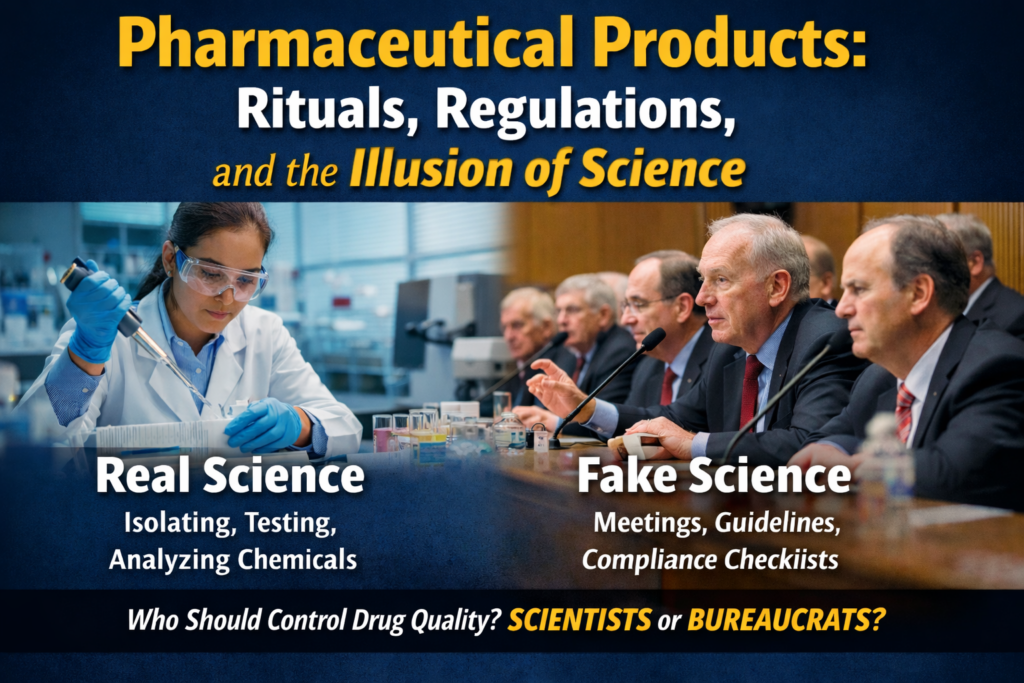
Most people assume that if there is a problem with drug quality, it must be a manufacturing issue, a company issue, or a regulatory oversight issue. Recently, I watched a clip from a Senate hearing on the quality of generic drugs (link), and the discussion gave the impression that lawmakers had “just” discovered an anomaly that needed to be investigated and fixed. But this is not an anomaly. This is not new. This is the predictable result of a system that replaced real science with rituals, regulations, and the illusion of science.

Drug products are not medical concepts. They are chemical products. Their identity, purity, strength, stability, and quality are chemical properties. Therefore, drug quality is a chemistry problem. Medicine is about diagnosing illness and prescribing drugs, not about defining chemical quality, developing analytical methods, or setting manufacturing standards. Those are scientific responsibilities, not medical ones.

(more…)

We are often told to trust the experts, trust the institutions, and trust the science. But what happens when the experts are not trained in science, the institutions are not truly scientific institutions, and what is presented as “science” is not science in the strict sense of the word? That is when a web of deception is created—so complex and so widely accepted that even politicians fall into it. What we are witnessing today in the debates about viruses, vaccines, and modern medicine is not a scientific debate, but a conflict of authority, credentials, and narratives, all presented under the powerful name of “science.”

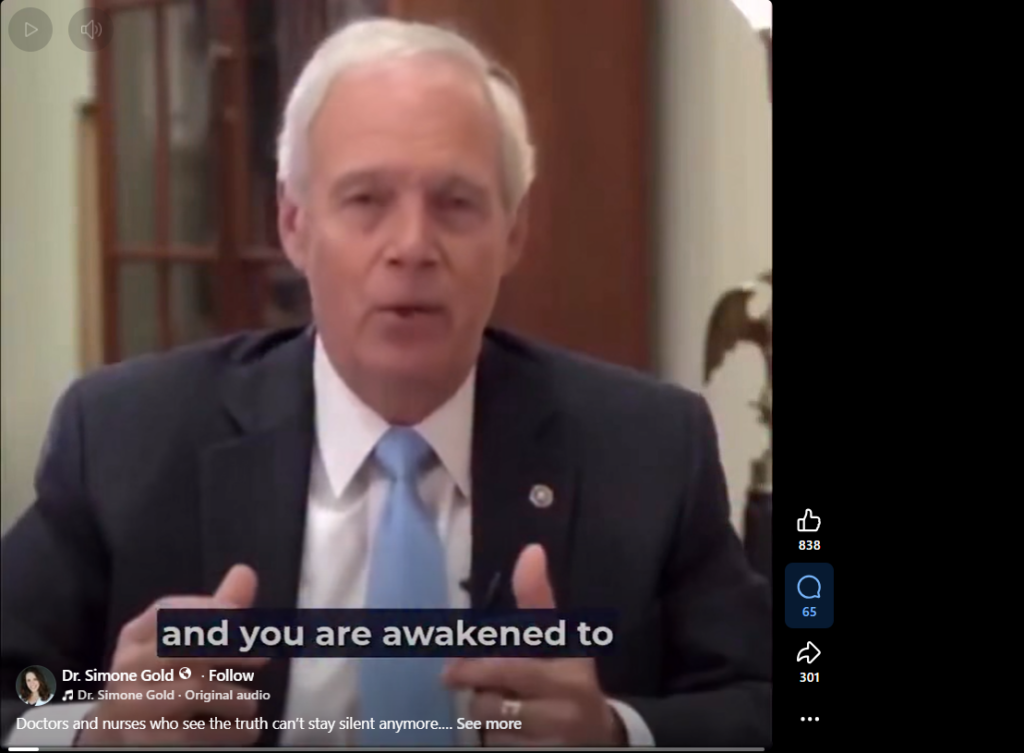
I recently listened to a short clip of Senator Johnson referring to physicians and other medical experts who are now speaking against mainstream medical experts who promote and support vaccines (link). What struck me was not the disagreement itself, but the deeper problem behind it. Political authorities, like most people, assume that doctors are capable of understanding and resolving issues related to viruses and vaccination. They do not realize that the issue is fundamentally about science and scientific research, not clinical practice. In this respect, both sides are working outside their actual training and credentials.

(more…)

Question: The covid vaccine makers claim that the mrna sends a code to the cell to manufacture spike proteins. We don’t have an isolated virus or an isolated spike protein. So what is the code actually telling the cells? Is there a code? What are the vaccinologists actually seeing under their “microscopes?” (link)

Response:

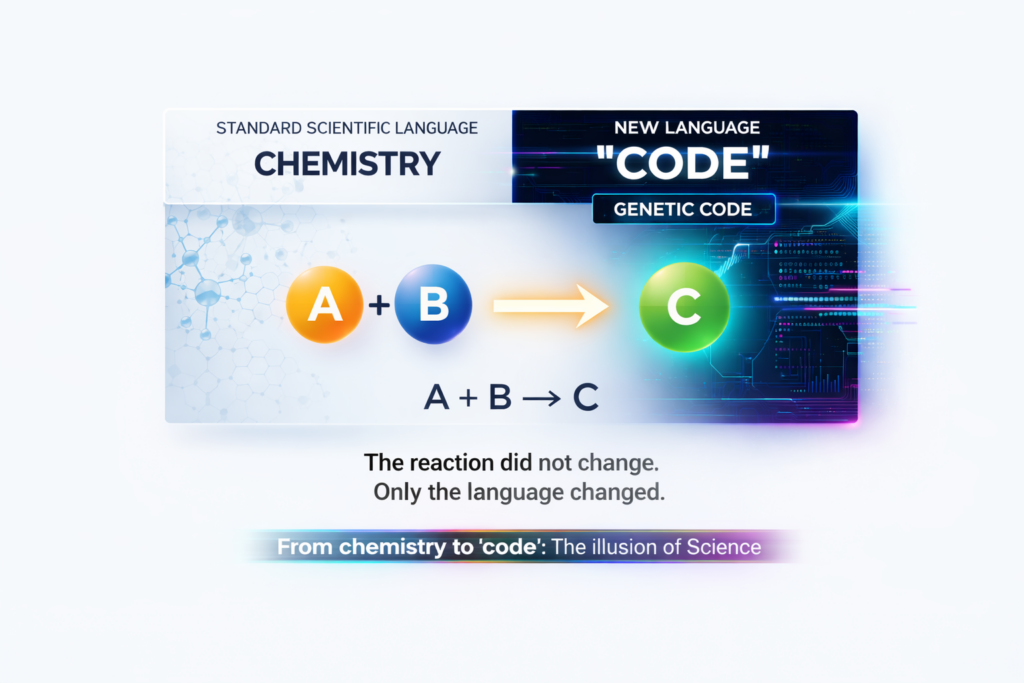
Before discussing mRNA “code,” one must first clarify what the word “code” actually means in scientific terms. The term creates the impression of something highly advanced and complex, often beyond the understanding of non-experts. However, in reality, the so-called “code” refers to a chemical sequence in a molecule called mRNA, which is claimed to cause the production of a protein in the body. When stripped of technical language, the entire process can be described as a series of chemical reactions between chemical compounds. Therefore, the subject should be examined from a chemical and analytical science perspective, not merely described in medical terminology.

In principle, or in theory, the word “code” refers to a specific chemical compound called mRNA. This compound is said to instruct another chemical component in the body (DNA) to produce another chemical compound, a protein (for example, the spike protein). The idea is that this process simulates the arrival of a foreign protein in the body, which is assumed to be part of a virus. The body then mounts a defense by producing antibodies (chemical compounds) that neutralize the protein and prepare the body to respond to future exposures.

(more…)

A Scientific Perspective on Standards, Variability, and Scientific Accountability

Medicine presents itself as science. But science, in its classical sense, requires measurement — precise, reproducible, and independently verifiable measurement. Without that, claims remain narratives.

Let us begin with a thought experiment. Suppose the medical establishment were to declare: “We made a mistake. The viral model, as currently defined, lacks foundational verification.” What would follow? Entire segments of modern pharmaceutical practice — particularly the vaccine sector — are built upon specific biological premises. If those premises were fundamentally revised, the products derived from them would require re-evaluation. The point is not collapse. The point is dependence. The industry operates within a framework defined by what is called “medical science.”

Now consider something more concrete.

(more…)

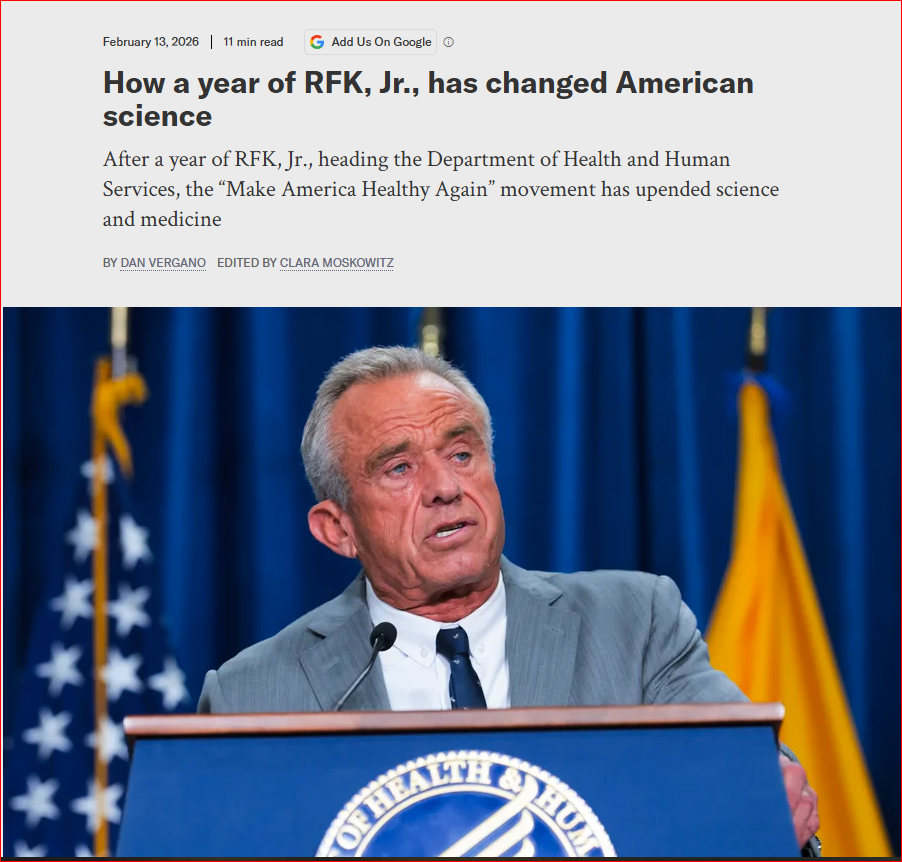
A recent Scientific American article argues that a year of RFK Jr.’s influence has “changed American science,” particularly within the U.S. Department of Health and Human Services (HHS). The underlying claim is that science at HHS has been disrupted, politicized, or undermined. (link)

That framing assumes something that deserves closer examination: that HHS is, in fact, a center of foundational science.

It is not.

HHS is primarily a clinical and regulatory institution. It is staffed and directed largely by physicians and public health professionals. Their training is clinical and applied. They diagnose, prescribe, regulate, and manage programs. That is a professional function — not foundational science.

(more…)

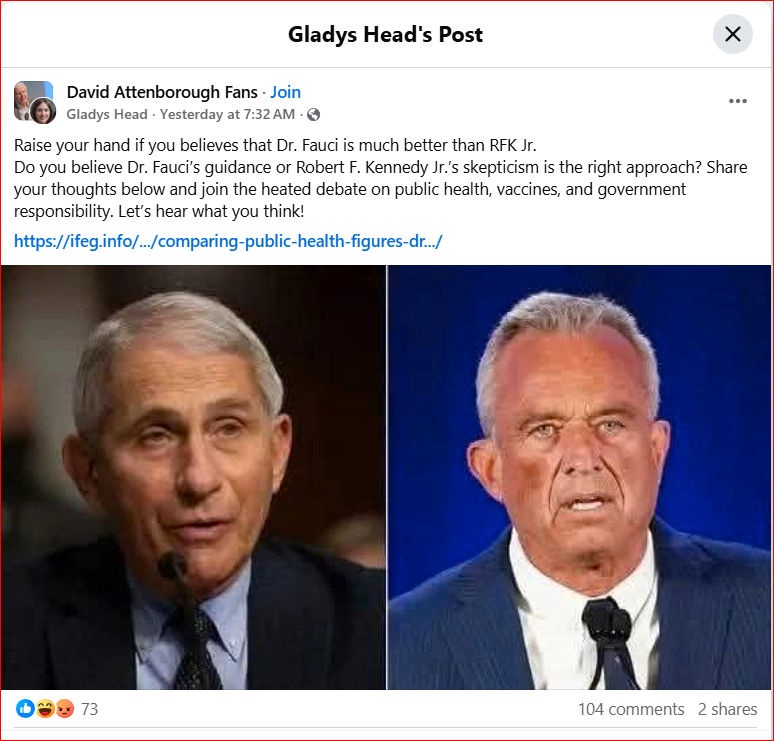
The vaccine debate is commonly presented as a clash between science and skepticism. In reality, it is a dispute between competing authorities—neither of which is grounded in the standards of true science.

The Illusion of Scientific Authority in Modern Medicine

From a scientific perspective, the public is largely unaware of a crucial fact: neither side of the contemporary vaccine debate is grounded in true scientific expertise.

In the case of Robert F. Kennedy Jr., this limitation is openly acknowledged. He does not claim training in chemistry, physics, or analytical science. That point is neither disputed nor concealed.

What is far less recognized—and far more consequential—is that the same limitation applies to Anthony Fauci, as well as many other high-profile physicians routinely portrayed as “science experts.” Despite their medical authority, they do not possess academic training or credentials in true science—namely, chemistry, physics, or analytical measurements. Yet their work is repeatedly labeled “science,” often under the terms medical science or virology.

This distinction is not semantic. It is foundational.

Medical Authority Is Not Scientific Authority

Medicine is a practice-based profession. It applies tools and products developed elsewhere. Drugs are chemicals. Diagnostics are measurements. These domains belong to chemistry and analytical science, not to medicine itself.

Modern medicine, however, has adopted scientific language without adhering to scientific standards. Claims involving viral isolation, PCR testing, immune markers, and vaccine efficacy are presented as established science, despite lacking the foundational requirements of true scientific disciplines.

As a result, opinions from both political critics and medical authorities lack scientific credibility when examined against the standards of chemistry and analytical chemistry.

Asking Questions Does Not Require Scientific Credentials

This is where the debate must be reframed.

A consumer does not need to be a mechanical engineer to evaluate a car. One is not asking how an engine works or to redesign it; one asks for evidence of performance. Does it meet specifications? Does it perform as claimed? Is there verifiable data?

The same logic applies here.

RFK Jr. does not need to be a chemist or scientist to ask simple, legitimate questions:

  • Where is the physical sample of the virus to verify the claim of its existence?
  • Where is the study protocol demonstrating vaccine efficacy against viruses or their diseases?
  • Where are the measurements calibrated against known standards (viruses, RNA, mRNA, spike protein, etc.?

These are not political questions; they are basic scientific questions—or the same questions any informed consumer would reasonably ask.

Where the System Fails

When such questions are raised, the response from medical authorities is predictable:


“The science is settled.”
“The data are peer-reviewed.”
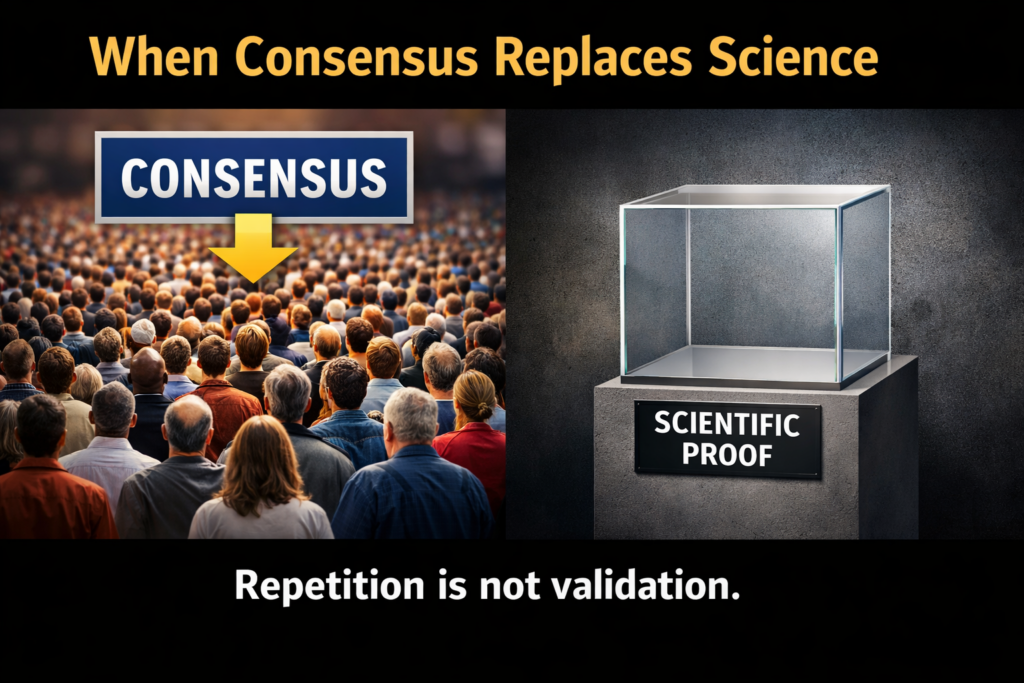
“There is consensus.”

This is precisely where the failure becomes visible.

Peer review in medicine is internal—conducted by similarly trained practitioners—not external validation by scientists trained in chemistry or analytical measurement. PCR testing, which underpins modern virology, has never been scientifically validated against a pure, isolated, and characterized physical virus sample—because such a sample has never been produced.

Without a physical reference, no test can be scientifically validated. Without validated tests, no illness can be scientifically attributed. Without that attribution, efficacy cannot be established—only assumed.

Why RFK Jr. Needs True Science Support

This is not a political weakness. It is a structural one.

RFK Jr. can ask the right questions, but without support from true science experts—particularly analytical chemists—those questions are easily deflected by appeals to authority. That is how fake science survives: not by evidence, but by insulation.

A single sentence from an analytical scientist exposes the entire framework:

Without a pure, isolated physical virus sample, none of the claimed tests, diagnoses, treatments, or vaccines can be scientifically validated.

Nothing more is required.

The Consequences of Facing Reality

Once this issue is examined through the lens of true science, the implications are unavoidable.

If viruses have not been scientifically demonstrated through isolation, purification, and characterization, then illnesses attributed to them cannot be scientifically established. If those illnesses are not established, then claims of treatment efficacy—including vaccines—have no scientific foundation. Without a verified target, there can be no validated test, no calibrated measurement, and no meaningful assessment of efficacy.

What follows is not a minor correction but a systemic collapse. Testing protocols, efficacy claims, regulatory approvals, and public-health mandates all rest on assumptions that have never been validated by the standards of chemistry or analytical science. Remove those assumptions, and the entire structure fails simultaneously.

This is not a matter of opinion. It is a matter of scientific necessity.

A Clear and Shorter Path Forward

Because the problem is foundational, the resolution does not require endless debate, more funding, or decades of additional research. It requires only one thing: the application of real science.

If chemistry and analytical science were applied honestly, the discussion would conclude quickly. Either a physical virus sample exists and can be produced for independent validation—or it does not. Either diagnostic tests can be calibrated against that physical reference—or they cannot. Either efficacy can be demonstrated against a verified illness—or it cannot.

There is no middle ground.

This is why the issue persists. Not because the science is complex, but because it has never been properly applied. The system survives by avoiding the very standards it claims to uphold.

Once those standards are enforced, the debate ends—not slowly, but immediately. And with it ends the illusion of “medical science” as a substitute for real science.

Conclusion

This debate persists only because true scientific standards have been excluded from the discussion. Once chemistry and analytical science are applied, the foundations of modern virology and vaccination collapse under their own weight. What remains is not science, but belief reinforced by authority and repetition. Real science does not require consensus, peer approval, or institutional protection—it requires evidence. And that evidence has never been produced.


The persistence of the virus narrative is not accidental. It is the result of a framework constructed and maintained by medical and biological professionals under the label of “medical science.” The public—and even many experts—accept these claims because they assume that true science, credibility, and authority support them.

This assumption is the central problem.

The “science” invoked by medicine and biology is not science in the fundamental sense. It is a conceptual and observational narrative developed within disciplines that do not require formal education or training in the foundational sciences—particularly chemistry, which governs molecular identity, structure, and reaction mechanisms. Without this foundation, conclusions about causation, specificity, and efficacy cannot be scientifically established.

(more…)

Terms such as science, scientists, studies, data, research, and scientific evidence are now routinely deployed in public discourse to promote medical, pharmaceutical, and healthcare claims. These words carry automatic authority. They command trust. They persuade compliance.

That authority is being misused.

In contemporary medicine, these terms are repeatedly invoked by physicians to legitimize claims that do not arise from science in its proper sense. What is presented as “scientific evidence” is most often clinical observation—records of patient encounters, outcomes, and correlations. Renaming such observations “clinical data” does not convert them into science. They remain descriptive surveys, not experimental investigations.

These words were not created for this purpose. They belong to real science.

(more…)