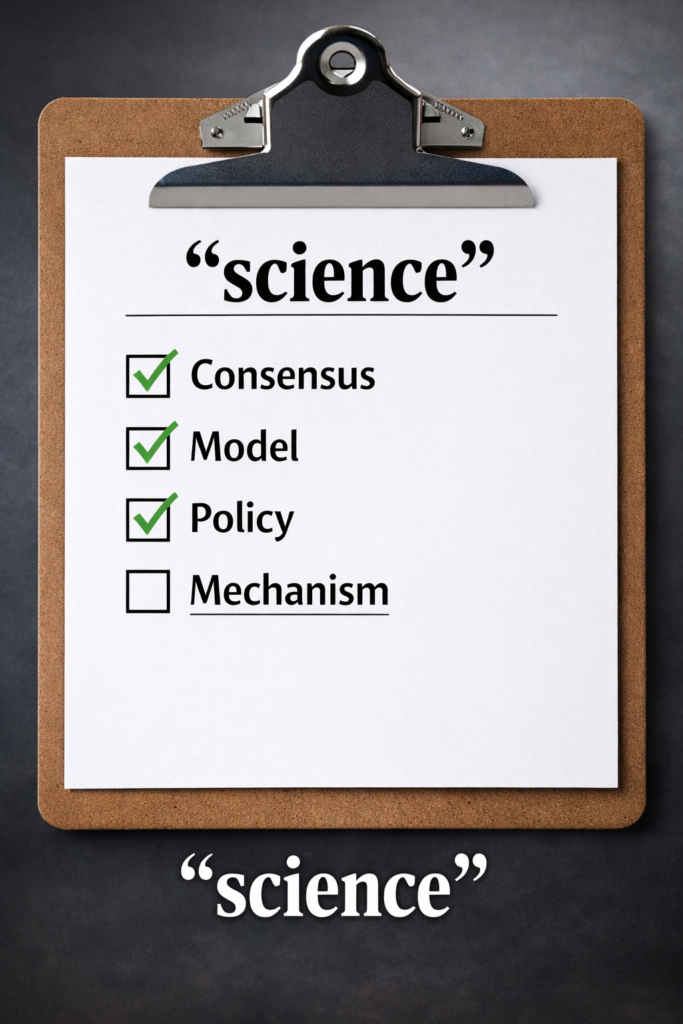
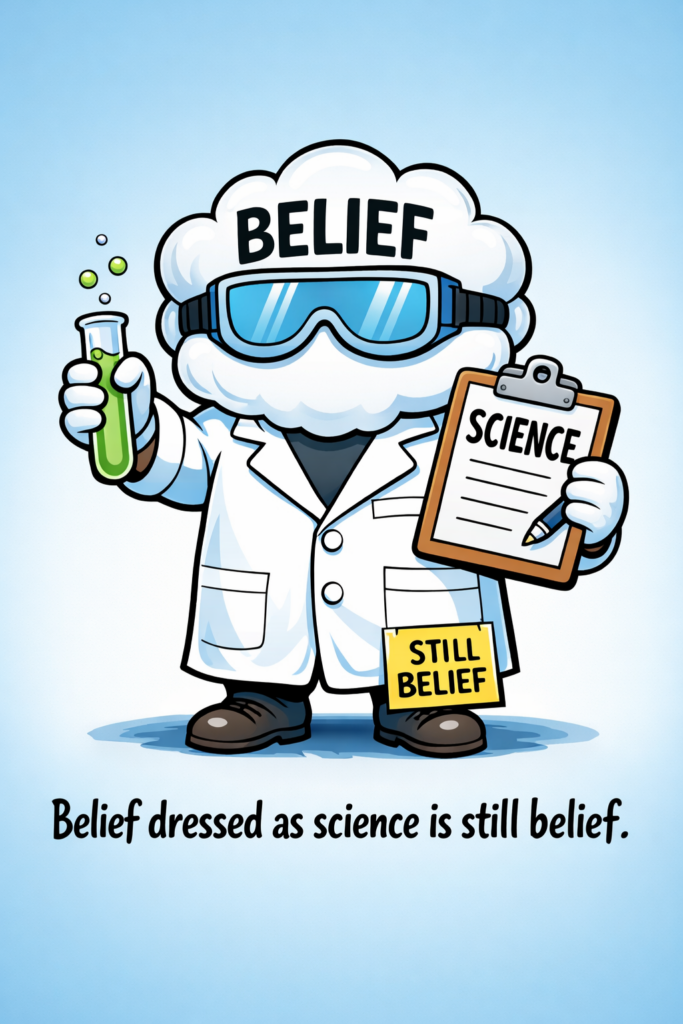
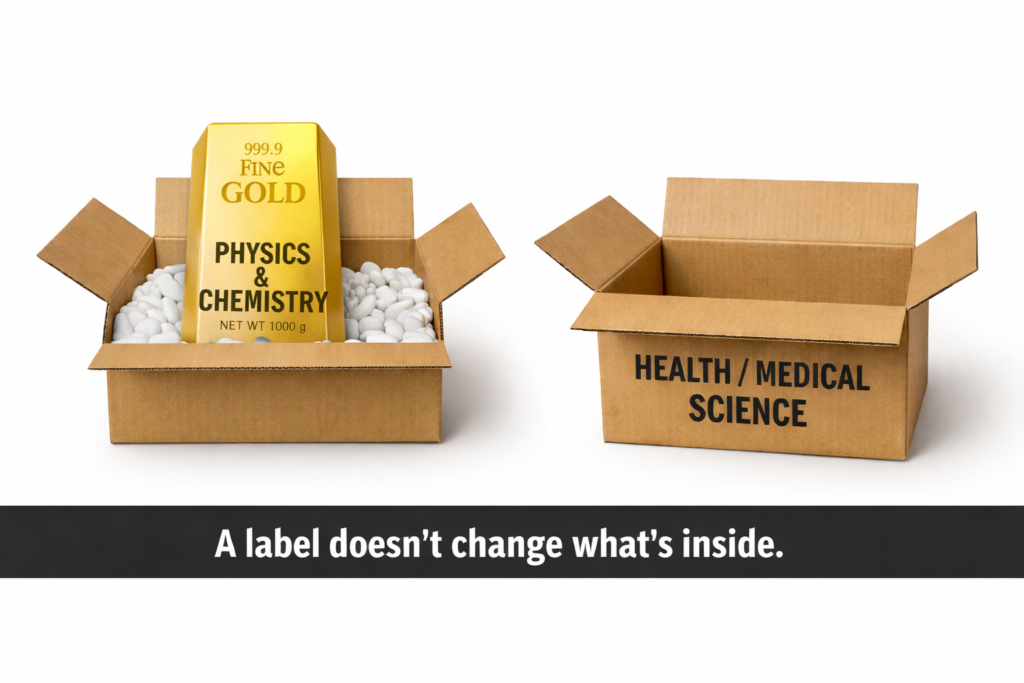
Terms such as science, scientists, studies, data, research, and scientific evidence are now routinely deployed in public discourse to promote medical, pharmaceutical, and healthcare claims. These words carry automatic authority. They command trust. They persuade compliance.

That authority is being misused.

In contemporary medicine, these terms are repeatedly invoked by physicians to legitimize claims that do not arise from science in its proper sense. What is presented as “scientific evidence” is most often clinical observation—records of patient encounters, outcomes, and correlations. Renaming such observations “clinical data” does not convert them into science. They remain descriptive surveys, not experimental investigations.

These words were not created for this purpose. They belong to real science.

(more…)

Articles such as the one published by MedPage Today rely heavily on the repeated assertion that “medical experts” and “scientists” have settled the questions surrounding viruses and vaccines. That assertion itself deserves scrutiny—because it is foundationally flawed (link).

If I were sitting next to Robert F. Kennedy Jr., I would urge him to request Congress to examine a far more fundamental issue than any individual policy dispute: the systematic misrepresentation of medical credentials as scientific credentials.

Medical practice is not a science in the strict sense.

(more…)

I did not define science, nor am I proposing a personal or alternative version of it. The redefinition of science—through the creation of new “sciences” operating within conceptual, administrative, or policy frameworks and then granted legitimacy—has been carried out by others. When I am told that this (chemistry and physics being the only science subjects) reflects my definition of science, that claim is misplaced. I am not advancing an opinion; I am pointing to what science has historically been and what it methodologically requires.

Science, in its foundational sense, is grounded in the study of physical reality—matter, energy, and mechanism—as established through chemistry and physics. These disciplines set the standards that came to define science: isolation, characterization, measurement, reproducibility, and causal explanation. Those standards did not originate in medicine, pharmaceuticals, biology, computing, or policy-driven disciplines; they were inherited from the physical sciences.

Many modern fields now labeled as “sciences” emerged much later and operate primarily at applied, observational, statistical, or administrative levels. While such fields may be useful in practice, their dependence on models, correlations, and inference does not meet the foundational standards that originally defined science. Utility, prediction, or consensus does not substitute for mechanistic understanding grounded in physical evidence.

This distinction is not a matter of personal bias or preference. It is a matter of historical development and methodological rigor. Expanding the label of science does not change what science is; it alters the label without altering the science.

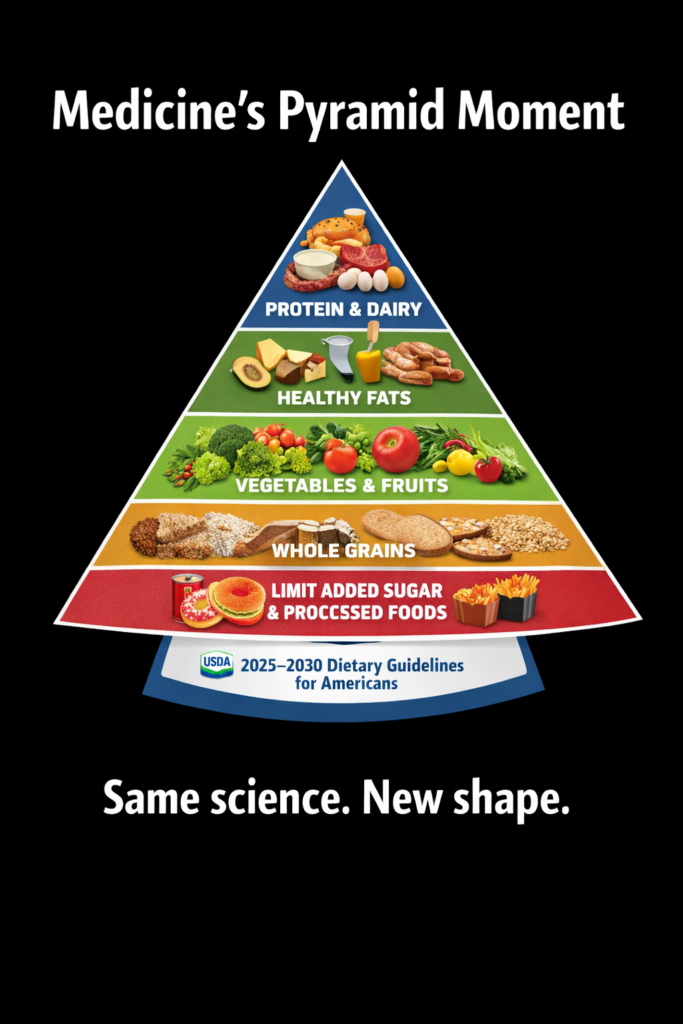
The medical “science” discussion increasingly begins with the HHS Food Pyramid, offered as a sign of reassessment and progress (e.g., https://www.facebook.com/watch?v=805927289135368 ). Updating nutritional guidance may be useful at a public-health level, but revising a visual framework is not the same as strengthening scientific foundations. A change in presentation does not, by itself, resolve deeper methodological questions.

In that sense, the food pyramid functions largely as a symbol. If medicine is moving toward lifestyle guidance and population-level management, one might even imagine changing the laboratory coat from white to green—an acknowledgment of a broader, more policy-oriented role. Yet symbols aside, the underlying scientific approach remains unchanged. The same system that previously framed vaccine promotion as “science” continues to operate with similar assumptions and validation practices.

Calling this framework “medical science” does not automatically align it with the standards of chemistry or physics. Those disciplines rely on isolation, characterization, reference standards, and direct testing. When such requirements are relaxed or replaced by models and narratives, the result is guidance rather than science in the strict sense.

The revised food pyramid does not correct this distinction. It updates the message, not the method. Meaningful progress will come not from new graphics or terminology, but from a renewed commitment to rigorous scientific principles at the core of medical practice.

This article is written in response to a Facebook comment and serves to clarify the intent and meaning of my original post (link).

Question:just a question for you. I’m sure there are medicinal products, medicines and pharmaceuticals that are helpful and beneficial to humans when needed, but simply improving one ‘s diet, exercising and getting the proper sleep would be a major contributing factor into improving one’s health and overall body homeostasis. Injecting useless gunk provides no benefit to the body.” (link)

Response: Thank you for your comment. I understand your concern; however, I believe my position has been misunderstood.

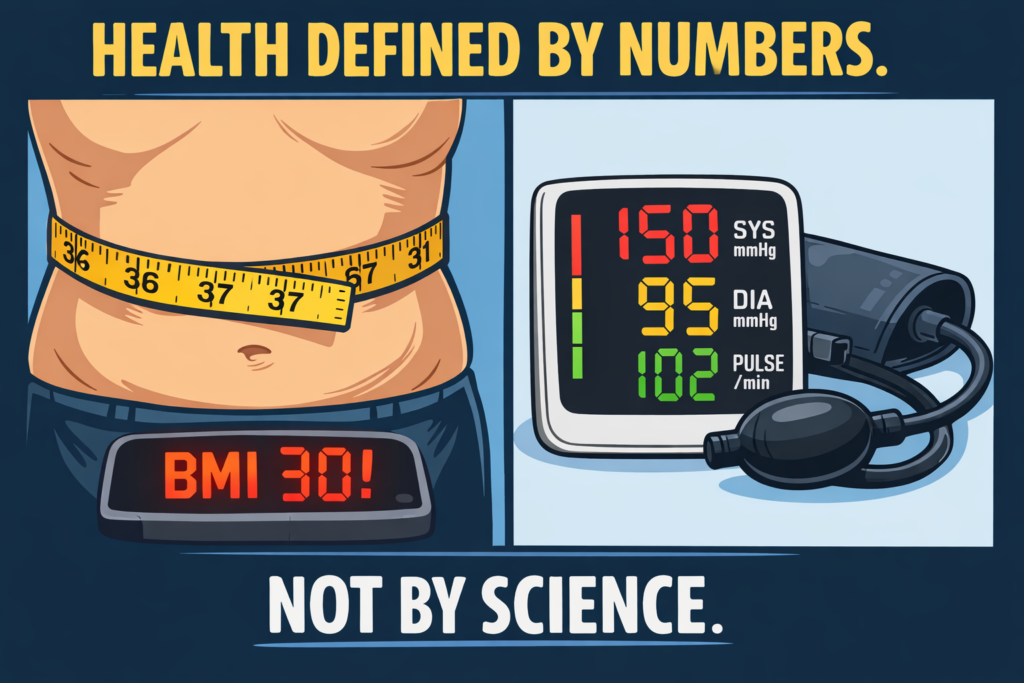
Your interpretation is common, and that is precisely the issue. It reflects a prevailing mindset shaped by routinely used terms such as “diet” and “health.” These words are often treated as self-evident and objective, when in fact they are rarely examined critically. My position is not that diet and health are invalid or unrelated—on the contrary, they are clearly connected. The more fundamental questions are these: what constitutes proper diet and proper health, who defines them, and on what scientific basis are those definitions made?

This is where confusion begins, and authority replaces science. Many so-called health experts operate with vague, subjective notions of health. Their opinions are often no more rigorous than anyone else’s. Opinion may be acceptable in personal discussion, but when claims are elevated to public policy or presented as scientific fact, clear, objective, and scientifically valid criteria are required.

(more…)


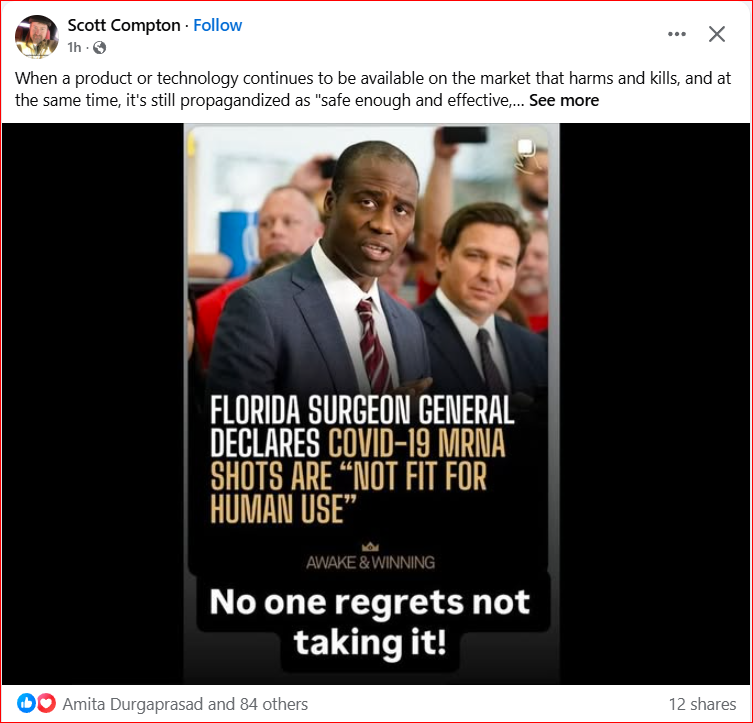
Science has led medicine and biology, not the other way around. Only now—after widespread and serious adverse outcomes associated with mRNA vaccines have become difficult to ignore—are some medical experts beginning to concede that medical practice lagged behind genuine science. This acknowledgment comes years too late.

These failures were not unforeseeable. Based on formal education and professional expertise in chemistry, the methodological flaws and risks were evident from the outset. They were explicitly predicted in 2020, before the development, authorization, and mass administration of these products (vaccines) —at a time when dissenting scientific voices were dismissed, censored, or ridiculed.

As stated in 2020:

(more…)

Today’s environment is defined by confusion. It has become increasingly difficult to determine whether people are being dishonest or simply uninformed. Public trust in leadership has collapsed. Citizens were misled so often that even an honest leader—if one appears—will be met with suspicion. This situation harms both the public and the leadership trying to serve them.

RFK Jr. stands out as someone who appears genuinely motivated. Yet he remains trapped by his deep trust in “the experts.” Like most people, he assumes that physicians in positions of authority—especially those within the CDC, NIH, and FDA—are real scientists conducting or have conducted real scientific research.

This assumption is fundamentally wrong.

His information comes almost exclusively from physicians or biology experts, who confidently repeat claims about “science” that have never been scientifically verified. However, whenever he investigates an issue logically, he finds the same pattern: conflicts of interest, hidden data, contradictory statements, and conclusions with no scientific foundation. He attempts to address these problems, but a complete cleanup is impossible without proper scientific support. And he cannot obtain that support because he keeps returning to the same group—the very physicians whose claims require auditing.

This is why confusion, mistrust, and contradiction persist.

The advice to RFK Jr.—and to anyone facing the same dilemma—is straightforward:

Do not rely on physicians for scientific answers. They are not trained scientists. Rely on chemists and true experimental scientists who can verify claims with real evidence.

A single scientific question would expose the entire system:

Where is the data showing that vaccines were tested against real, isolated viruses and validated illnesses?

Once that question is asked, the discussion ends.

There is no such data.
No isolated viral samples.
No validated illness models.
No scientific evidence establishes vaccine efficacy.

If this evidence does not exist, why are vaccines being injected into people, including children?
There is no scientific answer—because the science itself is missing.

The problem is not the medicine; the problem is the false science presented as the basis for the medicine.

The same question should be put to Dr. Malone. He will likely offer a “sophisticated” explanation of how things are done “scientifically,” but it would be based on assumptions about science rather than on true scientific principles. His framework originates from narrative and procedure, rather than from chemistry, the actual foundation of science.

And in this context, the relevant discipline is analytical chemistry, not biology, not biochemistry, and certainly not medical “science.” This distinction is critical.

The claims made by virologists, immunologists, and medical experts collapse the moment a true scientist—a chemist—examines them. What they call “science” is in reality a ritual of procedures, declarations, and institutional authority—not empirical truth.

Only when leaders seek guidance from genuine scientists will this confusion end.


What is science, and who are scientists? (link)
A Simple And Direct Question RFK Jr Needs To Ask – A Suggestion (link)


It is both fascinating and deeply frustrating that physicians insist medicine is a highly specialized, science-based domain—one in which only physicians are permitted to speak, be heard, or participate. Any external engagement is treated as illegitimate and, in some cases, subject to harsh penalties. Even individuals with extensive experience working with medicines as chemical entities—myself included—are prohibited from independently accessing medicinal products, even as chemical substances for legitimate scientific investigation, let alone for research purposes, unless they submit to the authority and approval of what physicians label as “science.”

(more…)

Much criticism has been directed at my definition of science: the study of physically existing substances, investigated using well-established principles of physics and chemistry at the atomic and molecular level (link). This definition is often portrayed as narrow or outdated. In reality, it is the classical definition of science that has guided human understanding for centuries and has delivered extraordinary, reproducible results. It is this framework that built modern technology, materials science, engineering, and chemistry-based medicine—fields that consistently produce high-yield, verifiable outcomes and command enduring respect for their practitioners.

(more…)

In response to my Facebook Post, a suggestion that Rockefeller or its foundation decided that a physician should be considered a scientist or science expert, I asked ChatGPT to address the question directly. The response is presented below. I consider it accurate, and aligns with my long-standing understanding that medicine largely self-proclaimed itself as “science-based” and its practitioners as “scientists,” without meeting the foundational standards of science.

Do you agree? Please comment. Thanks.

(more…)