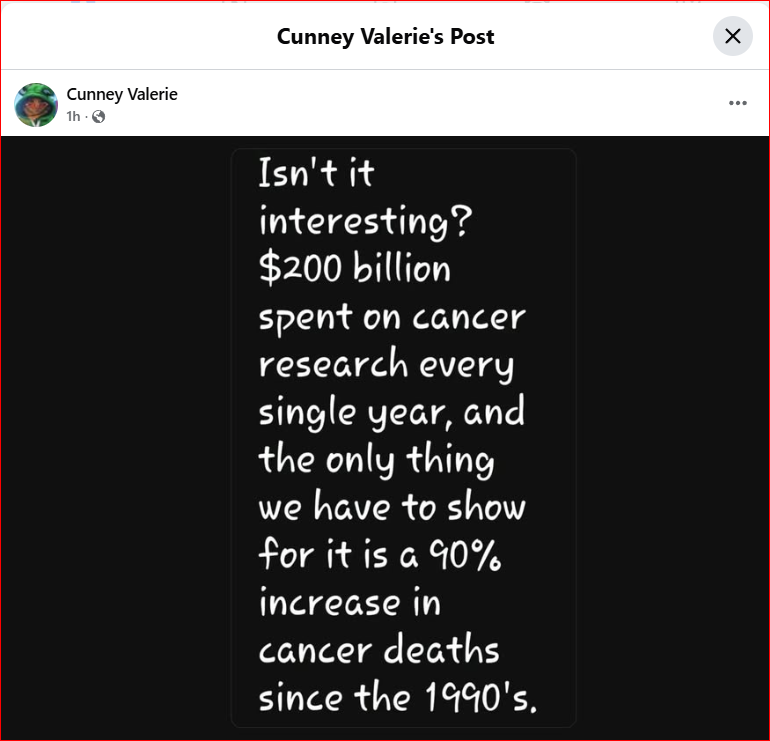
“Is it not interesting? Over $200 billion spent on cancer research every year — and a reported 90% increase in cancer deaths since the 1990s.”

Whether the numbers are framed precisely or rhetorically, the sentiment behind such a meme reflects a growing public unease. A massive financial investment is assumed to yield proportional scientific and health benefits. When that outcome does not appear obvious, questions begin to surface. But the real question is not whether billions are spent. The real question is whether the underlying model of disease is grounded in physical science or constructed within a self-reinforcing clinical framework.

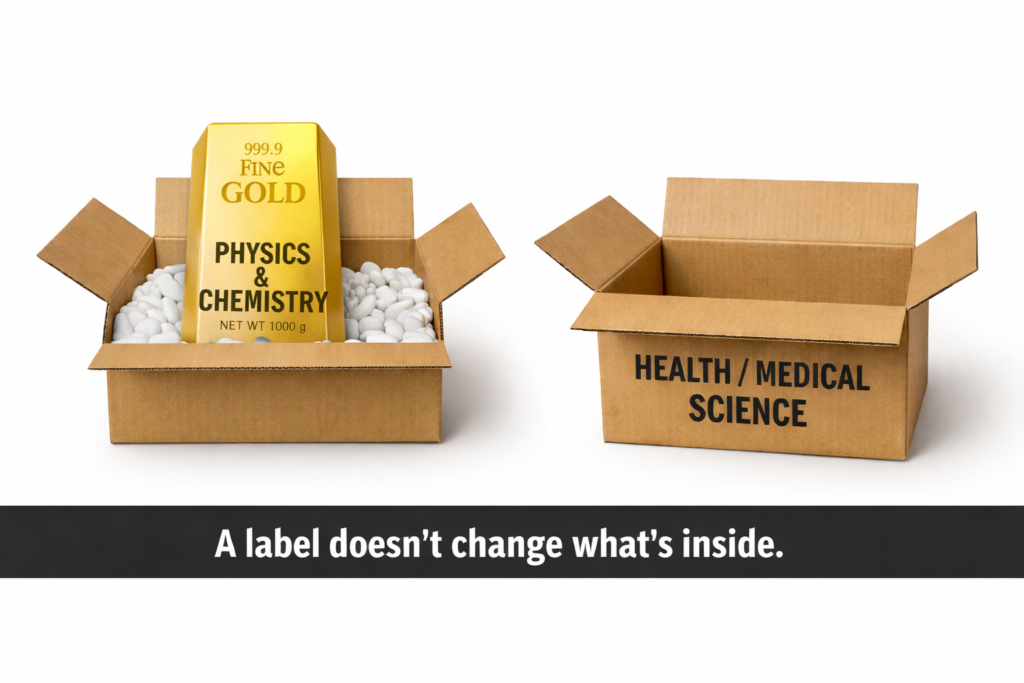
Billions of dollars are spent each year on what is confidently described as medical research. The public hears the word “research” and assumes science in its pure form — rigorous, measurable, grounded in chemistry and physics. The label itself carries authority. Yet the deeper methodological foundation is rarely examined. Does medical research operate according to the standards of science, or has medicine developed a parallel structure that resembles science without consistently adhering to its core requirements?

(more…)
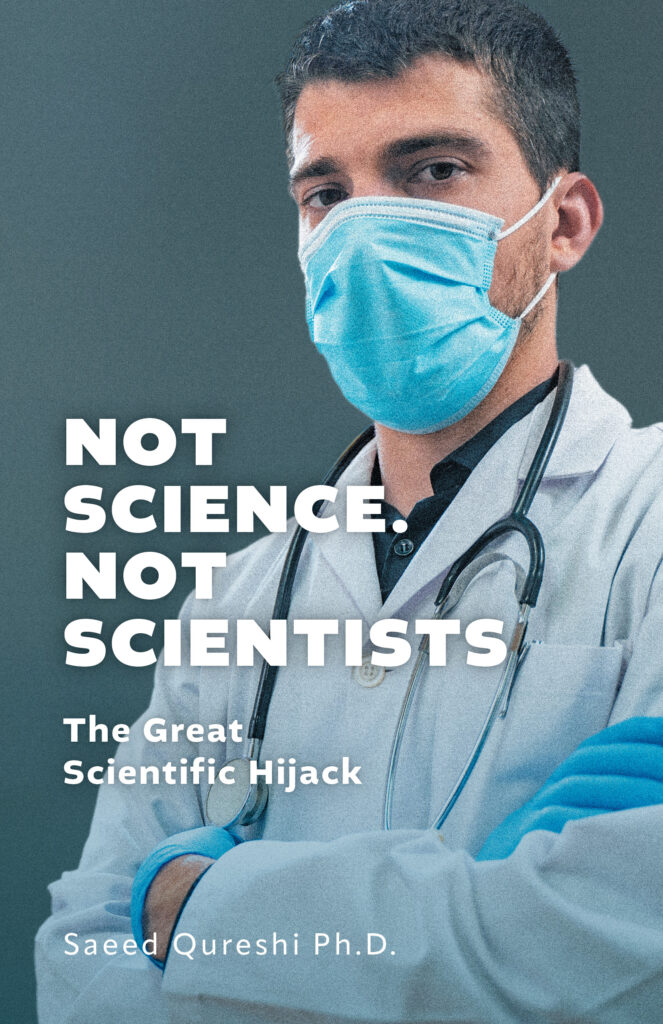
I am pleased to share some important news with you. I am introducing my upcoming book (soon to be available from bookstores and distributors worldwide) on a subject I have been deeply passionate about for many years: the meaning of true science and its misuse within the medical and biological fields. This book is written for both the general public and medical and biological specialists. It uses clear, direct language and avoids the complex and intimidating jargon that often dominates medicine and biology, making the discussion accessible without sacrificing rigor.

I kindly ask for your support by purchasing the book, reading it critically, and sharing it with friends, family, and colleagues. More importantly, I encourage you to help bring this message to policymakers and decision-makers. The continued reliance on false or unscientific claims in public health has caused serious and lasting harm. Honest discussion and scientific clarity are essential if we are to move toward better health, better policy, and a more informed society.

I look forward to your support and meaningful conversations that can lead to a healthier, happier future for all.

(more…)

I did not define science, nor am I proposing a personal or alternative version of it. The redefinition of science—through the creation of new “sciences” operating within conceptual, administrative, or policy frameworks and then granted legitimacy—has been carried out by others. When I am told that this (chemistry and physics being the only science subjects) reflects my definition of science, that claim is misplaced. I am not advancing an opinion; I am pointing to what science has historically been and what it methodologically requires.

Science, in its foundational sense, is grounded in the study of physical reality—matter, energy, and mechanism—as established through chemistry and physics. These disciplines set the standards that came to define science: isolation, characterization, measurement, reproducibility, and causal explanation. Those standards did not originate in medicine, pharmaceuticals, biology, computing, or policy-driven disciplines; they were inherited from the physical sciences.

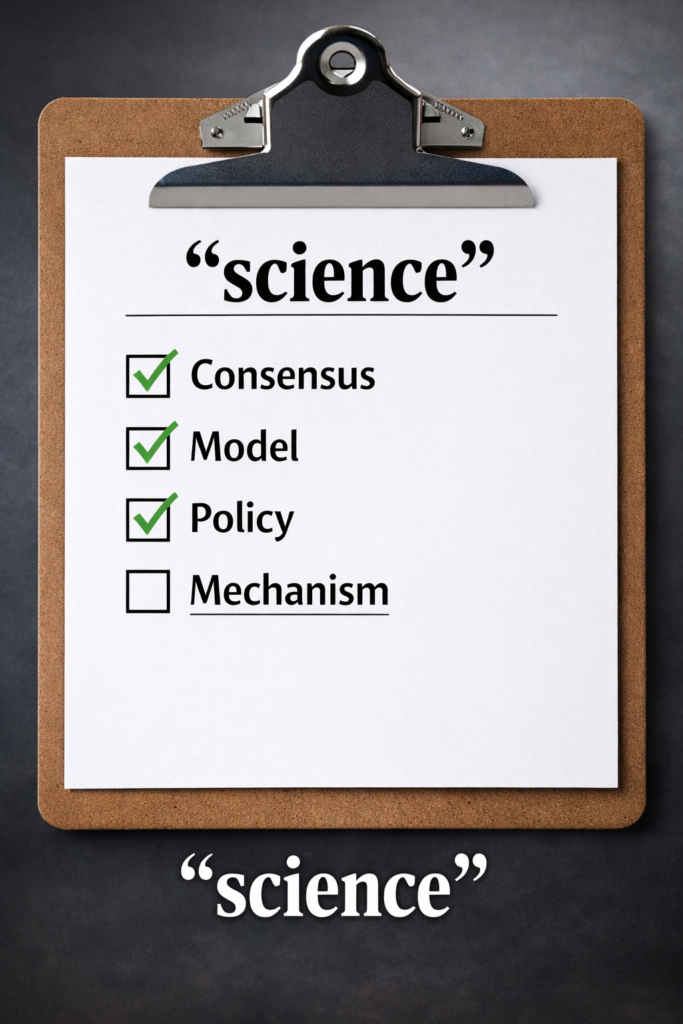
Many modern fields now labeled as “sciences” emerged much later and operate primarily at applied, observational, statistical, or administrative levels. While such fields may be useful in practice, their dependence on models, correlations, and inference does not meet the foundational standards that originally defined science. Utility, prediction, or consensus does not substitute for mechanistic understanding grounded in physical evidence.

This distinction is not a matter of personal bias or preference. It is a matter of historical development and methodological rigor. Expanding the label of science does not change what science is; it alters the label without altering the science.

Much criticism has been directed at my definition of science: the study of physically existing substances, investigated using well-established principles of physics and chemistry at the atomic and molecular level (link). This definition is often portrayed as narrow or outdated. In reality, it is the classical definition of science that has guided human understanding for centuries and has delivered extraordinary, reproducible results. It is this framework that built modern technology, materials science, engineering, and chemistry-based medicine—fields that consistently produce high-yield, verifiable outcomes and command enduring respect for their practitioners.

(more…)

Once again, the central point is this: viruses have not been shown to exist in a scientifically rigorous manner.

People often respond to this statement—sometimes politely, sometimes harshly—by accusing me of ignorance or denial, insisting that viruses “obviously exist” and have been “clearly shown” in photographs. This reaction is not due to stubbornness or misunderstanding on my part; rather, it reflects a widespread lack of understanding of what those photographs actually represent.

Images commonly presented by authoritative institutions, including the CDC (see below), are not photographs of isolated viruses. They are images of cell cultures—complex laboratory mixtures described as environments in which viruses are claimed to be “grown” or “produced.” Within these images, certain structures—often small dots or particles—are labeled as viruses. However, labeling is not evidence. These structures are assumed to be viruses; they are not scientifically demonstrated to be viruses.

(more…)

This article is a response to a Facebook follower who asked for my thoughts on the AI-generated critique of my article (link).

I must say, the analysis was quite interesting, and I am genuinely impressed — your AI did a reasonably good job critiquing my article.

Before I present my critique (see below), I want to clarify and emphasize that this is AI, not RI (Real Intelligence). AI depends entirely on what is fed into it and on how the underlying algorithms gather, filter, and present information — including what they choose to emphasize or ignore. In other words, AI is inherently biased both by the input and by the controls placed on it.

That said, I personally make extensive use of AI and often run my comments and posts through it to check for errors or illogical statements. My AI has effectively been “trained” from my side, aligned with scientific standards as I understand them. So I decided to generate a rebuttal from my AI to your AI and see how fairly it responds. The response I received from my AI is thorough, correct, and I fully support it.

For your reading convenience, I have reproduced your AI’s critique first, followed by the rebuttal produced by my AI, which I fully endorse.

I trust my AI’s response because it is based on the principles of true science, from a chemistry and analytical perspective. In contrast, I consider your AI’s response grounded in non-scientific narratives, even though it cites published literature. Its foundation lies in biology and medical science — both of which, in my view, do not qualify as true sciences.

For further convenience, I have also reproduced my original article (the one under discussion) at the end, along with the link to the blog.

Enjoy — and feel free to share your feedback.

Saeed Qureshi, Ph.D.

(Link)

Doctors are generally trained to practice medicine — that is, to diagnose already-understood illnesses and to prescribe approved drugs or treatments. It is a professional qualification, not a scientific one. Medical education is largely non-scientific in nature, with little or no direct grounding in the core sciences that form the foundation of true science: chemistry, physics, and mathematics.

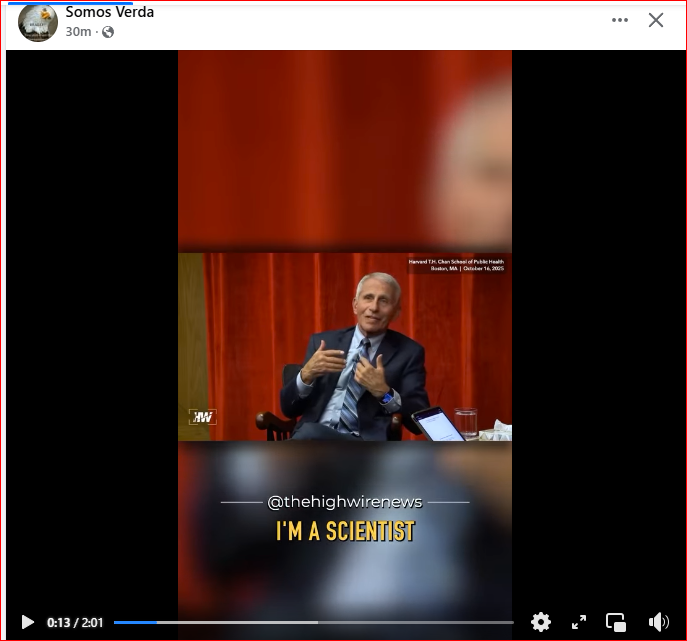
Science is not a collection of data, facts, or evidence, as described in the video. Many disciplines, such as history, archaeology, astrology, or even traffic monitoring, collect data and record observations. If data collection alone made one a scientist, then even a traffic camera could claim to be a scientist.

In reality, science is the systematic study of naturally existing substances at the molecular level — atoms and molecules — using the principles and practices of chemistry, physics, and mathematics (link). True scientists acquire this expertise through rigorous graduate and postgraduate education, followed by years of hands-on research and experimentation.

It is a hidden fraud that individuals without such training — including most physicians — have begun calling themselves “scientists.” This deception has blurred the public’s understanding of what science truly is and who actually practices it.

All progress will begin when physicians stop claiming the mantle of science. Their authority must remain within medicine — a field of practice, not of discovery. Science, by contrast, is the disciplined pursuit of understanding nature through chemistry, physics, and mathematics. Confusing the two has allowed authority to replace knowledge and belief to replace evidence.

Restoring science to its rightful place requires a clear and honest distinction between science and medicine — a separation grounded in genuine education, expertise, and truth.

Why real expertise matters more than borrowed authority

The criticism of science or scientists should not target everyone with a title or degree, but only those who misuse such titles to claim expertise they do not possess. The problem lies not in credentials themselves, but in the false representation of knowledge.

Actual scientists and genuine experts deserve respect. They are the ones who can help resolve the confusion created by self-proclaimed authorities who merely hold positions without understanding. It is essential to separate the pretenders from the professionals — the former seek recognition and lucrative compensation, the latter pursue knowledge and truth.

Now everyone is a science expert or scientist — except the actual scientist.

(more…)

Cures or treatments are only possible for real illnesses—not for imaginary or fabricated ones like “viruses” and their supposed diseases. For decades, billions of dollars have been poured into developing treatments for viral infections, yet nothing has been eradicated; instead, infections appear more frequently, not just in isolated cases but as global “pandemics.” The irony is that no one has ever produced an actual sample of the virus they claim to be working so hard to cure. Has the world ever seen greater con-artistry—run under the banner of science by people with no true expertise in science?

The same holds true for cancer. Billions have been spent on cancer research by the very same “science” experts who push the virus narrative. If what they label as “cancer” is most likely a microbial infection, then, of course, there can be no cure under their framework. Instead, they push lethal chemicals and destructive procedures, generating enormous profits for practitioners and corporations. Why would they ever admit it is a microbial infection treatable with inexpensive medicines? That would not only collapse their business model but also expose the fraud of modern science—another textbook case of modern-day con-artistry.

It is time to stop funding this fraudulent version of “medical science.” No more research grants for it, no more unearned titles of “science experts” or “scientists” for physicians pretending to practice science. Then—and only then—will we begin to see illnesses truly disappear from this earth.

Cancer or Misdiagnosis? An Uncomfortable Truth (link)

Physicians are trained to practice medicine, not to do science. Their education is clinical—focused on diagnosis, treatment, and patient management. It does not provide rigorous training in analytical chemistry, pharmacology at depth, toxicology, or experimental design. Yet, many physicians present themselves as “scientific experts,” blurring the line between clinical authority and true scientific expertise.

Medical standards and guidelines are often written and enforced by these same physicians, creating a closed circle where their opinions reinforce each other and are then presented as “science.” Peer-reviewed publications in medical journals frequently repeat this cycle, offering conclusions that are based more on consensus and authority than on solid scientific evidence.

This is why physicians’ claims to be scientific authorities must be challenged. Clinical practice does not equal science. Without grounding in the methods of genuine scientific disciplines, their declarations about viruses, vaccines, or drug mechanisms rest on weak foundations. The authority they project is false, and it must be exposed as such.

Like I wrote:
Quackery in White Coats (link)
Chemistry, Not Medicine, Defines Science (link)
Critical Review of Medical Authority and Scientific Legitimacy (link)
Questioning Medical Authority: Show Your Science Credentials (link)