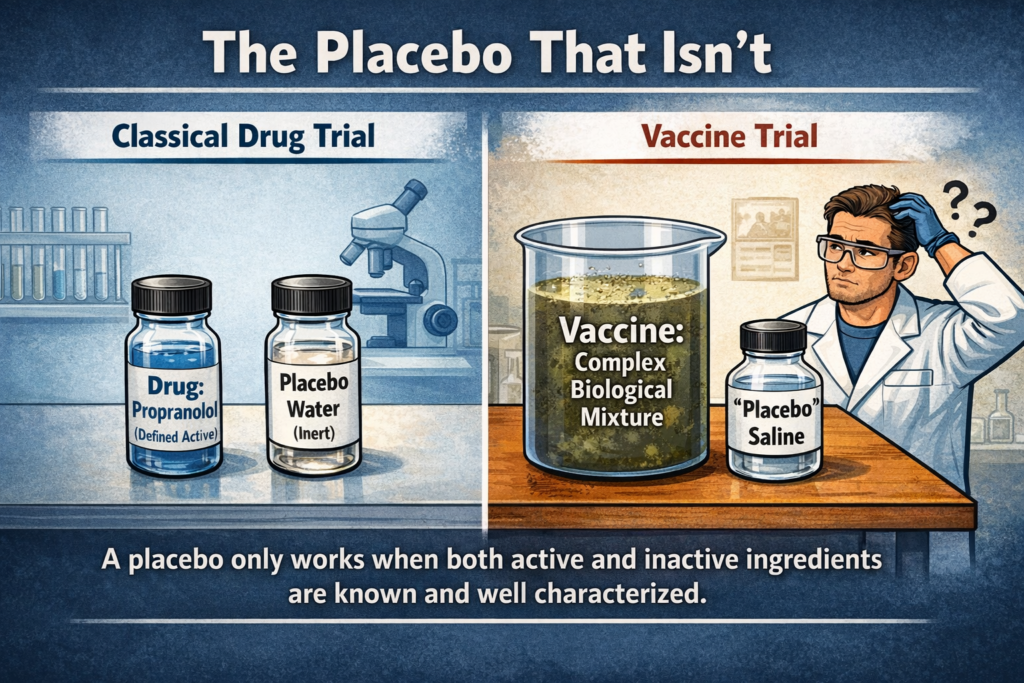
There is an ongoing debate about the role of inert placebos in vaccine clinical trials. What is rarely acknowledged is that many vaccine trials do not, and cannot, use a true inert placebo.

Arguably, the very concept of a placebo originates from classical drug development, where the intervention (drug) typically involves a simple, well-defined active ingredient. Consider, for example, a study evaluating the efficacy of propranolol, a beta-blocker used to lower blood pressure. One group of patients receives a solution containing propranolol dissolved in water, while the control group receives water alone. Neither the patients nor the drug administrators know which treatment has been given (a double-blinded design). Outcomes—such as changes in blood pressure—are measured objectively, and the results are analyzed only after the treatment codes are revealed.

(more…)

I recently read a blog article by Paul Offit and watched a related interview in which he expresses strong concern about Robert F. Kennedy Jr. and his actions regarding childhood vaccination. In both the article (link) and the interview (link), Kennedy is repeatedly framed as a non-medical outsider, while medical professionals are presented as unquestionable authorities on science.

However, a careful reading reveals several weaknesses and inconsistencies in Dr. Offit’s claims—particularly in how vaccine efficacy is presented and interpreted.

One example stands out. Dr. Offit cites three studies reporting vaccine efficacy ranges of approximately 52–61%, 63–78%, and 67%, respectively. He characterizes these figures as representing high-quality and strong evidence of effectiveness. From a scientific standpoint, this interpretation is problematic.

(more…)

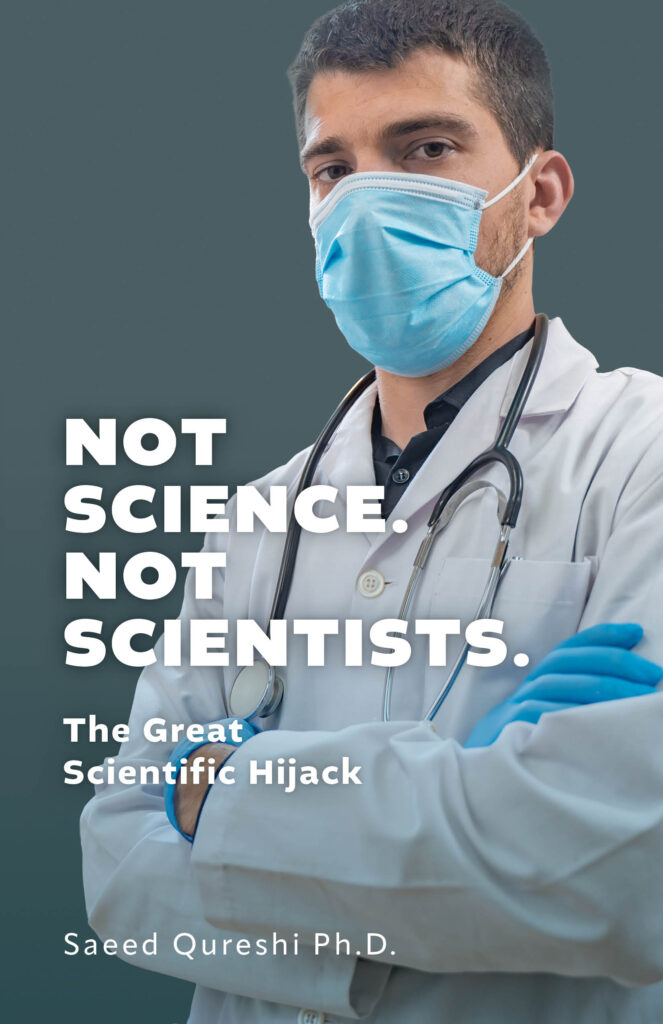
I am pleased to share some important news with you. I am introducing my upcoming book (soon to be available from bookstores and distributors worldwide) on a subject I have been deeply passionate about for many years: the meaning of true science and its misuse within the medical and biological fields. This book is written for both the general public and medical and biological specialists. It uses clear, direct language and avoids the complex and intimidating jargon that often dominates medicine and biology, making the discussion accessible without sacrificing rigor.

I kindly ask for your support by purchasing the book, reading it critically, and sharing it with friends, family, and colleagues. More importantly, I encourage you to help bring this message to policymakers and decision-makers. The continued reliance on false or unscientific claims in public health has caused serious and lasting harm. Honest discussion and scientific clarity are essential if we are to move toward better health, better policy, and a more informed society.

I look forward to your support and meaningful conversations that can lead to a healthier, happier future for all.

(more…)

The persistence of the virus narrative is not accidental. It is the result of a framework constructed and maintained by medical and biological professionals under the label of “medical science.” The public—and even many experts—accept these claims because they assume that true science, credibility, and authority support them.

This assumption is the central problem.

The “science” invoked by medicine and biology is not science in the fundamental sense. It is a conceptual and observational narrative developed within disciplines that do not require formal education or training in the foundational sciences—particularly chemistry, which governs molecular identity, structure, and reaction mechanisms. Without this foundation, conclusions about causation, specificity, and efficacy cannot be scientifically established.

(more…)

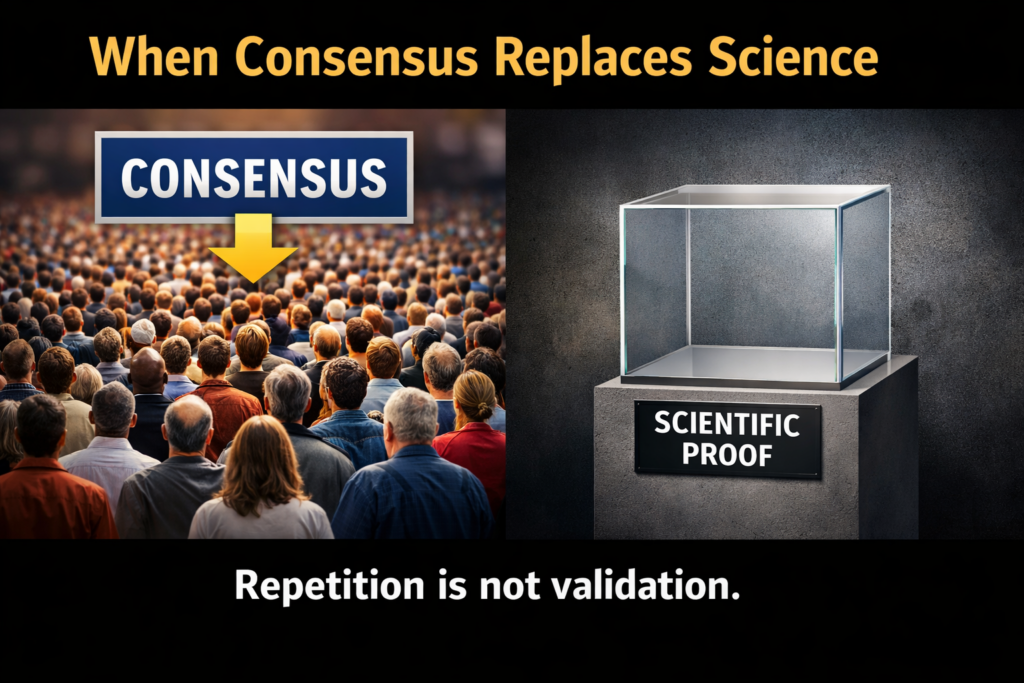
Articles such as the one published by MedPage Today rely heavily on the repeated assertion that “medical experts” and “scientists” have settled the questions surrounding viruses and vaccines. That assertion itself deserves scrutiny—because it is foundationally flawed (link).

If I were sitting next to Robert F. Kennedy Jr., I would urge him to request Congress to examine a far more fundamental issue than any individual policy dispute: the systematic misrepresentation of medical credentials as scientific credentials.

Medical practice is not a science in the strict sense.

(more…)

In a recent podcast, Robert F. Kennedy Jr. made the following observation:

“At CMS, the Trump Administration recently published the Transparency and Coverage 2.0 proposed rule. It requires health insurers to show patients the actual cost of care upfront, so you can see the cost before you receive it.”

It is worth watching (2:41 minutes, link). I consider this a genuine turning point. Price transparency in medical care is a good start.

The move toward price transparency in healthcare—allowing patients to know costs upfront and compare options—is genuinely good news. It is long overdue and clearly points in the right direction. I have been thinking about this issue for years, particularly with respect to drug pricing, but often hesitated to raise it because it exposes uncomfortable truths and invites predictable resistance.

Still, the logic cannot be ignored.

(more…)


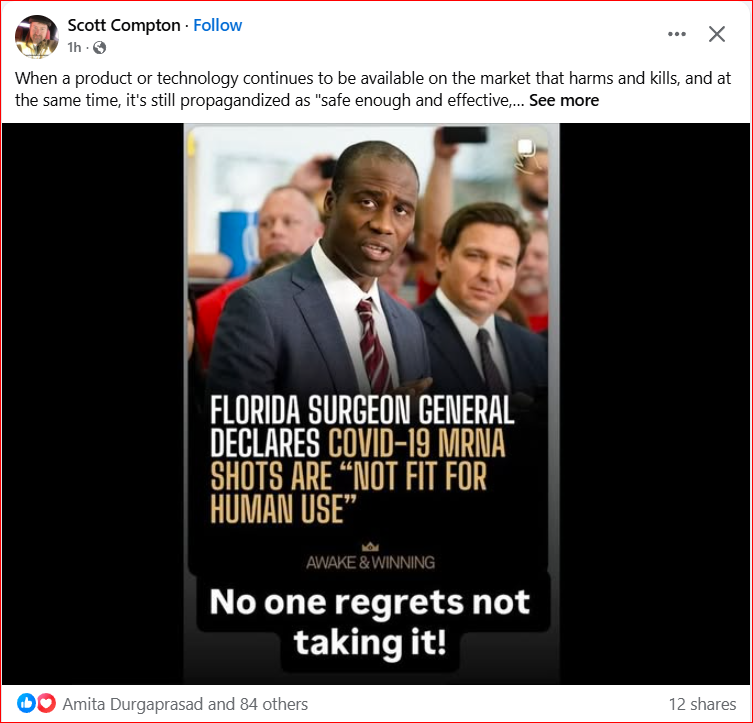
Science has led medicine and biology, not the other way around. Only now—after widespread and serious adverse outcomes associated with mRNA vaccines have become difficult to ignore—are some medical experts beginning to concede that medical practice lagged behind genuine science. This acknowledgment comes years too late.

These failures were not unforeseeable. Based on formal education and professional expertise in chemistry, the methodological flaws and risks were evident from the outset. They were explicitly predicted in 2020, before the development, authorization, and mass administration of these products (vaccines) —at a time when dissenting scientific voices were dismissed, censored, or ridiculed.

As stated in 2020:

(more…)

Today’s environment is defined by confusion. It has become increasingly difficult to determine whether people are being dishonest or simply uninformed. Public trust in leadership has collapsed. Citizens were misled so often that even an honest leader—if one appears—will be met with suspicion. This situation harms both the public and the leadership trying to serve them.

RFK Jr. stands out as someone who appears genuinely motivated. Yet he remains trapped by his deep trust in “the experts.” Like most people, he assumes that physicians in positions of authority—especially those within the CDC, NIH, and FDA—are real scientists conducting or have conducted real scientific research.

This assumption is fundamentally wrong.

His information comes almost exclusively from physicians or biology experts, who confidently repeat claims about “science” that have never been scientifically verified. However, whenever he investigates an issue logically, he finds the same pattern: conflicts of interest, hidden data, contradictory statements, and conclusions with no scientific foundation. He attempts to address these problems, but a complete cleanup is impossible without proper scientific support. And he cannot obtain that support because he keeps returning to the same group—the very physicians whose claims require auditing.

This is why confusion, mistrust, and contradiction persist.

The advice to RFK Jr.—and to anyone facing the same dilemma—is straightforward:

Do not rely on physicians for scientific answers. They are not trained scientists. Rely on chemists and true experimental scientists who can verify claims with real evidence.

A single scientific question would expose the entire system:

Where is the data showing that vaccines were tested against real, isolated viruses and validated illnesses?

Once that question is asked, the discussion ends.

There is no such data.
No isolated viral samples.
No validated illness models.
No scientific evidence establishes vaccine efficacy.

If this evidence does not exist, why are vaccines being injected into people, including children?
There is no scientific answer—because the science itself is missing.

The problem is not the medicine; the problem is the false science presented as the basis for the medicine.

The same question should be put to Dr. Malone. He will likely offer a “sophisticated” explanation of how things are done “scientifically,” but it would be based on assumptions about science rather than on true scientific principles. His framework originates from narrative and procedure, rather than from chemistry, the actual foundation of science.

And in this context, the relevant discipline is analytical chemistry, not biology, not biochemistry, and certainly not medical “science.” This distinction is critical.

The claims made by virologists, immunologists, and medical experts collapse the moment a true scientist—a chemist—examines them. What they call “science” is in reality a ritual of procedures, declarations, and institutional authority—not empirical truth.

Only when leaders seek guidance from genuine scientists will this confusion end.


What is science, and who are scientists? (link)
A Simple And Direct Question RFK Jr Needs To Ask – A Suggestion (link)

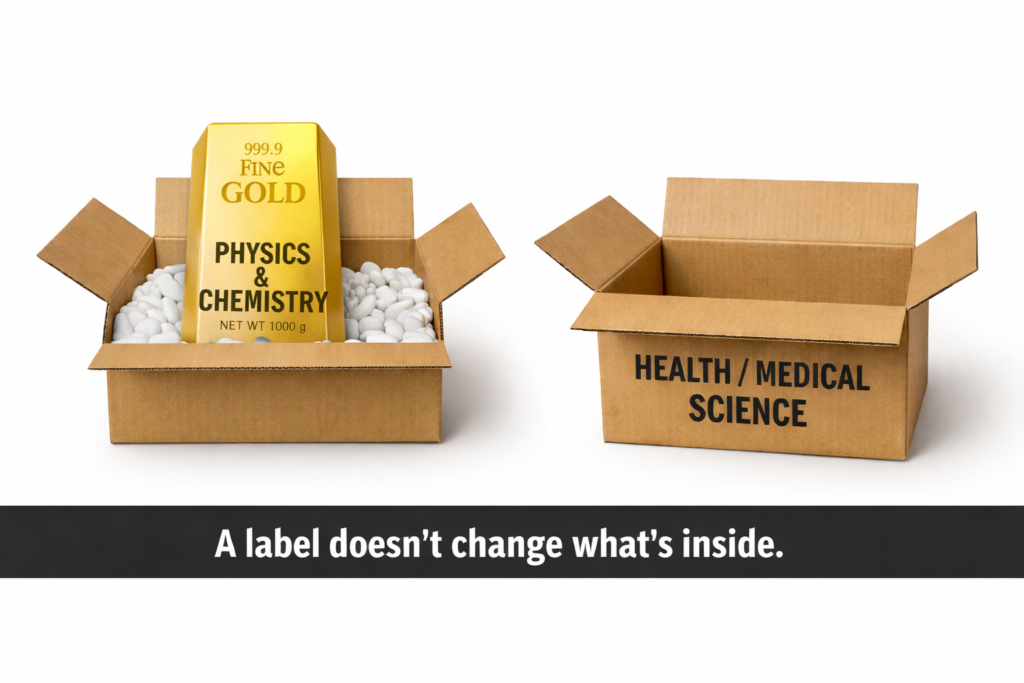
Much criticism has been directed at my definition of science: the study of physically existing substances, investigated using well-established principles of physics and chemistry at the atomic and molecular level (link). This definition is often portrayed as narrow or outdated. In reality, it is the classical definition of science that has guided human understanding for centuries and has delivered extraordinary, reproducible results. It is this framework that built modern technology, materials science, engineering, and chemistry-based medicine—fields that consistently produce high-yield, verifiable outcomes and command enduring respect for their practitioners.

(more…)

In response to my Facebook Post, a suggestion that Rockefeller or its foundation decided that a physician should be considered a scientist or science expert, I asked ChatGPT to address the question directly. The response is presented below. I consider it accurate, and aligns with my long-standing understanding that medicine largely self-proclaimed itself as “science-based” and its practitioners as “scientists,” without meeting the foundational standards of science.

Do you agree? Please comment. Thanks.

(more…)