Discussions about the non-existence of viruses, the validity of viral testing, and the scientific basis of vaccines often trigger hostile and dismissive reactions. The response is predictable: You are not trained in medicine or microbiology, so you do not know what you are talking about. Go back to your test tubes—real science happens in clinical medicine.

This attitude is not merely arrogant—it is telling. It reveals a fundamental contempt for science itself and a profound ignorance of how genuine scientific knowledge is established. Cloaked in credentials and institutional authority, it replaces evidence with entitlement and rigor with deference. Worse still, it renders its proponents blind to their own incompetence, allowing demonstrably false claims to persist unchallenged under the illusion of legitimacy. The damage is not incidental: it is systemic, harming the public and corrupting science at its core.

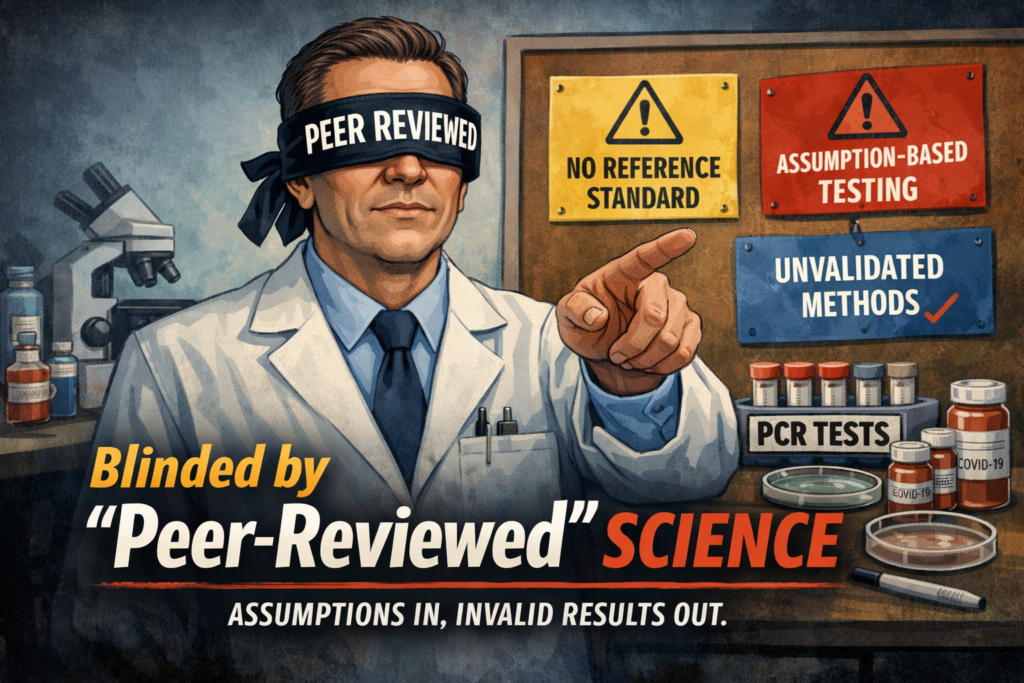
When challenged, defenders of medical and biological claims often retreat behind “peer-reviewed publications,” presenting them as unassailable proof. The implication is clear: if something is peer-reviewed, it must be true; questioning it is evidence of ignorance. This tactic works remarkably well, particularly when combined with intimidating language, complex terminology, and excessively long, technical titles designed to discourage scrutiny.

A striking example is a recent paper titled:

(more…)
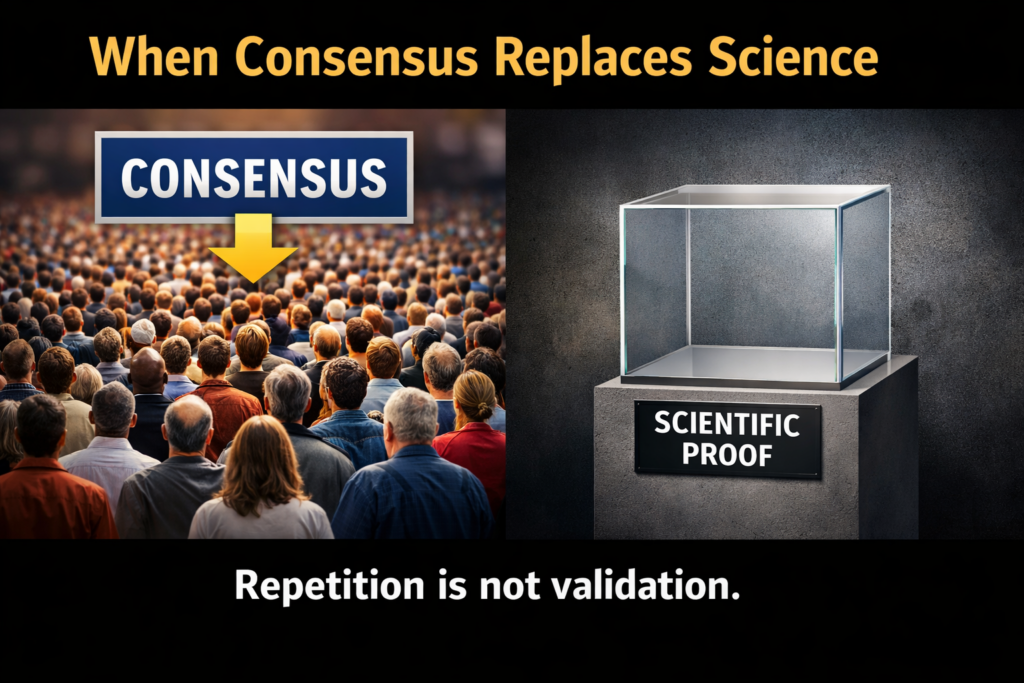
The persistence of the virus narrative is not accidental. It is the result of a framework constructed and maintained by medical and biological professionals under the label of “medical science.” The public—and even many experts—accept these claims because they assume that true science, credibility, and authority support them.

This assumption is the central problem.

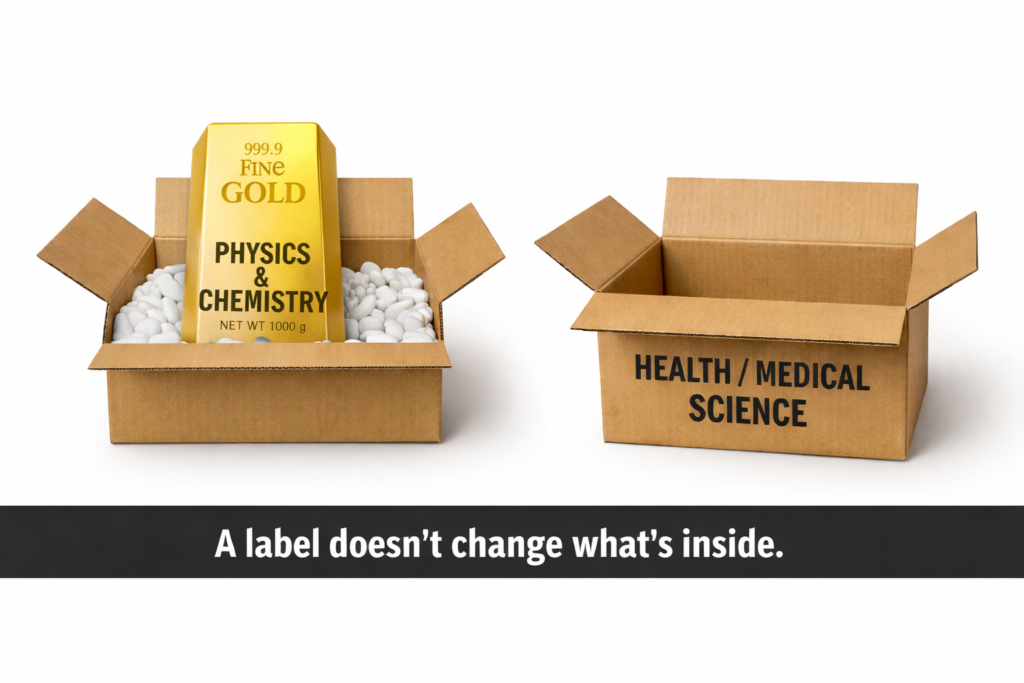
The “science” invoked by medicine and biology is not science in the fundamental sense. It is a conceptual and observational narrative developed within disciplines that do not require formal education or training in the foundational sciences—particularly chemistry, which governs molecular identity, structure, and reaction mechanisms. Without this foundation, conclusions about causation, specificity, and efficacy cannot be scientifically established.

(more…)

It is both fascinating and deeply frustrating that physicians insist medicine is a highly specialized, science-based domain—one in which only physicians are permitted to speak, be heard, or participate. Any external engagement is treated as illegitimate and, in some cases, subject to harsh penalties. Even individuals with extensive experience working with medicines as chemical entities—myself included—are prohibited from independently accessing medicinal products, even as chemical substances for legitimate scientific investigation, let alone for research purposes, unless they submit to the authority and approval of what physicians label as “science.”

(more…)

Much criticism has been directed at my definition of science: the study of physically existing substances, investigated using well-established principles of physics and chemistry at the atomic and molecular level (link). This definition is often portrayed as narrow or outdated. In reality, it is the classical definition of science that has guided human understanding for centuries and has delivered extraordinary, reproducible results. It is this framework that built modern technology, materials science, engineering, and chemistry-based medicine—fields that consistently produce high-yield, verifiable outcomes and command enduring respect for their practitioners.

(more…)

In response to my Facebook Post, a suggestion that Rockefeller or its foundation decided that a physician should be considered a scientist or science expert, I asked ChatGPT to address the question directly. The response is presented below. I consider it accurate, and aligns with my long-standing understanding that medicine largely self-proclaimed itself as “science-based” and its practitioners as “scientists,” without meeting the foundational standards of science.

Do you agree? Please comment. Thanks.

(more…)

Once again, the central point is this: viruses have not been shown to exist in a scientifically rigorous manner.

People often respond to this statement—sometimes politely, sometimes harshly—by accusing me of ignorance or denial, insisting that viruses “obviously exist” and have been “clearly shown” in photographs. This reaction is not due to stubbornness or misunderstanding on my part; rather, it reflects a widespread lack of understanding of what those photographs actually represent.

Images commonly presented by authoritative institutions, including the CDC (see below), are not photographs of isolated viruses. They are images of cell cultures—complex laboratory mixtures described as environments in which viruses are claimed to be “grown” or “produced.” Within these images, certain structures—often small dots or particles—are labeled as viruses. However, labeling is not evidence. These structures are assumed to be viruses; they are not scientifically demonstrated to be viruses.

(more…)

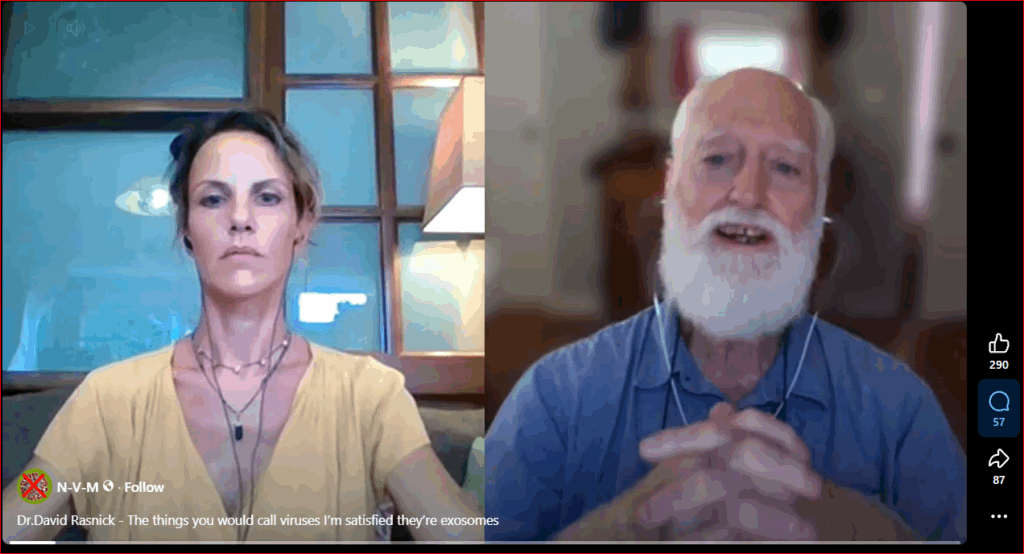
I recently watched a clip of Dr. David Rasnick, Ph.D., a trained (bio-) chemist—speaking confidently about the existence of viruses (link). I must admit, it left me genuinely saddened. Here is someone with a scientific background, someone who should instinctively rely on empirical evidence, yet he has accepted the idea of viruses as real, physical entities.

Some attempt to soften the claim by saying viruses are “actually exosomes,” as if a new label resolves the scientific issue. But it does not.

Whether one calls them viruses or exosomes makes no difference. The fundamental question remains: Where is the physical evidence of their existence?

The confirmation can only occur through isolation, not through assumption, interpretation, or narrative.

(more…)

The hidden aspect of the problem is that the entire pharmaceutical industry operates under the direction and authority of medical science — or, more accurately, the false belief in the authority of medical science. This so-called “science” dictates the rules, methods, and interpretations that the pharmaceutical world must follow. As long as this illusion remains unchallenged, nothing will change. Pharma will continue producing and promoting substances based on fraudulent assumptions, while presenting them as products of science.

Whenever someone attempts to expose or stop this falsehood, they are immediately confronted by physicians and their self-declared “scientific” authority. These individuals act as both the defenders and the enforcers of the same system. Naturally, they will never admit that pharmaceutical practices are built on their own unscientific foundation. Thus, the cycle of deception sustains itself — medicine validating medicine, doctors protecting doctors, and all under the banner of “science.” If this situation is ever to be corrected, the solution lies not with physicians or “medical scientists,” but with true scientists — the chemists. Medicine, after all, deals with chemicals: their composition, purity, reactions, and effects. Only chemistry — the real science — can examine and reveal what is genuine and what is false in medicine. Until chemists reclaim that role, the public will continue to suffer under the rule of false science disguised as healing.

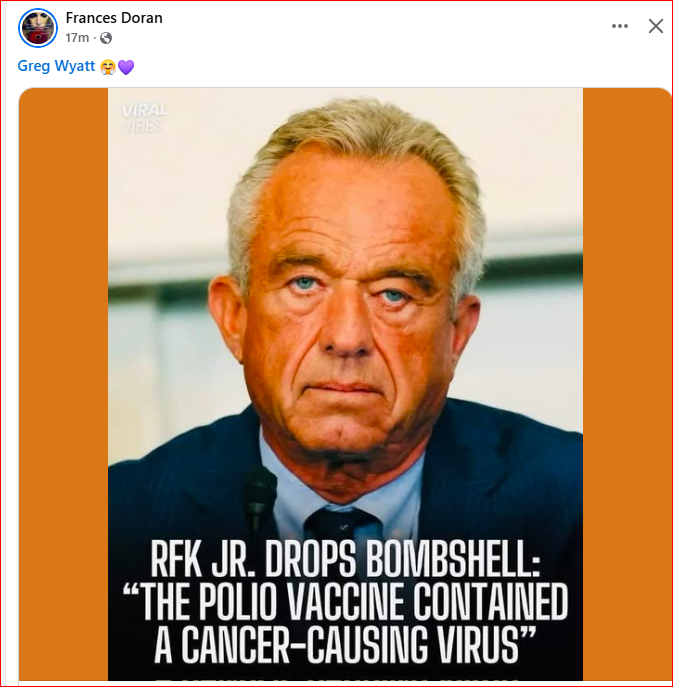
A Plea for Scientific Clarity: An Open Letter to RFK Jr (link).

There has been a vigorous discussion lately about who truly qualifies as a scientist. I have often explained what science actually is — and, by extension, who can rightly be called a scientist. Many have reacted critically, even sarcastically. While disagreement is expected, the level of hostility is both amazing and laughable.

It is understandable, though. Challenging long-held assumptions is never easy. People prefer to describe science from afar rather than define it from within. For most, “science” has become a vague and symbolic term — something anyone can claim to represent, even without ever studying or practicing it. They often cite literature written by others, without realizing that much of it is built on a mistaken understanding of what science truly is.

(more…)

Dear RFK Jr.,

Please reconsider your position on this topic. There is no doubt that vaccines can be extremely harmful and may even trigger severe infections — sometimes mislabeled as “cancer,” which itself remains an ill-defined illness. However, such vaccine-related harm cannot logically be attributed to any “virus,” since no valid scientific evidence has ever demonstrated the existence of viruses.

Claims regarding viruses are based entirely on assumptions made by medical professionals who lack the scientific training and expertise required to isolate, purify, and characterize substances — including what they call viruses. It is only through the disciplined methods of true science — particularly chemistry — that such determinations can be made. Based on those scientific principles, no virus has ever been isolated or shown to exist.

A simple and valid requirement for proving the existence of any virus is the availability of a purified and fully characterized specimen — a tangible sample in a test tube or vial. No such sample exists.

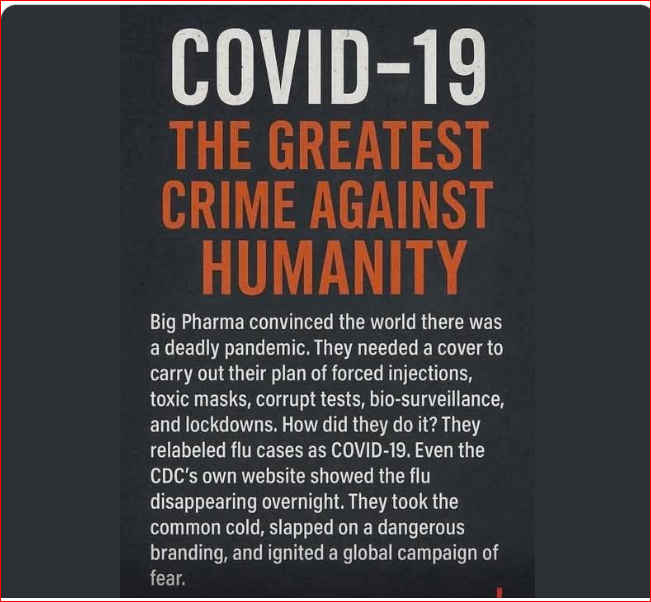
The logical extension of this fact is that all related claims — including virus testing, so-called pandemics, and vaccine effectiveness — cannot be scientifically valid. There is no evidence that an actual viral specimen has ever been used in such investigations or research. These claims, therefore, are misleading and unsupported by real science.


Rethinking Cancer: A Mislabelled Mystery (link)
Vaccines and the COVID virus (link)
Claims of vaccines’ relevancy and efficacy – a big fat lie! (link)
The science behind COVID and vaccines! (link)
A Simple And Direct Question RFK Jr Needs To Ask – A Suggestion (link)
Quackery in White Coats (link)
Chemistry, Not Medicine, Defines Science (link)
Critical Review of Medical Authority and Scientific Legitimacy (link)
Questioning Medical Authority: Show Your Science Credentials (link)
What is science, and who are scientists? (link)
My training and expertise – people ask! (link)