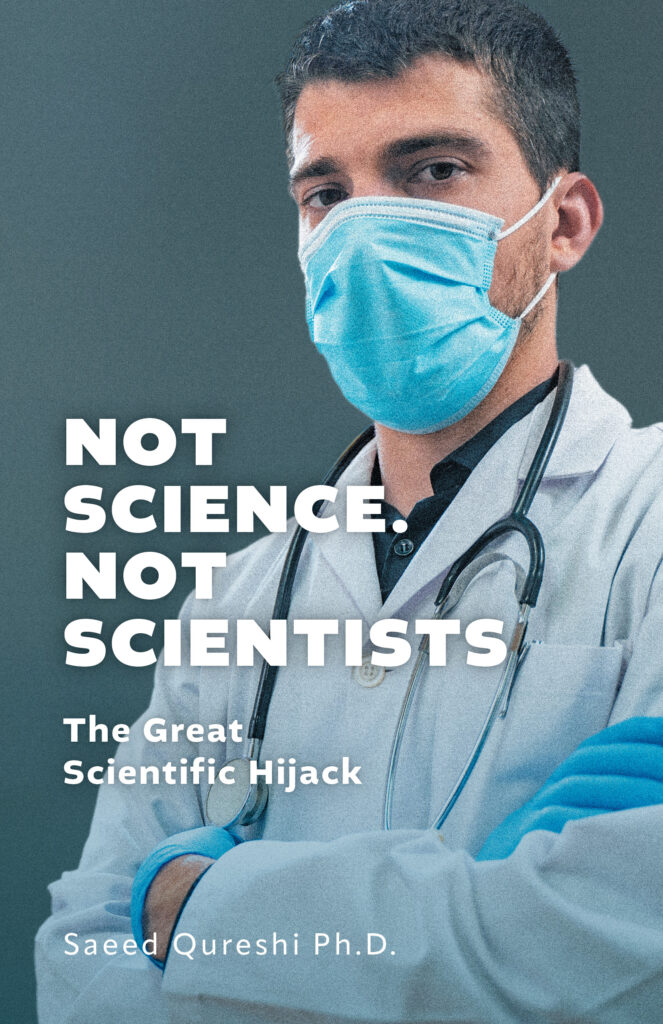
I am pleased to share some important news with you. I am introducing my upcoming book (soon to be available from bookstores and distributors worldwide) on a subject I have been deeply passionate about for many years: the meaning of true science and its misuse within the medical and biological fields. This book is written for both the general public and medical and biological specialists. It uses clear, direct language and avoids the complex and intimidating jargon that often dominates medicine and biology, making the discussion accessible without sacrificing rigor.

I kindly ask for your support by purchasing the book, reading it critically, and sharing it with friends, family, and colleagues. More importantly, I encourage you to help bring this message to policymakers and decision-makers. The continued reliance on false or unscientific claims in public health has caused serious and lasting harm. Honest discussion and scientific clarity are essential if we are to move toward better health, better policy, and a more informed society.

I look forward to your support and meaningful conversations that can lead to a healthier, happier future for all.

(more…)
Discussions about the non-existence of viruses, the validity of viral testing, and the scientific basis of vaccines often trigger hostile and dismissive reactions. The response is predictable: You are not trained in medicine or microbiology, so you do not know what you are talking about. Go back to your test tubes—real science happens in clinical medicine.

This attitude is not merely arrogant—it is telling. It reveals a fundamental contempt for science itself and a profound ignorance of how genuine scientific knowledge is established. Cloaked in credentials and institutional authority, it replaces evidence with entitlement and rigor with deference. Worse still, it renders its proponents blind to their own incompetence, allowing demonstrably false claims to persist unchallenged under the illusion of legitimacy. The damage is not incidental: it is systemic, harming the public and corrupting science at its core.

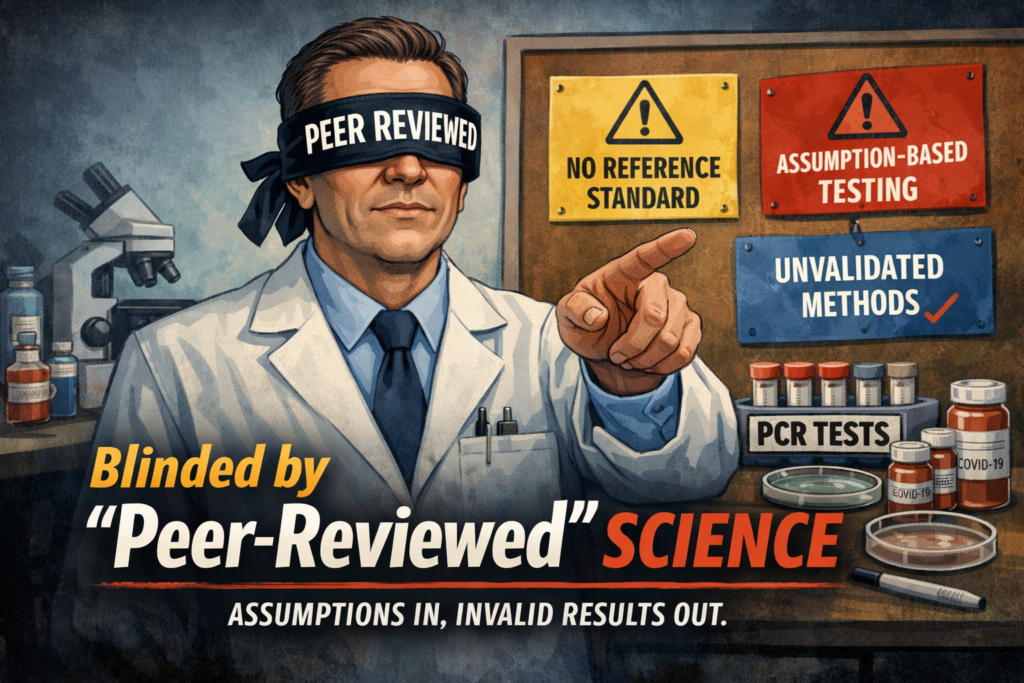
When challenged, defenders of medical and biological claims often retreat behind “peer-reviewed publications,” presenting them as unassailable proof. The implication is clear: if something is peer-reviewed, it must be true; questioning it is evidence of ignorance. This tactic works remarkably well, particularly when combined with intimidating language, complex terminology, and excessively long, technical titles designed to discourage scrutiny.

A striking example is a recent paper titled:

(more…)

The persistence of the virus narrative is not accidental. It is the result of a framework constructed and maintained by medical and biological professionals under the label of “medical science.” The public—and even many experts—accept these claims because they assume that true science, credibility, and authority support them.

This assumption is the central problem.

The “science” invoked by medicine and biology is not science in the fundamental sense. It is a conceptual and observational narrative developed within disciplines that do not require formal education or training in the foundational sciences—particularly chemistry, which governs molecular identity, structure, and reaction mechanisms. Without this foundation, conclusions about causation, specificity, and efficacy cannot be scientifically established.

(more…)

Terms such as science, scientists, studies, data, research, and scientific evidence are now routinely deployed in public discourse to promote medical, pharmaceutical, and healthcare claims. These words carry automatic authority. They command trust. They persuade compliance.

That authority is being misused.

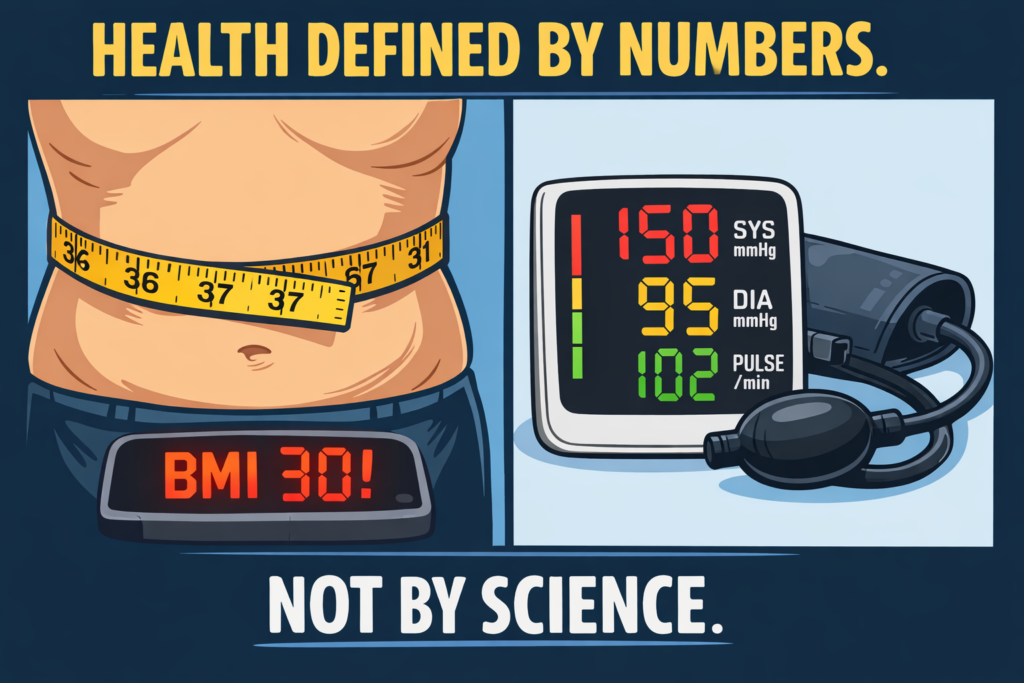
In contemporary medicine, these terms are repeatedly invoked by physicians to legitimize claims that do not arise from science in its proper sense. What is presented as “scientific evidence” is most often clinical observation—records of patient encounters, outcomes, and correlations. Renaming such observations “clinical data” does not convert them into science. They remain descriptive surveys, not experimental investigations.

These words were not created for this purpose. They belong to real science.

(more…)

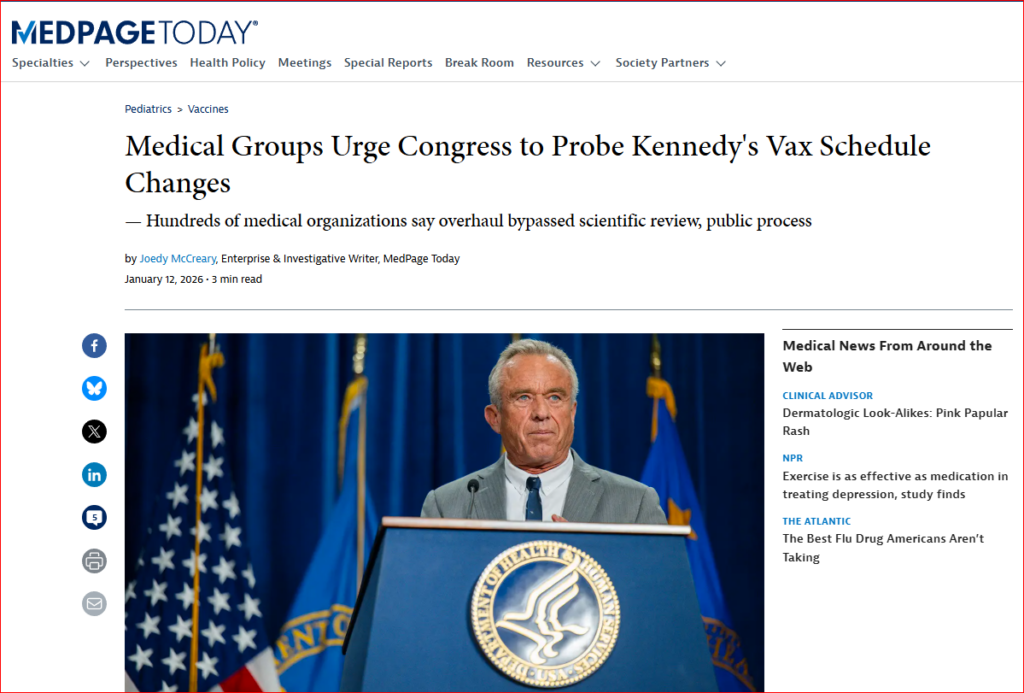
Articles such as the one published by MedPage Today rely heavily on the repeated assertion that “medical experts” and “scientists” have settled the questions surrounding viruses and vaccines. That assertion itself deserves scrutiny—because it is foundationally flawed (link).

If I were sitting next to Robert F. Kennedy Jr., I would urge him to request Congress to examine a far more fundamental issue than any individual policy dispute: the systematic misrepresentation of medical credentials as scientific credentials.

Medical practice is not a science in the strict sense.

(more…)

In a recent podcast, Robert F. Kennedy Jr. made the following observation:

“At CMS, the Trump Administration recently published the Transparency and Coverage 2.0 proposed rule. It requires health insurers to show patients the actual cost of care upfront, so you can see the cost before you receive it.”

It is worth watching (2:41 minutes, link). I consider this a genuine turning point. Price transparency in medical care is a good start.

The move toward price transparency in healthcare—allowing patients to know costs upfront and compare options—is genuinely good news. It is long overdue and clearly points in the right direction. I have been thinking about this issue for years, particularly with respect to drug pricing, but often hesitated to raise it because it exposes uncomfortable truths and invites predictable resistance.

Still, the logic cannot be ignored.

(more…)

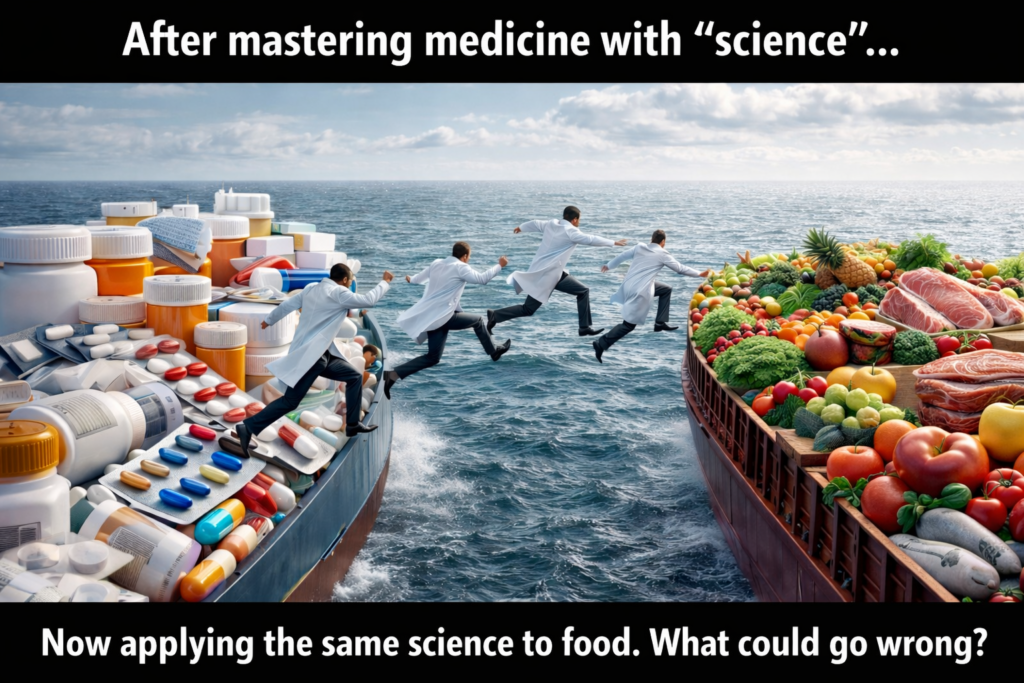
The image of physicians in lab coats jumping from a ship loaded with medicines to one loaded with food captures a deeply troubling reality. Instead of confronting the long-standing deficiencies within medicine and pharmaceuticals—particularly the absence of rigorous scientific training in chemistry and physics—these same professionals are now repositioning themselves as authorities in yet another domain.

Rather than addressing the failure of medical and pharmaceutical practice to meet foundational scientific standards, so-called “science experts” are simply shifting domains. Medicine is not being corrected; it is being abandoned. The authority attached to the label of “science” is now being transferred from pharmaceuticals to food and nutrition, without any corresponding transfer of scientific competence. That is not reform; it is rebranding.

(more…)

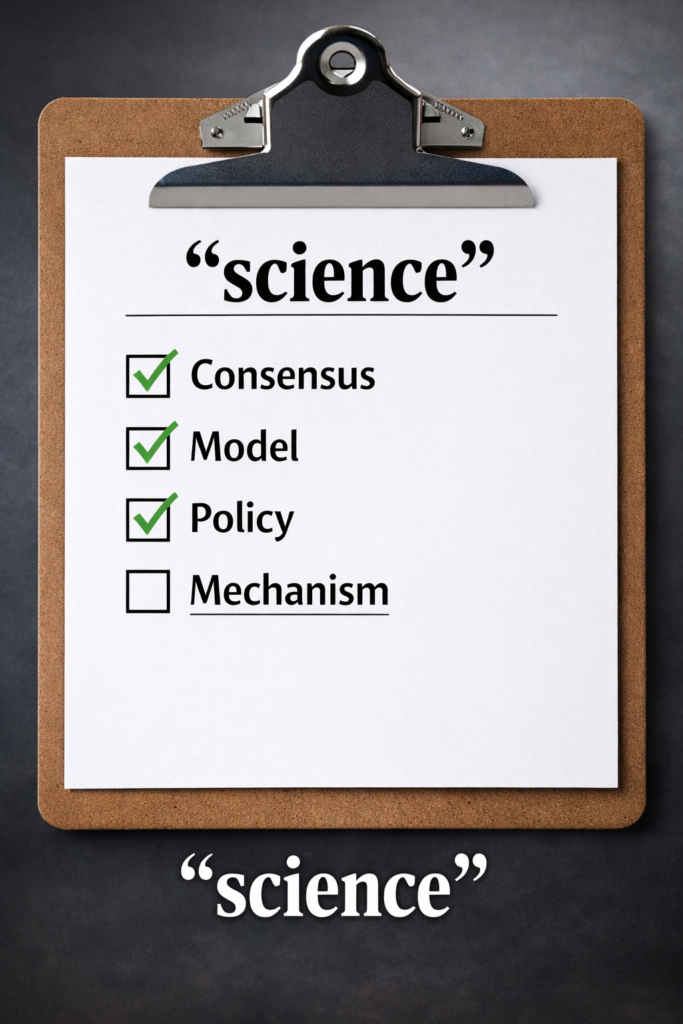
I did not define science, nor am I proposing a personal or alternative version of it. The redefinition of science—through the creation of new “sciences” operating within conceptual, administrative, or policy frameworks and then granted legitimacy—has been carried out by others. When I am told that this (chemistry and physics being the only science subjects) reflects my definition of science, that claim is misplaced. I am not advancing an opinion; I am pointing to what science has historically been and what it methodologically requires.

Science, in its foundational sense, is grounded in the study of physical reality—matter, energy, and mechanism—as established through chemistry and physics. These disciplines set the standards that came to define science: isolation, characterization, measurement, reproducibility, and causal explanation. Those standards did not originate in medicine, pharmaceuticals, biology, computing, or policy-driven disciplines; they were inherited from the physical sciences.

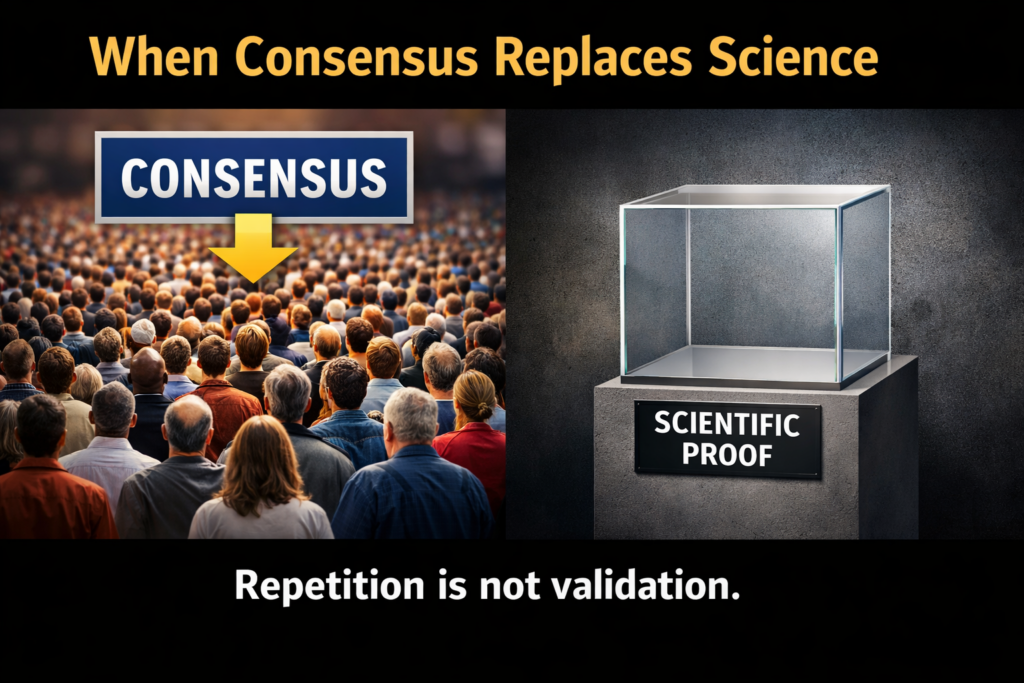
Many modern fields now labeled as “sciences” emerged much later and operate primarily at applied, observational, statistical, or administrative levels. While such fields may be useful in practice, their dependence on models, correlations, and inference does not meet the foundational standards that originally defined science. Utility, prediction, or consensus does not substitute for mechanistic understanding grounded in physical evidence.

This distinction is not a matter of personal bias or preference. It is a matter of historical development and methodological rigor. Expanding the label of science does not change what science is; it alters the label without altering the science.

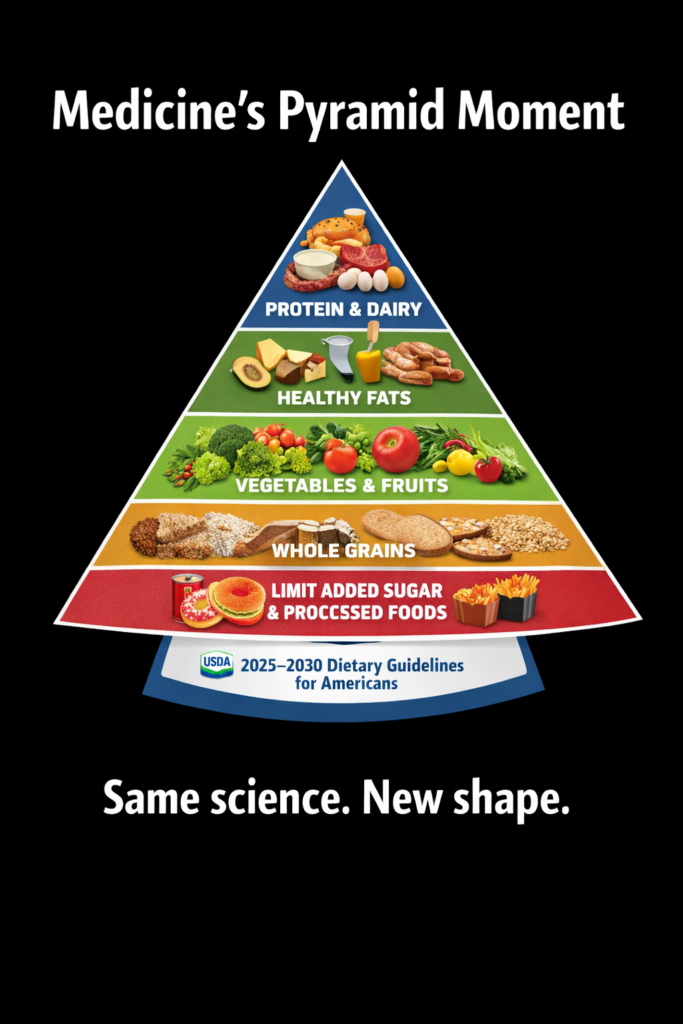
The medical “science” discussion increasingly begins with the HHS Food Pyramid, offered as a sign of reassessment and progress (e.g., https://www.facebook.com/watch?v=805927289135368 ). Updating nutritional guidance may be useful at a public-health level, but revising a visual framework is not the same as strengthening scientific foundations. A change in presentation does not, by itself, resolve deeper methodological questions.

In that sense, the food pyramid functions largely as a symbol. If medicine is moving toward lifestyle guidance and population-level management, one might even imagine changing the laboratory coat from white to green—an acknowledgment of a broader, more policy-oriented role. Yet symbols aside, the underlying scientific approach remains unchanged. The same system that previously framed vaccine promotion as “science” continues to operate with similar assumptions and validation practices.

Calling this framework “medical science” does not automatically align it with the standards of chemistry or physics. Those disciplines rely on isolation, characterization, reference standards, and direct testing. When such requirements are relaxed or replaced by models and narratives, the result is guidance rather than science in the strict sense.

The revised food pyramid does not correct this distinction. It updates the message, not the method. Meaningful progress will come not from new graphics or terminology, but from a renewed commitment to rigorous scientific principles at the core of medical practice.

This article is written in response to a Facebook comment and serves to clarify the intent and meaning of my original post (link).

Question:just a question for you. I’m sure there are medicinal products, medicines and pharmaceuticals that are helpful and beneficial to humans when needed, but simply improving one ‘s diet, exercising and getting the proper sleep would be a major contributing factor into improving one’s health and overall body homeostasis. Injecting useless gunk provides no benefit to the body.” (link)

Response: Thank you for your comment. I understand your concern; however, I believe my position has been misunderstood.

Your interpretation is common, and that is precisely the issue. It reflects a prevailing mindset shaped by routinely used terms such as “diet” and “health.” These words are often treated as self-evident and objective, when in fact they are rarely examined critically. My position is not that diet and health are invalid or unrelated—on the contrary, they are clearly connected. The more fundamental questions are these: what constitutes proper diet and proper health, who defines them, and on what scientific basis are those definitions made?

This is where confusion begins, and authority replaces science. Many so-called health experts operate with vague, subjective notions of health. Their opinions are often no more rigorous than anyone else’s. Opinion may be acceptable in personal discussion, but when claims are elevated to public policy or presented as scientific fact, clear, objective, and scientifically valid criteria are required.

(more…)