
There has been a vigorous discussion lately about who truly qualifies as a scientist. I have often explained what science actually is — and, by extension, who can rightly be called a scientist. Many have reacted critically, even sarcastically. While disagreement is expected, the level of hostility is both amazing and laughable.
It is understandable, though. Challenging long-held assumptions is never easy. People prefer to describe science from afar rather than define it from within. For most, “science” has become a vague and symbolic term — something anyone can claim to represent, even without ever studying or practicing it. They often cite literature written by others, without realizing that much of it is built on a mistaken understanding of what science truly is.
A clear example is the medical profession. Over the past half-century, physicians have come to regard themselves, and be regarded by society, as scientists. Yet their education and training offer no evidence to support such a claim. Medical training remains descriptive and observational, focused on anatomy, physiology, pathology, and biology, supplemented by pharmacology and diagnostic tools. What it lacks are the true scientific foundations — chemistry, physics, and mathematics — the disciplines that require rigorous, quantitative study and direct experimental engagement with matter itself.
Some may argue that because medical students are taught some chemistry or physics, they are therefore trained in science. But these subjects are introduced only at a superficial level — for familiarity, not mastery. They are used merely to support medical routines, not to advance fundamental understanding. In the same way, biology students or “molecular biologists” may handle chemicals or instruments, but that does not make them scientists. Attaching the word molecular (borrowed from chemistry) to biology does not transform it into an actual science; it only disguises descriptive work in scientific language.
Likewise, a physician prescribing hormones does not become a chemist or hormone scientist simply by handling chemical substances. The study of such materials — their structures, reactions, and properties — belongs to chemistry laboratories, not medical offices. Using chemical names, formulas, or laboratory equipment in a hospital setting does not make one a scientist.
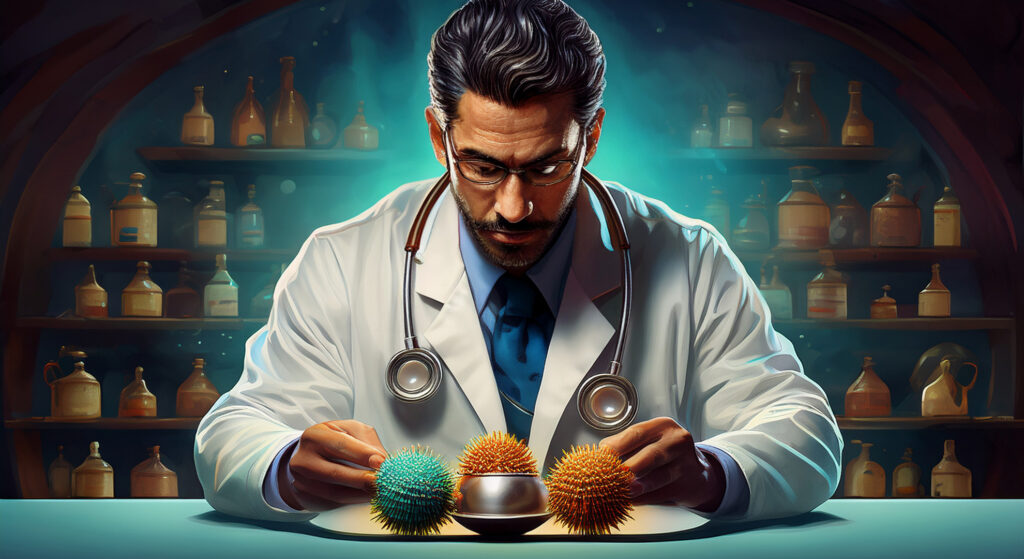
Similarly, repeatedly making claims about the existence of viruses — by showing computer-generated images, publishing diagrams, or developing so-called treatments (such as vaccines) — does not make those viruses real. Science demands physical evidence: a purified, isolated sample in a vial or test tube that can be studied and verified. In the absence of such a sample, the virus cannot be said to have ever been demonstrated to exist. Therefore, all related claims — including those forming the basis of virology — remain false and fraudulent.
True science demands far more — it requires years of high-level academic training, exhaustive hands-on experimentation, and a deep command of the principles governing matter and measurement. Those who perform routine testing or apply existing methods are typically professionals or technicians, rather than scientists. Even chemists who may skillfully follow established procedures would not be considered scientists. On the other hand, a scientist designs, questions, and refines it to uncover new knowledge, working in specialized laboratories away from routine testing laboratories.
The claims made about the existence of viruses — along with their so-called RNA and spike proteins — originate from routine laboratory procedures, not from genuine scientific research laboratories or bona fide scientists. The routine testing laboratories merely follow prescribed protocols that instruct them to declare such entities as “isolated” or “identified,” without ever demonstrating a physical, purified sample. A genuine scientist, working within true science, would demand direct physical evidence of the claimed entities. Therefore, these are not scientific claims but procedural declarations — and scientifically, they remain false and fraudulent.
Both the medical profession and the public must recognize this fact and act accordingly if they wish to avoid the ongoing illusion of “viral illnesses,” the manufactured fear of future pandemics, and so-called scientific research in the field of “medical science.” This is not a scientific issue; it is a shell game disguised as science.
In its pure form, science remains what it has always been: the disciplined study of nature through chemistry, physics, and mathematics. No label, professional title, or borrowed vocabulary can change that.
For further reading, see here: What is science, and who are scientists? (link)