The term “bioweapon” is often repeated with dramatic certainty. Yet it should be read with sadness and concern, because it hides a serious deception: it projects the appearance of advanced science and expert authority where neither has been demonstrated.

Calling something a “bioweapon” implies that rigorous, high-level science is being conducted — that defined biological agents are understood, controlled, and intentionally weaponized. It suggests precision, expertise, and a legitimate scientific foundation. But the uncomfortable reality is that this framing can be used to legitimize a practice that has not met basic scientific standards.

True science — physics and chemistry — begins with defined objects: substances that are isolated, purified, characterized, and measurable, with methods that are reproducible and transparent. Without that foundation, “advanced research” becomes a performance: sophisticated language wrapped around assumptions, mixed materials, and unverified claims.

(more…)

The central problem in modern medicine is not the pharmaceutical industry. It is medicine itself—specifically physicians—who have come to treat stories as science and enforce those stories as fact.

What gives medicine this power is not evidence, but classification. When physicians collectively label something as “science,” it is accepted as such by governments, regulators, courts, media, and the public. Once that label is applied, questioning is no longer permitted. Industry does not define this reality; it responds to it.

Physicians hold the ultimate trump card: the power to treat narrative as science.

How the Story Was Created

The modern story of viruses, vaccines, and mass vaccination did not originate with pharmaceutical manufacturers. It originated within medicine and biology, promoted by physicians under the banner of “medical science.”

The claim that vaccines are “safe and effective” was not invented by industry. It was—and continues to be—made by physicians, their professional associations, committees, and advisory bodies, all presenting themselves as scientific authorities.

Pharmaceutical companies simply manufactured products that physicians asserted were scientifically developed, scientifically validated, and 95% effective, despite the absence of foundational scientific requirements.

(more…)

The collapse of Theranos remains one of the clearest modern examples of what happens when bold medical claims are finally subjected to genuine scientific scrutiny. Founded in 2003 and operating for more than a decade, Theranos rose rapidly in the early 2010s, reaching a peak valuation of roughly $9 billion. At its height, the company attracted elite investors, major corporate partnerships, and extraordinary political credibility.

Its board and supporters included some of the most influential figures in U.S. public life, among them George Shultz and Henry Kissinger. Such endorsements conferred instant legitimacy. The claims were celebrated, the machines were photographed and publicly displayed, and skepticism was muted by authority rather than answered by evidence.

Theranos promised a medical revolution: hundreds of laboratory tests from a single drop of blood, performed on sleek proprietary devices presented as cutting-edge technology. These machines became icons of innovation—despite never being shown to work as claimed.

Behind the scenes, Theranos relied on conventional laboratory equipment while its own devices failed to produce reliable results. Data were inconsistent, validation was absent, and basic principles of chemistry and analytical science were ignored. When whistleblowers and investigative reporting forced independent scrutiny, the illusion collapsed rapidly. Regulators intervened, laboratories were shut down, and partnerships dissolved.

The legal reckoning followed. Elizabeth Holmes, founder and CEO of Theranos, was convicted in 2022 on multiple counts of fraud for misleading investors about the company’s technology and was sentenced to more than 11 years in federal prison. Her business partner, Ramesh Balwani, was separately convicted and sentenced to nearly 13 years. Theranos did not fail because it dared to innovate; it failed because its claims could not withstand scientific validation.

(more…)

Dr. Fauci’s question is not legal — it is scientific

A strong legal case can arguably be constructed against Anthony Fauci. However, winning such a case is far from straightforward. Legal proceedings are easily diluted by bureaucratic complexity—government protocols, institutional guidelines, contractual language, jurisdictional ambiguity, and procedural loopholes. History shows that this approach often leads to endless circular arguments, leaving virology, vaccine policy, and related medical practices effectively untouched for decades.

This pattern is not accidental. It is precisely how contentious areas of medicine have been insulated from meaningful scrutiny—by shifting the debate away from science and into a fog of administrative and legal matters.

Yet there is another way to approach this issue—one that is not only clearer but far more decisive.

That way is science.

The Fundamental Scientific Claim

At the core of modern medical authority lies a central assertion: that medical experts and virologists are acting as scientists and that their conclusions are grounded in science. This claim is rarely challenged, yet it is foundational to every downstream policy decision.

From a true scientific perspective, this claim is fundamentally false.

(more…)

Yesterday, one of my Facebook posts reached nearly 80,000 views in just over 24 hours (link). The volume and intensity of the responses suggest that a nerve was touched. When deeply held beliefs—particularly those labeled as “unquestionable” or “settled” science—are challenged, emotional reactions are inevitable. Such responses are entirely predictable.

Most replies did not engage with the argument’s substance. Instead, they relied on insults, ridicule, and attempts to dismiss my credentials. This is a common tactic when belief systems are threatened: attack the messenger rather than examine the evidence.

The most frequent rebuttal is familiar: “Read the medical literature—there are thousands of papers proving viruses exist.”

The problem is not the quantity of papers. It is how they are read—and what they actually show.

Medical and biology/virology papers do not work with isolated or purified viruses. Instead, they rely on what is termed a “virus isolate,” which is a complex mixture of cell debris, genetic fragments, proteins, additives, and other contaminants derived from cell cultures—without demonstrating that any presumed virus is present within that mixture. Labeling such material a “virus” does not establish its existence. Repeating an assumption does not make it evidence.

In true science—particularly chemistry—existence requires isolation, purification, and physical and chemical characterization. Without these steps, claims remain presumptive. This is not a minor technical detail; it is the foundation of scientific validation, which is absent. The reason this error persists is that many working in medicine and biology are not trained in science, where material identification is mandatory and rigorously enforced.

This leads to a conclusion that many find uncomfortable but unavoidable when scientific standards are applied:

Viruses do not exist; therefore, they cannot cause infection. Medical and biological experts do not work with isolated or purified viruses; they presume them. Consequently, vaccines are irrelevant and invalid as treatments or products. This is not an opinion, but a scientific claim based on the principles of true science—chemistry.

Insults will not change this. Appeals to authority will not change this. Pointing to medical or biology (peer-reviewed) publications will not change this.

The reality is that modern medicine and biology routinely borrow the language of science while ignoring its standards and requirements, using chemistry as a tool while disregarding its rules. From this misuse emerges an imagined entity called “the virus.”

This practice of false science needs to stop. The sooner true scientific rigor is restored, the sooner meaningful progress—rather than belief-driven consensus—can begin.

Former ICMR Director General Soumya Swaminathan has warned that unchecked health misinformation on social media, especially related to vaccines can spread fear, mislead the public, and trigger the return of preventable diseases. She urged stronger regulation and swift removal of harmful medical claims online to safeguard public health.” (link)

When I read such comments from senior physicians, I take them not as evidence of confidence, but as evidence of concern. These reactions suggest that the information now circulating publicly appears logical, internally consistent, and difficult to rebut using traditional medical talking points.

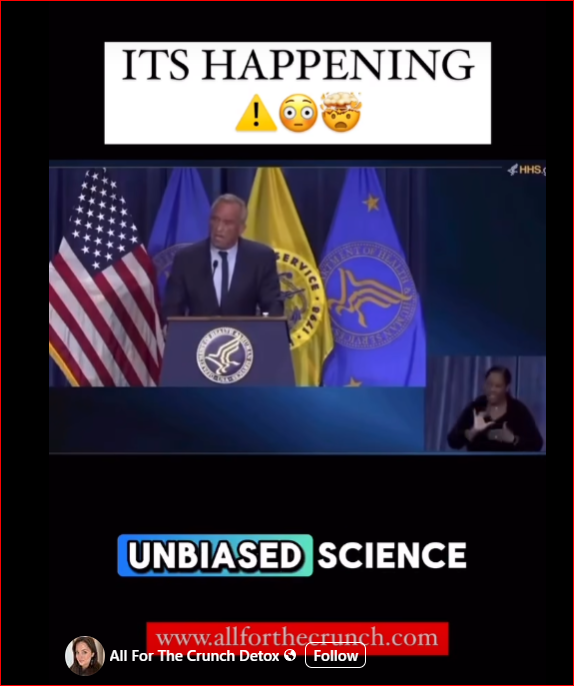
We are seeing this increasingly in paediatrics, and similar patterns are evident in the United States. This shift became especially visible after Robert F. Kennedy Jr. publicly challenged long-standing claims made by medical authorities—particularly regarding childhood vaccination.

The response from many physicians has been revealing. Rather than addressing the substance of the questions raised, they assert authority. This reflects a deeper problem: physicians are not accustomed to being questioned on foundational assumptions. Their training positions them as decision-makers whose claims are expected to be accepted as valid, logical, and scientific—without challenge.

(more…)

In public discourse, the words science, scientists, and research are used constantly. In the context of health and medicine, these terms are almost automatically assumed to refer to medical professionals, particularly physicians, and to what is commonly called medical science. This assumption is so deeply ingrained that it is rarely questioned. Yet it is categorically incorrect.

Neither the public nor most professionals stop to ask a basic question: what exactly is meant by science? And more importantly, who is actually trained to practice it?

This confusion lies at the heart of modern medicine’s claimed authority.

Allopathic medicine—the so-called modern medical system—is widely promoted as superior to alternative traditions such as homeopathy, Ayurveda, and naturopathy. This claimed superiority rests almost entirely on the assertion that modern medicine is “science-based” and supported by “scientific research.” However, this assertion collapses once the term science is defined correctly.

(more…)

A very telling—and revealing—comment was posted by Rense Rozeboom on Facebook:

“Saeed Qureshi, I see you weren’t trained in (micro)biology, so I understand you don’t ‘believe’ in viruses (or bacteria?). But I’ve seen and worked with them, and I can say your idea is very wrong—and worse, you mention things without personal experience. That’s dangerous! Someone claiming to be an ‘expert in chemicals/pharmaceuticals’ should know to remain silent on other fields.” (link)

This comment illustrates exactly why the problem—the persistence of false claims in virology and medicine—continues. These fields operate within a closed framework, promoting internally generated assumptions as “science,” while insulating themselves from external scientific scrutiny.

Microbiologists, biologists, and medical professionals often fail to recognize that I am operating squarely within my field, while they are not. Their claims rely on scientific and chemical methodologies that are incorrectly attributed to their disciplines. Isolation, purification, characterization, test-method development, and the purification and characterization of vaccine or pharmaceutical contents—including the establishment of quality standards—do not belong to microbiology, biology, or medicine. They belong to science in the strict sense: chemistry, which is my area of education and expertise.

Yet these fields routinely appeal to chemistry without proper training or comprehension, drawing conclusions that chemistry itself does not justify. The result is a fundamental scientific error.

From the perspective of true science—chemistry—the methodologies cited and the conclusions drawn do not meet established scientific (chemistry) standards. Claims of viral isolation, validated testing, and authentic purification and characterization of vaccines fail the most basic requirement: the availability of an isolated, purified, and fully characterized physical virus sample in a test tube. Instead, what is presented are mislabeled “virus isolates,” or lysates—complex biological mixtures (having known or unknown components) implied to be pure viruses.

Without isolated, purified, and fully characterized physical entities, such as these viruses, the narrative remains unsupported. From a scientific standpoint, it is not evidence-based.

That is the core issue.

Read the comment carefully and critically (provided below). It unintentionally exposes the core issue.

What is being acknowledged here is that vaccination is market-driven, not driven by public health necessity or medical urgency. Investment decisions are openly framed in terms of return on investment and market access, not disease burden, scientific need, or demonstrated efficacy.

This immediately raises an obvious question:

What happened to the alleged existential threat of viruses and pandemics?

The referenced policy shift primarily applies to the United States, which represents only a small fraction of the global population. If the claims about viral threats and the necessity of vaccination were scientifically sound, one would expect overwhelming demand, urgency, and justification from the rest of the world. That has not occurred. No global scientific or public-health case has been convincingly made to support continued investment.

This is consistent with what I have been stating all along: viruses have not been scientifically demonstrated as physical entities, and vaccines therefore lack scientific relevance. When funding— which creates the market, not pathogens or their treatment— is withdrawn, development stops not because of politics, but because there is no defensible scientific foundation to sustain it.

I will go further. HHS and other authorities should apply the same level of scrutiny to the diagnosis and treatment of many so-called diseases, including cancer. From a true scientific perspective, many modern diagnoses and treatments lack proper scientific grounding. They are based on assumptions, surrogate markers, and narratives rather than isolated, purified, and characterized causes.

Medical science repeatedly claims scientific authority, yet it does not operate within the framework of true science. It lacks rigorous physical verification, analytical validation, and causal demonstration. As a result, many conditions are likely misdiagnosed and mistreated—potentially representing unresolved microbial processes that could be addressed with appropriate antimicrobial approaches, rather than the current aggressive, often ineffective interventions, but highly expensive (profitable) treatments.

This is not a political argument. It is a scientific one.

When science is real, markets follow necessity. When markets collapse, it is often because the science never existed in the first place.


Text from the referenced article/post.

“MODERNA NO LONGER VIEWS VACCINE MARKET AS A CASH COW…

Bloomberg) — Moderna Inc.’s chief executive officer said the company doesn’t plan to invest in new late-stage vaccine trials because of growing opposition to immunizations from US officials.

“You cannot make a return on investment if you don’t have access to the US market,” Stéphane Bancel said in an interview with Bloomberg TV from the World Economic Forum in Davos, Switzerland. Regulatory delays and lack of support from US health officials are making the potential market size “much smaller,” he said.

Bancel’s comments are some of his strongest yet about the difficulties that vaccine makers face in the Trump administration. He joins a chorus of other pharmaceutical executives who have started to vent their frustrations with the government’s assault on immunizations.

“It’s sad for us to see that vaccines that have been proven for decades helping people around the world are not recommended anymore,”

The vaccine debate is commonly presented as a clash between science and skepticism. In reality, it is a dispute between competing authorities—neither of which is grounded in the standards of true science.

The Illusion of Scientific Authority in Modern Medicine

From a scientific perspective, the public is largely unaware of a crucial fact: neither side of the contemporary vaccine debate is grounded in true scientific expertise.

In the case of Robert F. Kennedy Jr., this limitation is openly acknowledged. He does not claim training in chemistry, physics, or analytical science. That point is neither disputed nor concealed.

What is far less recognized—and far more consequential—is that the same limitation applies to Anthony Fauci, as well as many other high-profile physicians routinely portrayed as “science experts.” Despite their medical authority, they do not possess academic training or credentials in true science—namely, chemistry, physics, or analytical measurements. Yet their work is repeatedly labeled “science,” often under the terms medical science or virology.

This distinction is not semantic. It is foundational.

Medical Authority Is Not Scientific Authority

Medicine is a practice-based profession. It applies tools and products developed elsewhere. Drugs are chemicals. Diagnostics are measurements. These domains belong to chemistry and analytical science, not to medicine itself.

Modern medicine, however, has adopted scientific language without adhering to scientific standards. Claims involving viral isolation, PCR testing, immune markers, and vaccine efficacy are presented as established science, despite lacking the foundational requirements of true scientific disciplines.

As a result, opinions from both political critics and medical authorities lack scientific credibility when examined against the standards of chemistry and analytical chemistry.

Asking Questions Does Not Require Scientific Credentials

This is where the debate must be reframed.

A consumer does not need to be a mechanical engineer to evaluate a car. One is not asking how an engine works or to redesign it; one asks for evidence of performance. Does it meet specifications? Does it perform as claimed? Is there verifiable data?

The same logic applies here.

RFK Jr. does not need to be a chemist or scientist to ask simple, legitimate questions:

  • Where is the physical sample of the virus to verify the claim of its existence?
  • Where is the study protocol demonstrating vaccine efficacy against viruses or their diseases?
  • Where are the measurements calibrated against known standards (viruses, RNA, mRNA, spike protein, etc.?

These are not political questions; they are basic scientific questions—or the same questions any informed consumer would reasonably ask.

Where the System Fails

When such questions are raised, the response from medical authorities is predictable:


“The science is settled.”
“The data are peer-reviewed.”
“There is consensus.”

This is precisely where the failure becomes visible.

Peer review in medicine is internal—conducted by similarly trained practitioners—not external validation by scientists trained in chemistry or analytical measurement. PCR testing, which underpins modern virology, has never been scientifically validated against a pure, isolated, and characterized physical virus sample—because such a sample has never been produced.

Without a physical reference, no test can be scientifically validated. Without validated tests, no illness can be scientifically attributed. Without that attribution, efficacy cannot be established—only assumed.

Why RFK Jr. Needs True Science Support

This is not a political weakness. It is a structural one.

RFK Jr. can ask the right questions, but without support from true science experts—particularly analytical chemists—those questions are easily deflected by appeals to authority. That is how fake science survives: not by evidence, but by insulation.

A single sentence from an analytical scientist exposes the entire framework:

Without a pure, isolated physical virus sample, none of the claimed tests, diagnoses, treatments, or vaccines can be scientifically validated.

Nothing more is required.

The Consequences of Facing Reality

Once this issue is examined through the lens of true science, the implications are unavoidable.

If viruses have not been scientifically demonstrated through isolation, purification, and characterization, then illnesses attributed to them cannot be scientifically established. If those illnesses are not established, then claims of treatment efficacy—including vaccines—have no scientific foundation. Without a verified target, there can be no validated test, no calibrated measurement, and no meaningful assessment of efficacy.

What follows is not a minor correction but a systemic collapse. Testing protocols, efficacy claims, regulatory approvals, and public-health mandates all rest on assumptions that have never been validated by the standards of chemistry or analytical science. Remove those assumptions, and the entire structure fails simultaneously.

This is not a matter of opinion. It is a matter of scientific necessity.

A Clear and Shorter Path Forward

Because the problem is foundational, the resolution does not require endless debate, more funding, or decades of additional research. It requires only one thing: the application of real science.

If chemistry and analytical science were applied honestly, the discussion would conclude quickly. Either a physical virus sample exists and can be produced for independent validation—or it does not. Either diagnostic tests can be calibrated against that physical reference—or they cannot. Either efficacy can be demonstrated against a verified illness—or it cannot.

There is no middle ground.

This is why the issue persists. Not because the science is complex, but because it has never been properly applied. The system survives by avoiding the very standards it claims to uphold.

Once those standards are enforced, the debate ends—not slowly, but immediately. And with it ends the illusion of “medical science” as a substitute for real science.

Conclusion

This debate persists only because true scientific standards have been excluded from the discussion. Once chemistry and analytical science are applied, the foundations of modern virology and vaccination collapse under their own weight. What remains is not science, but belief reinforced by authority and repetition. Real science does not require consensus, peer approval, or institutional protection—it requires evidence. And that evidence has never been produced.