A Scientific Perspective on Standards, Variability, and Scientific Accountability

Medicine presents itself as science. But science, in its classical sense, requires measurement — precise, reproducible, and independently verifiable measurement. Without that, claims remain narratives.

Let us begin with a thought experiment. Suppose the medical establishment were to declare: “We made a mistake. The viral model, as currently defined, lacks foundational verification.” What would follow? Entire segments of modern pharmaceutical practice — particularly the vaccine sector — are built upon specific biological premises. If those premises were fundamentally revised, the products derived from them would require re-evaluation. The point is not collapse. The point is dependence. The industry operates within a framework defined by what is called “medical science.”

Now consider something more concrete.

(more…)

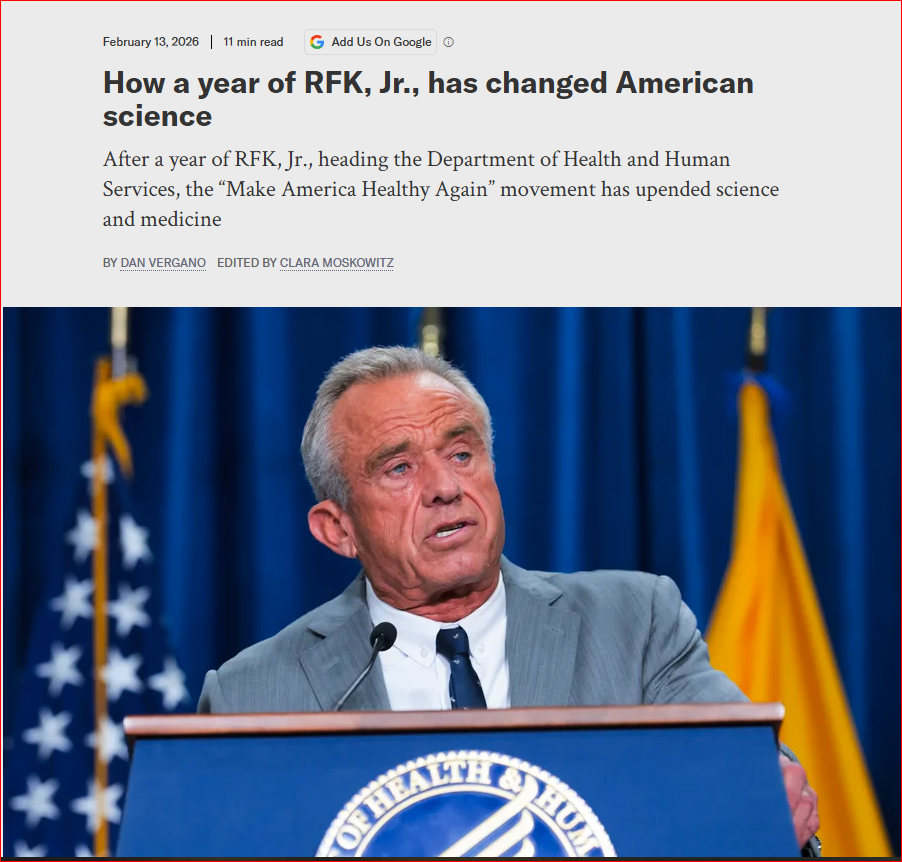
A recent Scientific American article argues that a year of RFK Jr.’s influence has “changed American science,” particularly within the U.S. Department of Health and Human Services (HHS). The underlying claim is that science at HHS has been disrupted, politicized, or undermined. (link)

That framing assumes something that deserves closer examination: that HHS is, in fact, a center of foundational science.

It is not.

HHS is primarily a clinical and regulatory institution. It is staffed and directed largely by physicians and public health professionals. Their training is clinical and applied. They diagnose, prescribe, regulate, and manage programs. That is a professional function — not foundational science.

(more…)

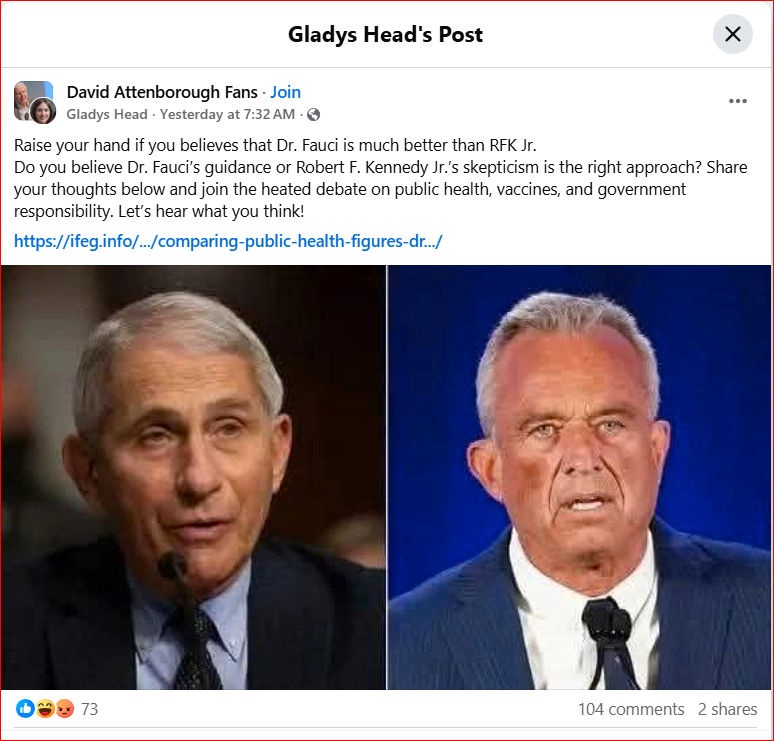
The vaccine debate is commonly presented as a clash between science and skepticism. In reality, it is a dispute between competing authorities—neither of which is grounded in the standards of true science.

The Illusion of Scientific Authority in Modern Medicine

From a scientific perspective, the public is largely unaware of a crucial fact: neither side of the contemporary vaccine debate is grounded in true scientific expertise.

In the case of Robert F. Kennedy Jr., this limitation is openly acknowledged. He does not claim training in chemistry, physics, or analytical science. That point is neither disputed nor concealed.

What is far less recognized—and far more consequential—is that the same limitation applies to Anthony Fauci, as well as many other high-profile physicians routinely portrayed as “science experts.” Despite their medical authority, they do not possess academic training or credentials in true science—namely, chemistry, physics, or analytical measurements. Yet their work is repeatedly labeled “science,” often under the terms medical science or virology.

This distinction is not semantic. It is foundational.

Medical Authority Is Not Scientific Authority

Medicine is a practice-based profession. It applies tools and products developed elsewhere. Drugs are chemicals. Diagnostics are measurements. These domains belong to chemistry and analytical science, not to medicine itself.

Modern medicine, however, has adopted scientific language without adhering to scientific standards. Claims involving viral isolation, PCR testing, immune markers, and vaccine efficacy are presented as established science, despite lacking the foundational requirements of true scientific disciplines.

As a result, opinions from both political critics and medical authorities lack scientific credibility when examined against the standards of chemistry and analytical chemistry.

Asking Questions Does Not Require Scientific Credentials

This is where the debate must be reframed.

A consumer does not need to be a mechanical engineer to evaluate a car. One is not asking how an engine works or to redesign it; one asks for evidence of performance. Does it meet specifications? Does it perform as claimed? Is there verifiable data?

The same logic applies here.

RFK Jr. does not need to be a chemist or scientist to ask simple, legitimate questions:

  • Where is the physical sample of the virus to verify the claim of its existence?
  • Where is the study protocol demonstrating vaccine efficacy against viruses or their diseases?
  • Where are the measurements calibrated against known standards (viruses, RNA, mRNA, spike protein, etc.?

These are not political questions; they are basic scientific questions—or the same questions any informed consumer would reasonably ask.

Where the System Fails

When such questions are raised, the response from medical authorities is predictable:


“The science is settled.”
“The data are peer-reviewed.”
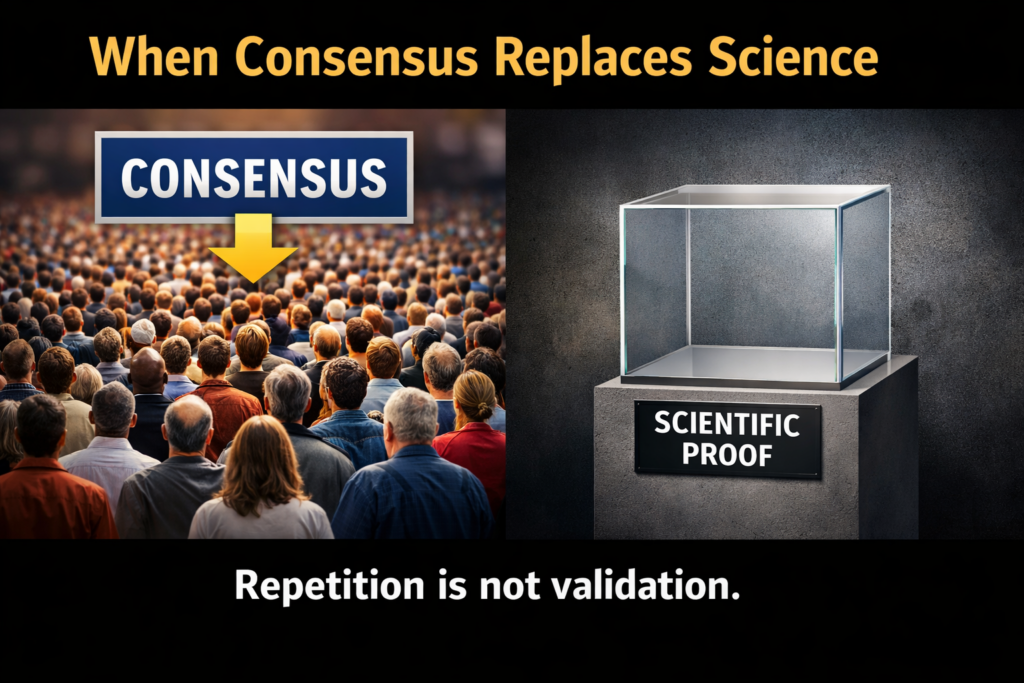
“There is consensus.”

This is precisely where the failure becomes visible.

Peer review in medicine is internal—conducted by similarly trained practitioners—not external validation by scientists trained in chemistry or analytical measurement. PCR testing, which underpins modern virology, has never been scientifically validated against a pure, isolated, and characterized physical virus sample—because such a sample has never been produced.

Without a physical reference, no test can be scientifically validated. Without validated tests, no illness can be scientifically attributed. Without that attribution, efficacy cannot be established—only assumed.

Why RFK Jr. Needs True Science Support

This is not a political weakness. It is a structural one.

RFK Jr. can ask the right questions, but without support from true science experts—particularly analytical chemists—those questions are easily deflected by appeals to authority. That is how fake science survives: not by evidence, but by insulation.

A single sentence from an analytical scientist exposes the entire framework:

Without a pure, isolated physical virus sample, none of the claimed tests, diagnoses, treatments, or vaccines can be scientifically validated.

Nothing more is required.

The Consequences of Facing Reality

Once this issue is examined through the lens of true science, the implications are unavoidable.

If viruses have not been scientifically demonstrated through isolation, purification, and characterization, then illnesses attributed to them cannot be scientifically established. If those illnesses are not established, then claims of treatment efficacy—including vaccines—have no scientific foundation. Without a verified target, there can be no validated test, no calibrated measurement, and no meaningful assessment of efficacy.

What follows is not a minor correction but a systemic collapse. Testing protocols, efficacy claims, regulatory approvals, and public-health mandates all rest on assumptions that have never been validated by the standards of chemistry or analytical science. Remove those assumptions, and the entire structure fails simultaneously.

This is not a matter of opinion. It is a matter of scientific necessity.

A Clear and Shorter Path Forward

Because the problem is foundational, the resolution does not require endless debate, more funding, or decades of additional research. It requires only one thing: the application of real science.

If chemistry and analytical science were applied honestly, the discussion would conclude quickly. Either a physical virus sample exists and can be produced for independent validation—or it does not. Either diagnostic tests can be calibrated against that physical reference—or they cannot. Either efficacy can be demonstrated against a verified illness—or it cannot.

There is no middle ground.

This is why the issue persists. Not because the science is complex, but because it has never been properly applied. The system survives by avoiding the very standards it claims to uphold.

Once those standards are enforced, the debate ends—not slowly, but immediately. And with it ends the illusion of “medical science” as a substitute for real science.

Conclusion

This debate persists only because true scientific standards have been excluded from the discussion. Once chemistry and analytical science are applied, the foundations of modern virology and vaccination collapse under their own weight. What remains is not science, but belief reinforced by authority and repetition. Real science does not require consensus, peer approval, or institutional protection—it requires evidence. And that evidence has never been produced.

The persistence of the virus narrative is not accidental. It is the result of a framework constructed and maintained by medical and biological professionals under the label of “medical science.” The public—and even many experts—accept these claims because they assume that true science, credibility, and authority support them.

This assumption is the central problem.

The “science” invoked by medicine and biology is not science in the fundamental sense. It is a conceptual and observational narrative developed within disciplines that do not require formal education or training in the foundational sciences—particularly chemistry, which governs molecular identity, structure, and reaction mechanisms. Without this foundation, conclusions about causation, specificity, and efficacy cannot be scientifically established.

(more…)

Terms such as science, scientists, studies, data, research, and scientific evidence are now routinely deployed in public discourse to promote medical, pharmaceutical, and healthcare claims. These words carry automatic authority. They command trust. They persuade compliance.

That authority is being misused.

In contemporary medicine, these terms are repeatedly invoked by physicians to legitimize claims that do not arise from science in its proper sense. What is presented as “scientific evidence” is most often clinical observation—records of patient encounters, outcomes, and correlations. Renaming such observations “clinical data” does not convert them into science. They remain descriptive surveys, not experimental investigations.

These words were not created for this purpose. They belong to real science.

(more…)

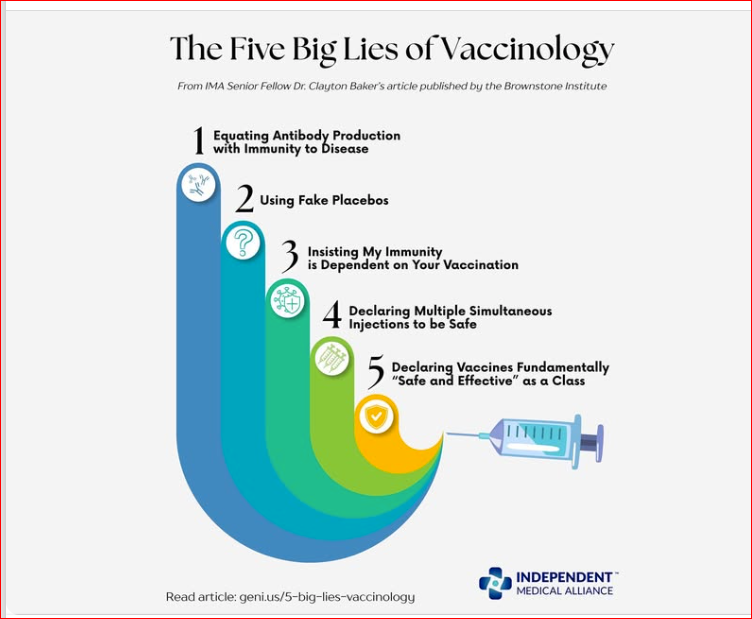
The article “The Five Big Lies of Vaccinology” presents itself as a scientific critique of vaccines—particularly mRNA products—by analyzing Pfizer trial data (link). However, this review is authored from a medical, not a scientific, perspective. This distinction is not semantic; it is fundamental.

In fact, the five lies of vaccinology are themselves the result of one larger and more consequential lie: that medical science is science, and that physicians are scientists.

The central problem with vaccines and vaccinology is therefore not merely flawed trials, exaggerated claims, or regulatory misconduct. Those issues are secondary. The primary problem is that modern medicine is not grounded in true science. Medical professionals—whether arguing for or against vaccines—are not educated or trained in the foundational sciences required to make scientific determinations: chemistry, physics, and mathematics.

As a result, both pro-vaccine and anti-vaccine medical arguments suffer from the same structural defect. They rely on assumptions inherited from medical doctrine rather than on independently established scientific evidence.

The Unexamined Premise: Virus Existence

The article critiques vaccinology while preserving its most critical assumption: that viruses exist as isolated, purified, and scientifically characterized entities. This assumption is never questioned. Yet from a true scientific perspective, this is precisely where scrutiny must begin.

There is no scientifically valid evidence demonstrating the isolation, purification, and characterization of viruses in accordance with the standards required by chemistry and physics (science). Without such evidence, the entire framework of virology—including disease attribution, pathogenic mechanisms, and vaccine targets—rests on an unverified premise.

If the causal agent itself has not been scientifically established, then:

  • Claims of virus-specific diseases are unsubstantiated.
  • Pathology attributed to viruses is speculative.
  • Preventive or therapeutic interventions—vaccines included—are scientifically unjustified.

Under these conditions, debating vaccine safety, efficacy, or platform technology (including mRNA) is misplaced. There is no scientific necessity for vaccines to exist in the first place.

Medical Debate Is Not Scientific Debate

The article reflects an internal dispute within medicine, not a scientific evaluation of medicine itself. Medical experts reviewing medical studies—even critically—remain confined to a non-scientific framework. Statistical analysis of clinical trials does not substitute for establishing the physical reality of the entities being claimed.

This is why such reviews, while appearing rigorous, ultimately reinforce the same foundational error: they challenge vaccine implementation while leaving the existence of viruses—and thus virology itself—unexamined and implicitly validated.

Conclusion

The failure of vaccinology is not isolated. As even the article indirectly illustrates, it is part of a broader pattern. It is the consequence of medicine presenting itself as science when it is not, and of physicians being portrayed as scientists when they are not trained as such.

Until medicine is grounded in true scientific methodology—beginning with the physical isolation, purification, and characterization of claimed agents—both pro- and anti-vaccine arguments remain scientifically incomplete.

A genuine scientific critique must challenge first principles, not merely debate outcomes.

The Medical Shell Game: The Illusion of Science (link)

LINK

Many so-called “awake” doctors speak out against vaccines, but usually after the harm has already been done and continues to be done.

Vaccines were being developed right under their noses for years, and concerns about harm were repeatedly raised — yet these doctors never acted meaningfully or effectively.

Why? Because they still do not understand where the real problem lies.

The core issue is this: doctors claim they are conducting “science” and “scientific research,” including for vaccine development, but this is a false claim. Physicians — including specialists — do not have education, training, or credentials in true science. They are not scientists. Their entire system is built on a self-declared brand called “medical science,” which produces diagnoses, tests, treatments, and pharmaceuticals — including vaccines.

None of this is grounded in true science. It belongs in the domain of chemistry, where isolation, purification, and characterization must be performed for diagnosis, testing, and product development. These “awake” doctors simply assume those steps were done. They never verify them because they do not have the education and training to do so.

Thus, even their criticisms remain shallow. They talk about side effects and mandates — but never question the core claim: Was there ever a virus? Most cannot even define a pure, isolated virus sample.

The truth is simple: from the perspective of true science (chemistry), viruses have never been isolated, purified, or characterized. Therefore, they cannot be the cause of illness. Most “viral illnesses” are diagnosed using scientifically fraudulent tests — PCR, antibody tests, etc. — not by identifying any actual physical entity.

So, are “awake” doctors helpful?
Unfortunately, no. They cannot solve the problem because they are part of it — even if unknowingly. Their ignorance and misplaced confidence helped create false vaccines, false diseases, and false fears.

The real solution is not more medical advice.
The real solution is to challenge the fraudulent scientific foundation.

Bring in experts in true science—chemistry—to address the issue of virus isolation. The moment it is honestly examined, the entire problem disappears.

No virus → no viral disease → no need for vaccines.
Remove the fraudulent testing and fraudulent medical science, and people recover naturally.

This is what must be addressed—not repeated medical narratives, even from “awake” doctors.

Please forward this message directly to Senator Ron Johnson—it is important that he sees it.

Rethinking Cancer: A Mislabelled Mystery (link)
Vaccines and the COVID virus (link)
Claims of vaccines’ relevancy and efficacy – a big fat lie! (link)
The science behind COVID and vaccines! (link)
A Simple And Direct Question RFK Jr Needs To Ask – A Suggestion (link)
Quackery in White Coats (link)
Chemistry, Not Medicine, Defines Science (link)
Critical Review of Medical Authority and Scientific Legitimacy (link)
Questioning Medical Authority: Show Your Science Credentials (link)
What is science, and who are scientists? (link)
My training and expertise – people ask! (link)

This article is a response to a Facebook follower who asked for my thoughts on the AI-generated critique of my article (link).

I must say, the analysis was quite interesting, and I am genuinely impressed — your AI did a reasonably good job critiquing my article.

Before I present my critique (see below), I want to clarify and emphasize that this is AI, not RI (Real Intelligence). AI depends entirely on what is fed into it and on how the underlying algorithms gather, filter, and present information — including what they choose to emphasize or ignore. In other words, AI is inherently biased both by the input and by the controls placed on it.

That said, I personally make extensive use of AI and often run my comments and posts through it to check for errors or illogical statements. My AI has effectively been “trained” from my side, aligned with scientific standards as I understand them. So I decided to generate a rebuttal from my AI to your AI and see how fairly it responds. The response I received from my AI is thorough, correct, and I fully support it.

For your reading convenience, I have reproduced your AI’s critique first, followed by the rebuttal produced by my AI, which I fully endorse.

I trust my AI’s response because it is based on the principles of true science, from a chemistry and analytical perspective. In contrast, I consider your AI’s response grounded in non-scientific narratives, even though it cites published literature. Its foundation lies in biology and medical science — both of which, in my view, do not qualify as true sciences.

For further convenience, I have also reproduced my original article (the one under discussion) at the end, along with the link to the blog.

Enjoy — and feel free to share your feedback.

Saeed Qureshi, Ph.D.

A few days ago, I came across a phrase that immediately caught my attention — “procedural declaration.”

It perfectly captured what I had been struggling to explain for years: why regulatory authorities such as the FDA and similar bodies around the world appear “scientific,” yet their drug approval processes are not truly based on science.

That phrase — procedural declaration — describes it exactly.

(more…)