Dr. Fauci’s question is not legal — it is scientific
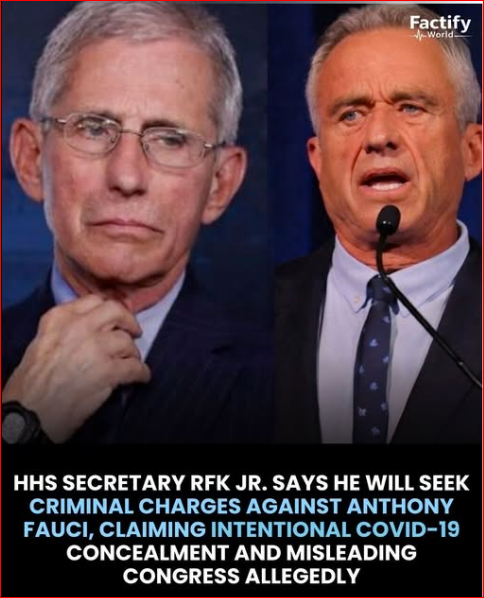
A strong legal case can arguably be constructed against Anthony Fauci. However, winning such a case is far from straightforward. Legal proceedings are easily diluted by bureaucratic complexity—government protocols, institutional guidelines, contractual language, jurisdictional ambiguity, and procedural loopholes. History shows that this approach often leads to endless circular arguments, leaving virology, vaccine policy, and related medical practices effectively untouched for decades.

This pattern is not accidental. It is precisely how contentious areas of medicine have been insulated from meaningful scrutiny—by shifting the debate away from science and into a fog of administrative and legal matters.

Yet there is another way to approach this issue—one that is not only clearer but far more decisive.

That way is science.

The Fundamental Scientific Claim

At the core of modern medical authority lies a central assertion: that medical experts and virologists are acting as scientists and that their conclusions are grounded in science. This claim is rarely challenged, yet it is foundational to every downstream policy decision.

From a true scientific perspective, this claim is fundamentally false.

(more…)
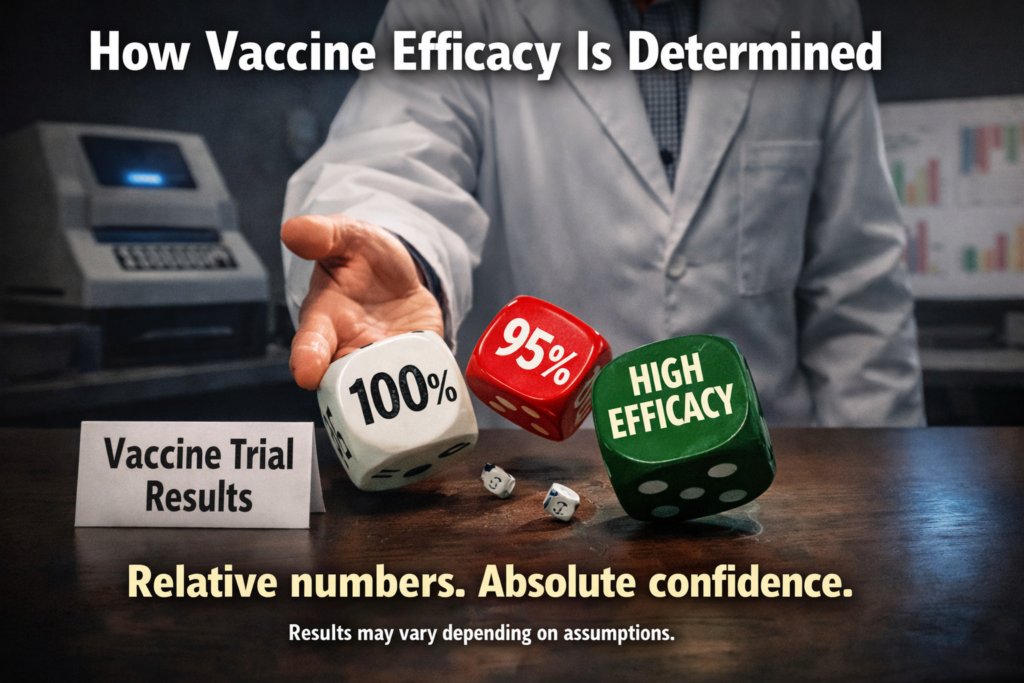
In principle, efficacy is intended to represent the proportion of patients who are cured. Traditionally, this has been inferred from clinical improvement—the resolution of visible or reported symptoms. More rigorously, however, a true cure should be demonstrated objectively through testing, using measurable markers whose changes reliably reflect disease progression or recovery.

For example, in the case of a viral infection, effective treatment would be expected to reduce viral load or specific viral markers, such as viral RNA or proteins. This framework assumes that such markers are elevated in sick individuals compared to healthy ones, and that their reduction corresponds to recovery. This is the model upon which claims of efficacy are meant to rest.

However, this framework does not operate in virology as practiced today. There is no scientific evidence demonstrating the existence of viruses as claimed, and therefore, no validated evidence for their supposed markers. As a result, the fundamental requirements for objective measurement are neither met nor applied.

(more…)

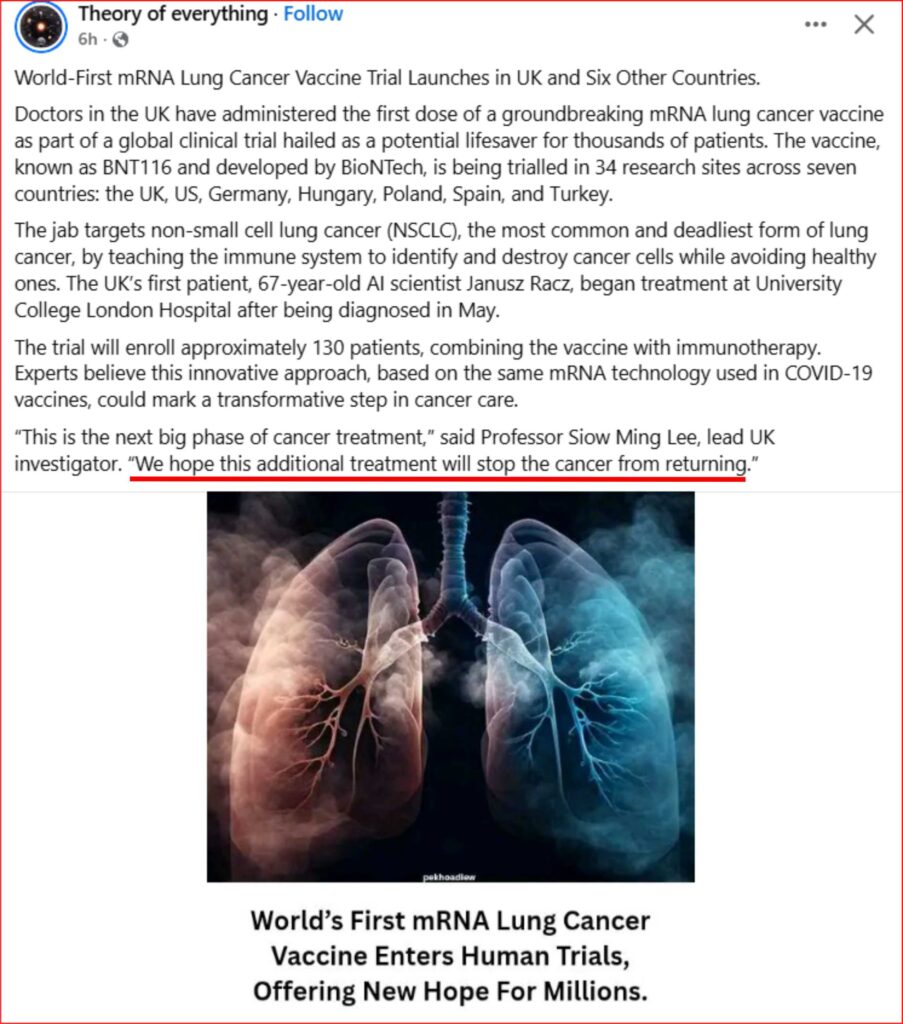
“We hope this additional treatment will stop the cancer from returning.”

They are working with hope, not with science. That is the essence of today’s so-called “medical science” — it runs on hope, not on evidence grounded in chemistry or physics.

Doctors speak of “mRNA technology,” but there is no such technology in the scientific sense. It is merely a chemical formulation—a mixture said to contain a compound called mRNA. In truth, there is no verified test to confirm the presence or purity of this mRNA, because no isolated or purified reference material exists.

So, what remains? Hope — the same hope that surrounded the COVID-19 “mRNA vaccines.” Everyone now knows how that turned out: a human tragedy of global proportions, buried under layers of denial and cover-ups.

Just as with “viruses” — unseen, undefined, and unverified entities — the medical world now constructs “cancer” as another illusion, a diagnosis based on images and tissue fragments rather than isolated, characterized substances. Despite decades of funding and experimentation, they have not found, controlled, or scientifically explained either.

Yet, the public continues to trust “medical science,” unaware that its foundation rests on untested methods like the clinical trial — celebrated as the gold standard, but never scientifically validated for its intended purpose. It is not a scientific tool; it is a commercial and regulatory instrument designed to maintain control and to continue medical foolishness and fraud.

And so, the cycle continues:

Hope, not science — marketing, not measurement — faith, not proof.

In recent online discussions, several readers raised thoughtful questions about what defines a scientist and what truly qualifies as science. The conversation touched on topics such as bioelectrochemistry, molecular biology, virology, and the role of chemistry in understanding living systems. The discussion revealed a recurring confusion — that biology and medicine are often mistaken for sciences, when in fact they depend entirely on the principles of chemistry and physics.

Defining a Scientist

A scientist is one who studies physics, chemistry, and mathematics in depth — the foundational disciplines that explain nature and its operations. These subjects deal with matter, energy, and the laws that govern their behavior. Only through such rigorous and quantitative understanding can one explore the workings of nature in a truly scientific way.

(more…)

There has been much talk about a recently “discovered” study that claims to compare vaccinated and unvaccinated children, as summarized here (the article). The original study may be found here (link).

Based on a survey or so-called epidemiological analysis, it reportedly found that vaccination appears to harm vaccinated children. The data presented indeed suggest this outcome. Logically, there is no reason to continue vaccination programs. The conclusion is self-evident.

However, upon closer reading, one finds manipulation and misleading language throughout the report. The authors describe the study’s “scientifical robustness,” yet there is no science in it in the true sense of the word. Science means experimental work — controlled, measurable, and reproducible — not the simple collection of questionnaire data. At best, this is an observational social survey. The first author of the study, Lois Lamerato, Ph.D., holds a degree in sociology.

(more…)

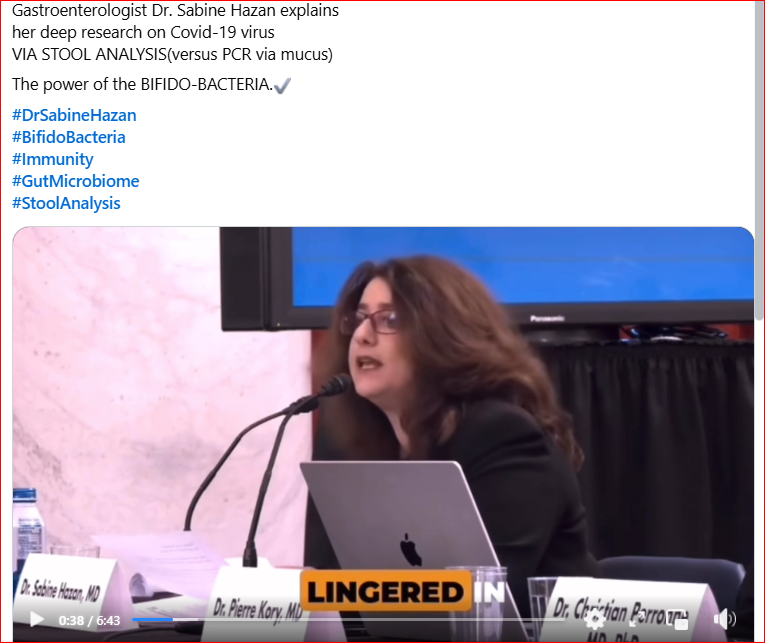
This perspective may be both interesting and disturbing from the standpoint of a scientist and student of science. Dr. Hazan claims to have been involved in science for an extended period (link). Yet her training is in medicine, and her work centers on clinical practice and studies, which she equates with science. But how does conducting clinical trials or working with bacteria suddenly make one a scientific expert—or a scientist? At best, such activities fall under applied biology and observational practice. Unfortunately, many people, including physicians, wrongly assume this qualifies them to call themselves scientists.

The most glaring flaw in her claims is the belief in viruses and her assertion that  “[her lab] was the first lab to document the entire sequence of the virus.” Scientifically, this is impossible without first isolating the virus itself. To illustrate: if one wishes to prove that sugarcane contains sugar, the process begins with obtaining authentic sugarcane, extracting and isolating the sugar, and characterizing it using well-established chemical methods. Only then can one confirm the presence of sugar in sugarcane. Without authentic sugarcane, any claim of “finding sugar” in it is nonsense. Repeating such claims in scientific language, or publishing them in medical journals, does not make them science.

The harsh truth is that medical experts are not doing science, nor are they scientists. They fail to grasp such analogies because they have never studied science rigorously, nor learned its proper research techniques and methods. Their false claims stem directly from this lack of education. The same misplaced authority of medicine—fundamentally non-scientific training—brought us the so-called fake pandemic, built on the illusion of a virus that never existed to begin with.

Therefore, my request to medical professionals is simple: please refrain from making false claims about “science.” You do not have the credentials, and an M.D. degree has no basis in science. It is essentially a non-science, undergraduate-level qualification in prescribing medicines and following diagnostic procedures, without genuine research. Presenting this as “science” is misleading, untrue, and potentially dangerous. The general public should be aware of the false claims of science.

False Priests of Science (link)  
A Simple And Direct Question RFK Jr Needs To Ask – A Suggestion (link)


The following article has been written in response to a query.

Query:

Saeed Qureshi Let’s say you have two groups. One given the drug/treatment and the other a placebo. Then, it’s observed that over a long period of time one group suffers certain side effects and the other doesn’t. Can’t we at least determine from this that whatever is in the drug is causing these side effects?

Response:

Your argument is logical and valid, and one can certainly draw inferences from it. However, such inferences remain observations—they cannot be treated as firm conclusions or as valid scientific studies. The key distinction lies in the nature of scientific research: a true scientific study requires controls, or in other words, a controlled design. At a minimum, three critical components must be addressed:

  • Input (the drug or treatment)
  • The human body (physiology of the volunteer/subject)
  • Output (the measured effect or response)
(more…)

The U.S. National Institutes of Health (NIH) and the U.S. Department of Health and Human Services (HHS) have recently announced what they are calling a “next-generation, universal vaccine platform.” The project, branded Generation Gold Standard, is being promoted as a major leap forward in vaccine science and safety assessment. Public figures, including RFK Jr., have spoken about it as if it were the solution to the failures of the COVID-19 vaccines — the dawn of a new, “safe and effective” vaccine era.

Before accepting these claims, it is worth examining them from the standpoint of actual science — specifically chemistry — to assess the validity of the approach and the likelihood of success (more like its failure).

(more…)

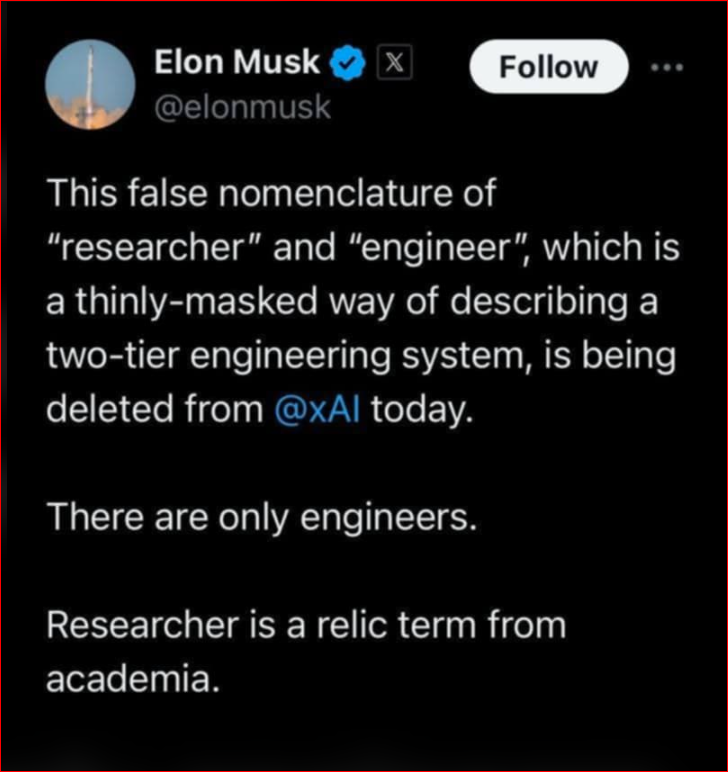
Mr. Elon Musk recently sparked an important and timely debate by commenting on the overlap between research and engineering. While his observation may seem benign on the surface, it actually highlights a much deeper issue: the misuse—and often complete distortion—of the words science and research.

As Musk aptly noted: “This false nomenclature of ‘researcher’ and ‘engineer’, which is a thinly-masked way of describing a two-tier engineering system, is being deleted from @xAI today. There are only engineers. Researcher is a relic term from academia.”

Although Musk was addressing internal structures at xAI, the broader implications of his statement resonate across many fields. The casual use of the word research to describe development work not only confuses the public—it also erodes the credibility of real scientific research.

(more…)

Response to the FB discussion (link)

This is an excellent and timely topic—actually, several questions wrapped into one. If even a trained pharmacist feels confused by the endless claims about supplements, nutrients, and health advice, imagine the situation for the average person constantly bombarded with contradictory information and marketing.

“I wanted to ask you what your opinion is on dietary supplements? Especially about what they call vitamin D, and the promotion that is made for minerals, trace elements? I am a Pharmacist in Greece, I know that all of these are chemicals, I am confused by the fact that they have a lot of promotion even from alternative doctors while we all know that their production is in the hands of big pharma.”

This is not just a valid question—it is a crucial one. I offer the following scientific perspective, which I hope helps clarify the confusion and cuts through the noise.

(more…)