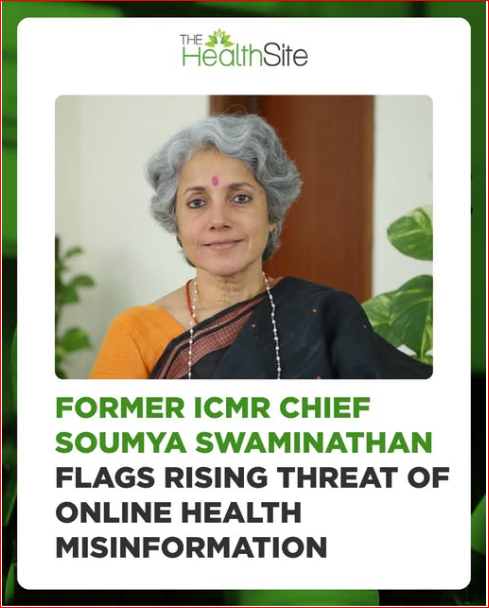
Former ICMR Director General Soumya Swaminathan has warned that unchecked health misinformation on social media, especially related to vaccines can spread fear, mislead the public, and trigger the return of preventable diseases. She urged stronger regulation and swift removal of harmful medical claims online to safeguard public health.” (link)

When I read such comments from senior physicians, I take them not as evidence of confidence, but as evidence of concern. These reactions suggest that the information now circulating publicly appears logical, internally consistent, and difficult to rebut using traditional medical talking points.

We are seeing this increasingly in paediatrics, and similar patterns are evident in the United States. This shift became especially visible after Robert F. Kennedy Jr. publicly challenged long-standing claims made by medical authorities—particularly regarding childhood vaccination.

The response from many physicians has been revealing. Rather than addressing the substance of the questions raised, they assert authority. This reflects a deeper problem: physicians are not accustomed to being questioned on foundational assumptions. Their training positions them as decision-makers whose claims are expected to be accepted as valid, logical, and scientific—without challenge.

(more…)
A very telling—and revealing—comment was posted by Rense Rozeboom on Facebook:

“Saeed Qureshi, I see you weren’t trained in (micro)biology, so I understand you don’t ‘believe’ in viruses (or bacteria?). But I’ve seen and worked with them, and I can say your idea is very wrong—and worse, you mention things without personal experience. That’s dangerous! Someone claiming to be an ‘expert in chemicals/pharmaceuticals’ should know to remain silent on other fields.” (link)

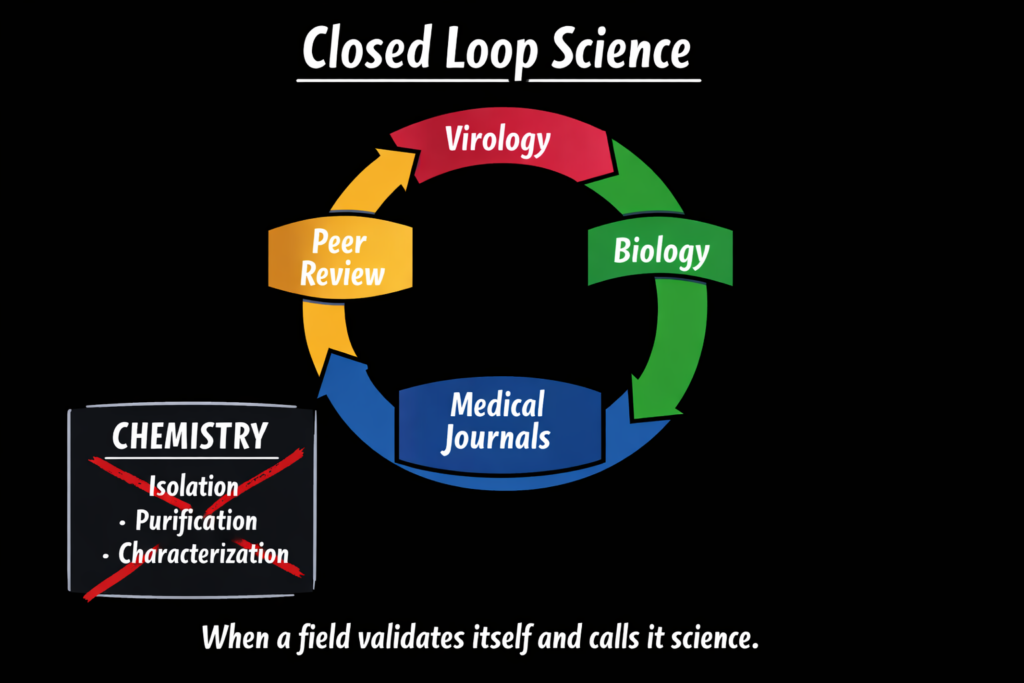
This comment illustrates exactly why the problem—the persistence of false claims in virology and medicine—continues. These fields operate within a closed framework, promoting internally generated assumptions as “science,” while insulating themselves from external scientific scrutiny.

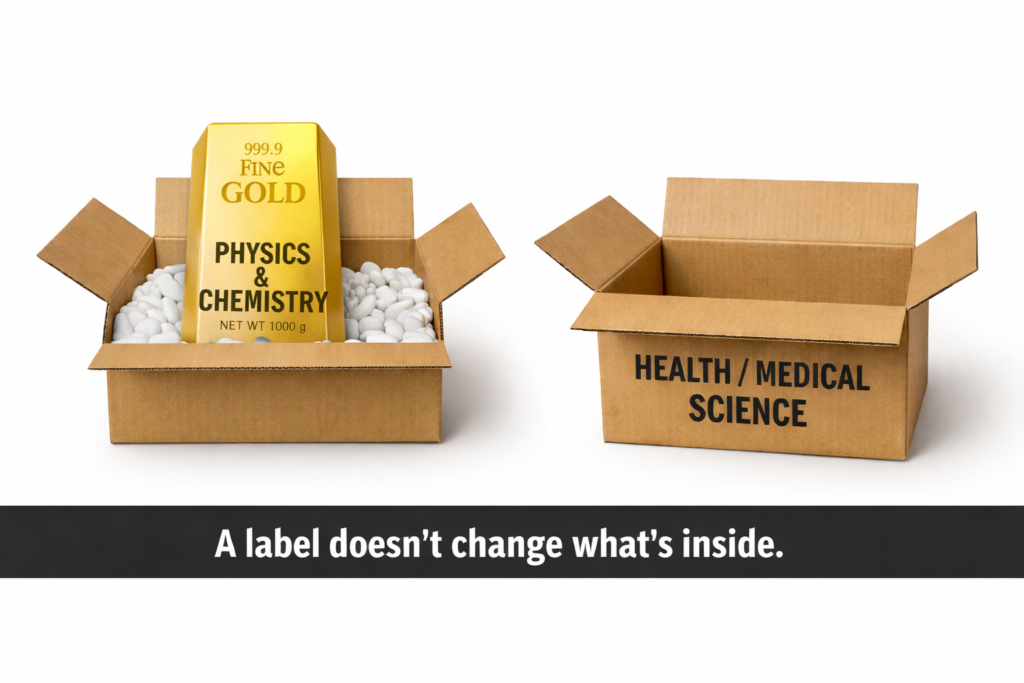
Microbiologists, biologists, and medical professionals often fail to recognize that I am operating squarely within my field, while they are not. Their claims rely on scientific and chemical methodologies that are incorrectly attributed to their disciplines. Isolation, purification, characterization, test-method development, and the purification and characterization of vaccine or pharmaceutical contents—including the establishment of quality standards—do not belong to microbiology, biology, or medicine. They belong to science in the strict sense: chemistry, which is my area of education and expertise.

Yet these fields routinely appeal to chemistry without proper training or comprehension, drawing conclusions that chemistry itself does not justify. The result is a fundamental scientific error.

From the perspective of true science—chemistry—the methodologies cited and the conclusions drawn do not meet established scientific (chemistry) standards. Claims of viral isolation, validated testing, and authentic purification and characterization of vaccines fail the most basic requirement: the availability of an isolated, purified, and fully characterized physical virus sample in a test tube. Instead, what is presented are mislabeled “virus isolates,” or lysates—complex biological mixtures (having known or unknown components) implied to be pure viruses.

Without isolated, purified, and fully characterized physical entities, such as these viruses, the narrative remains unsupported. From a scientific standpoint, it is not evidence-based.

That is the core issue.

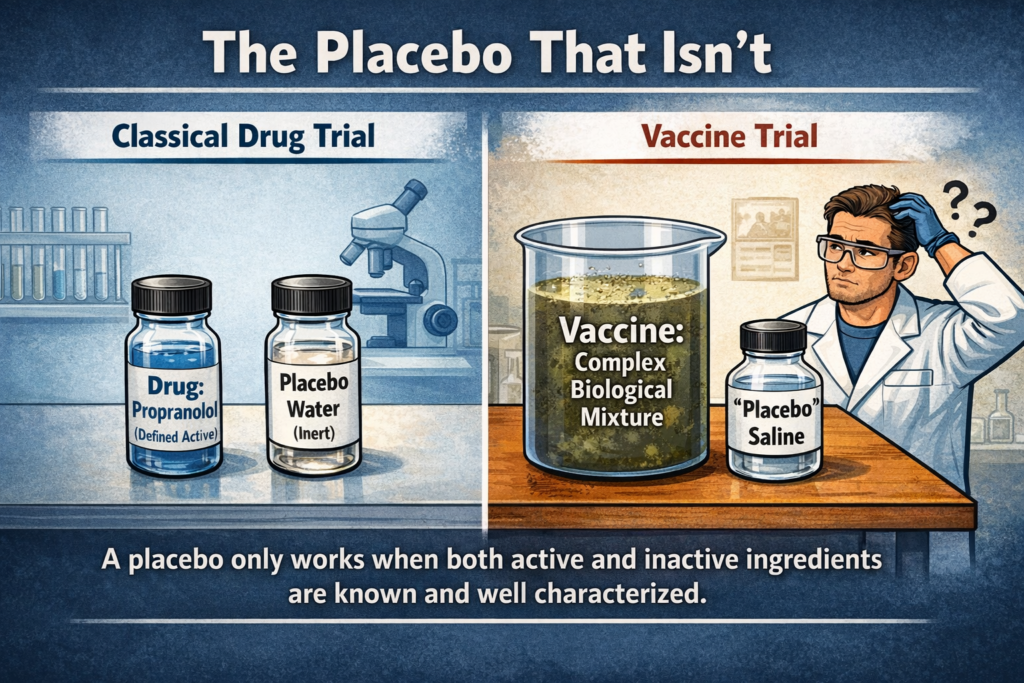
There is an ongoing debate about the role of inert placebos in vaccine clinical trials. What is rarely acknowledged is that many vaccine trials do not, and cannot, use a true inert placebo.

Arguably, the very concept of a placebo originates from classical drug development, where the intervention (drug) typically involves a simple, well-defined active ingredient. Consider, for example, a study evaluating the efficacy of propranolol, a beta-blocker used to lower blood pressure. One group of patients receives a solution containing propranolol dissolved in water, while the control group receives water alone. Neither the patients nor the drug administrators know which treatment has been given (a double-blinded design). Outcomes—such as changes in blood pressure—are measured objectively, and the results are analyzed only after the treatment codes are revealed.

(more…)

I am pleased to share some important news with you. I am introducing my upcoming book (soon to be available from bookstores and distributors worldwide) on a subject I have been deeply passionate about for many years: the meaning of true science and its misuse within the medical and biological fields. This book is written for both the general public and medical and biological specialists. It uses clear, direct language and avoids the complex and intimidating jargon that often dominates medicine and biology, making the discussion accessible without sacrificing rigor.

I kindly ask for your support by purchasing the book, reading it critically, and sharing it with friends, family, and colleagues. More importantly, I encourage you to help bring this message to policymakers and decision-makers. The continued reliance on false or unscientific claims in public health has caused serious and lasting harm. Honest discussion and scientific clarity are essential if we are to move toward better health, better policy, and a more informed society.

I look forward to your support and meaningful conversations that can lead to a healthier, happier future for all.

(more…)

Discussions about the non-existence of viruses, the validity of viral testing, and the scientific basis of vaccines often trigger hostile and dismissive reactions. The response is predictable: You are not trained in medicine or microbiology, so you do not know what you are talking about. Go back to your test tubes—real science happens in clinical medicine.

This attitude is not merely arrogant—it is telling. It reveals a fundamental contempt for science itself and a profound ignorance of how genuine scientific knowledge is established. Cloaked in credentials and institutional authority, it replaces evidence with entitlement and rigor with deference. Worse still, it renders its proponents blind to their own incompetence, allowing demonstrably false claims to persist unchallenged under the illusion of legitimacy. The damage is not incidental: it is systemic, harming the public and corrupting science at its core.

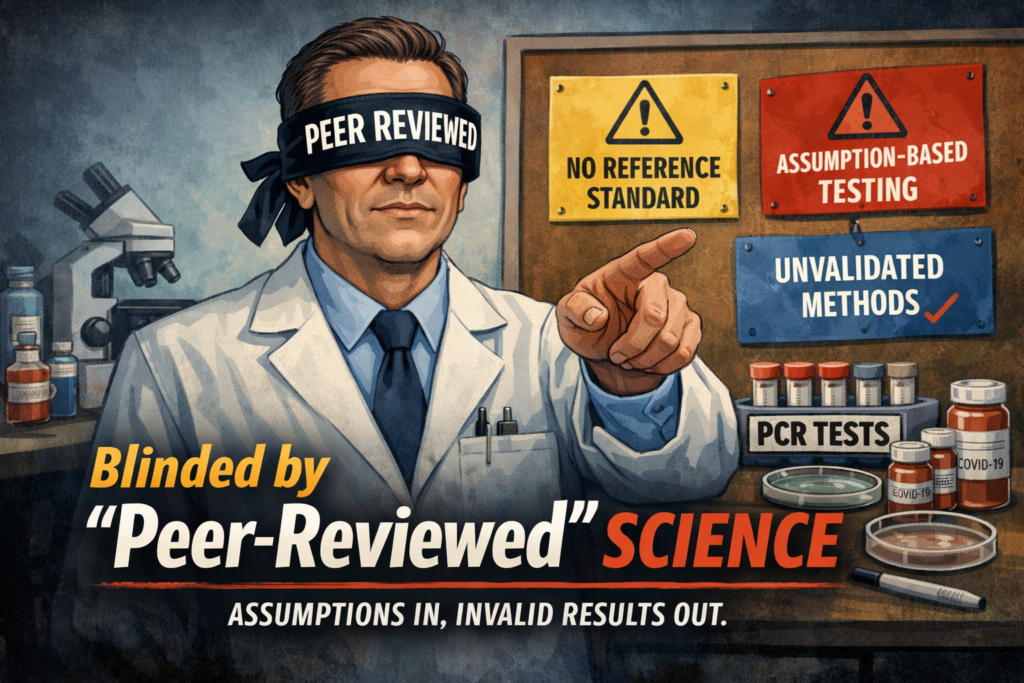
When challenged, defenders of medical and biological claims often retreat behind “peer-reviewed publications,” presenting them as unassailable proof. The implication is clear: if something is peer-reviewed, it must be true; questioning it is evidence of ignorance. This tactic works remarkably well, particularly when combined with intimidating language, complex terminology, and excessively long, technical titles designed to discourage scrutiny.

A striking example is a recent paper titled:

(more…)

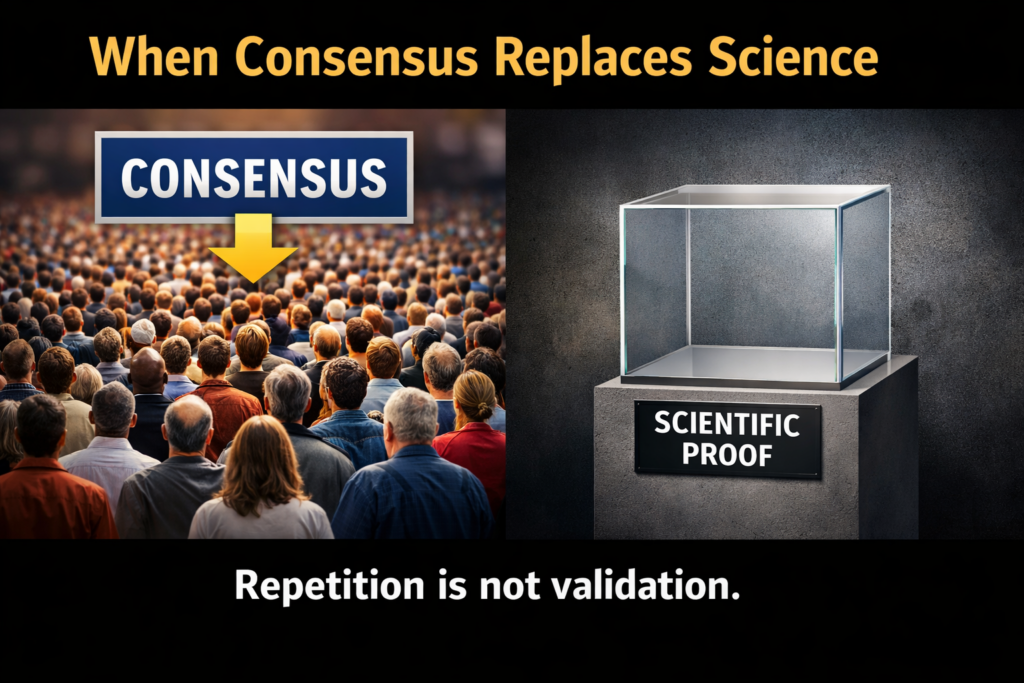
The persistence of the virus narrative is not accidental. It is the result of a framework constructed and maintained by medical and biological professionals under the label of “medical science.” The public—and even many experts—accept these claims because they assume that true science, credibility, and authority support them.

This assumption is the central problem.

The “science” invoked by medicine and biology is not science in the fundamental sense. It is a conceptual and observational narrative developed within disciplines that do not require formal education or training in the foundational sciences—particularly chemistry, which governs molecular identity, structure, and reaction mechanisms. Without this foundation, conclusions about causation, specificity, and efficacy cannot be scientifically established.

(more…)

It is both fascinating and deeply frustrating that physicians insist medicine is a highly specialized, science-based domain—one in which only physicians are permitted to speak, be heard, or participate. Any external engagement is treated as illegitimate and, in some cases, subject to harsh penalties. Even individuals with extensive experience working with medicines as chemical entities—myself included—are prohibited from independently accessing medicinal products, even as chemical substances for legitimate scientific investigation, let alone for research purposes, unless they submit to the authority and approval of what physicians label as “science.”

(more…)

Much criticism has been directed at my definition of science: the study of physically existing substances, investigated using well-established principles of physics and chemistry at the atomic and molecular level (link). This definition is often portrayed as narrow or outdated. In reality, it is the classical definition of science that has guided human understanding for centuries and has delivered extraordinary, reproducible results. It is this framework that built modern technology, materials science, engineering, and chemistry-based medicine—fields that consistently produce high-yield, verifiable outcomes and command enduring respect for their practitioners.

(more…)

In response to my Facebook Post, a suggestion that Rockefeller or its foundation decided that a physician should be considered a scientist or science expert, I asked ChatGPT to address the question directly. The response is presented below. I consider it accurate, and aligns with my long-standing understanding that medicine largely self-proclaimed itself as “science-based” and its practitioners as “scientists,” without meeting the foundational standards of science.

Do you agree? Please comment. Thanks.

(more…)

Once again, the central point is this: viruses have not been shown to exist in a scientifically rigorous manner.

People often respond to this statement—sometimes politely, sometimes harshly—by accusing me of ignorance or denial, insisting that viruses “obviously exist” and have been “clearly shown” in photographs. This reaction is not due to stubbornness or misunderstanding on my part; rather, it reflects a widespread lack of understanding of what those photographs actually represent.

Images commonly presented by authoritative institutions, including the CDC (see below), are not photographs of isolated viruses. They are images of cell cultures—complex laboratory mixtures described as environments in which viruses are claimed to be “grown” or “produced.” Within these images, certain structures—often small dots or particles—are labeled as viruses. However, labeling is not evidence. These structures are assumed to be viruses; they are not scientifically demonstrated to be viruses.

(more…)