
Article Review: When Winning Requires Sacrifice (link)
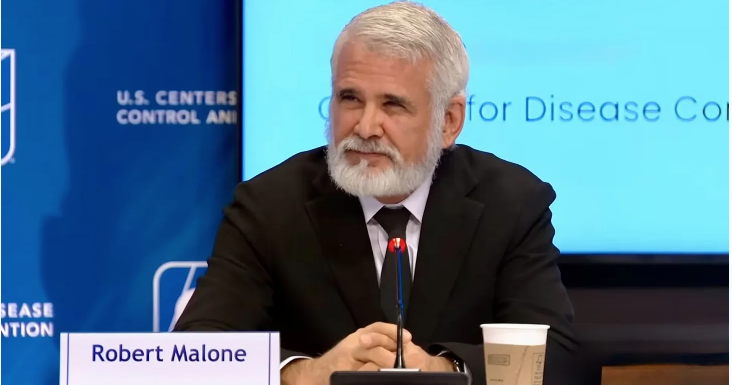
I read the article When Winning Requires Sacrifice with interest, but also with some confusion. At first, it appeared to be a story about Dr. Robert Malone, his time on the ACIP committee, and how he was not respected and eventually forced to leave. However, this is not really a story about one man or one committee. It is a story about something much bigger: the use of the word “science” in medicine, and whether what is called medical science today actually meets the definition of science in the first place.
One sentence in the article stood out to me: “The need for honest science hasn’t gone anywhere.” This sentence sounds reasonable and reassuring, but it raises a very serious question: What is “honest science,” and who decides what science is?
From a scientific perspective, medicines, vaccines, proteins, RNA, and mRNA are all chemical substances. Any claim about their existence, safety, toxicity, or effectiveness must therefore be established using the principles of chemistry and analytical science. In real science, before any substance can be studied, tested, or discussed, it must first be isolated, purified, and fully chemically characterized. This is standard practice in chemistry and physics and forms the foundation of scientific work.
Physicians are highly trained professionals in diagnosis, treatment, and patient care. However, medical training is not the same as training in scientific research, particularly in the areas of isolation, purification, and chemical characterization of substances. Therefore, when medical professionals talk about “the science,” it is important to ask whether they are referring to clinical practice, statistical studies, and treatment guidelines, or to science in the fundamental sense defined by chemistry and physics.
In the article, one of the main scientific concerns mentioned is the toxicity of the spike protein. From a scientific standpoint, however, before toxicity can be established, the substance itself must be proven to exist and must be available as a purified reference standard. Any analytical test used to detect or measure a substance must be validated against a known reference standard of that substance. This is a basic requirement of analytical science.
To obtain a reference standard of spike protein, it must be isolated and purified from its original source, which is said to be the virus. If the virus itself has not been isolated, purified, and fully characterized as a physical entity, then the entire chain of claims — virus, spike protein, toxicity, and vaccine — rests on assumptions rather than on fully established scientific evidence. This creates a situation where debates take place within an assumed framework. Experts may disagree about safety, policy, or risk-benefit analysis, but they are still working within the same set of assumptions. The disagreement may appear to be scientific, but it is actually a disagreement within a model, not a disagreement based on independently established physical science.
Another important issue is that criticism is often directed specifically at mRNA vaccines, while other vaccines are treated as established and accepted. From a scientific standpoint, however, all vaccines should be subject to the same fundamental requirements: clear identification of the target, validated detection methods, proper controls, and rigorous chemical and analytical characterization of both the disease agent and the vaccine itself. If these steps are not followed, then calling the process “science” simply because it is done within medicine does not make it science in the strict sense of the word. It becomes a medical system supported by studies, statistics, regulatory agencies, and committees, but that is not the same as foundational science based on chemistry and physics.
Therefore, the conflict described in the article may not simply be about personalities, committees, or politics. It may reflect a deeper problem: the difference between medical science and science as defined by the physical sciences. It is possible that some individuals are challenging authority within medical and regulatory institutions, and this is being interpreted as hostility or non-cooperation. However, the real issue may be more fundamental — a question of what counts as science, who is qualified to define it, and whether modern medicine has become separated from the foundational principles of chemistry and physics.
In the end, the issue is not about Dr. Malone, ACIP, or any one committee. The real issue is the definition of science itself. As long as medicine continues to use the authority of science without fully applying the methods of science — isolation, purification, measurement, and full chemical characterization — there will continue to be conflict, confusion, and loss of public trust. The problem is not that there is too much science in medicine. The problem may be that there is not enough real science in what is called medical science. Until that changes, committees will continue to argue, experts will continue to disagree, and the public will continue to be caught in the middle — not because science is unclear, but because the word “science” is being used without the full practice of science behind it.